
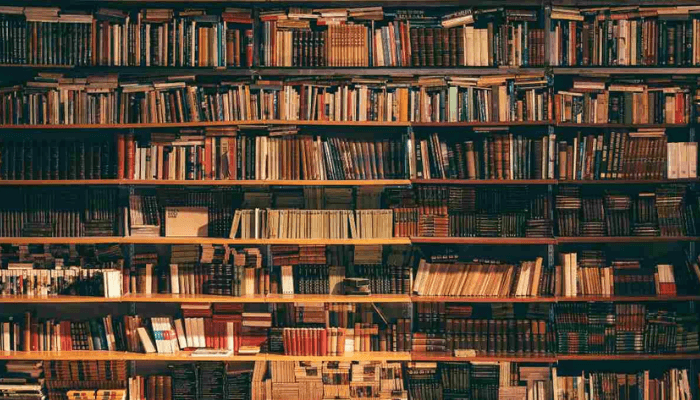
Since the advent of writing, literate societies have created institutions dedicated to collecting and preserving knowledge. The early record rooms housed extensive material on trade, governance and foreign relations. Long before the Internet, libraries served as important centers of learning, profoundly influencing the course of civilization. Many early records were written on clay tablets, which have survived in far greater numbers than texts written on papyrus or leather. For historians, these tablets are invaluable, providing rare and detailed insights into the ancient world.
Many of the world's earliest archives and libraries were destroyed thousands of years ago, leaving behind only fragments of the knowledge they contained. Others survive today as ruins, silent reminders of their former grandeur, while a rare few have survived largely intact over the centuries.
Here are the ten oldest libraries in the world
Bogazkoy Archive – Hittite Empire

The Boğazköy Archive, also known as the Hattusa Archive, is one of the most important surviving archives of the Hittite Empire (circa 1600–1200 BC). Discovered in the Hittite capital, Hattusa, modern-day Turkey, the collection includes more than 30,000 clay tablets and fragments written in cuneiform.
The tablets contain laws, treaties, religious texts, and diplomatic correspondence, including the famous peace treaty between the Hittites and Egypt.
Written in multiple languages, they reflect the empire's wide political and cultural reach. Many tablets survived because the fire that destroyed the city cooked the soil, allowing the records to be preserved. For historians, the collection provides rare insights into Bronze Age governance, diplomacy and belief systems.
Library of Ashurbanipal – Assyrian Empire

The Library of Ashurbanipal was one of the most important centers of knowledge of the ancient world, built by King Ashurbanipal of the Assyrian Empire in the 7th century BC. Located in Nineveh, it contained thousands of clay tablets written in cuneiform.
The collection included royal inscriptions, scientific texts, omens, prayers, and literary works such as the Epic of Gilgamesh. Many tablets survived the destruction of Nineveh in 612 BC because the fire cooked the clay, preserving the texts. Today, the library provides invaluable insights into Assyrian administration, religion, and intellectual life.
Library of Alexandria

The Library of Alexandria in Egypt was the most famous center of learning in the ancient world. Built during the reign of Ptolemy II Philadelphus, this complex, opened between 286 and 285 BC, sought to collect all known knowledge, containing hundreds of thousands of scrolls on subjects ranging from science and medicine to philosophy and literature. Although its destruction continues to be debated, the library became an enduring symbol of humanity's quest for knowledge and the tragic loss of ancient learning.
Also Read: Top 10 Libraries in the World
Hadrian's Library – Greece

Hadrian's Library in Athens, Greece, was built by the Emperor Hadrian, one of the greatest and most famous Roman emperors, in the 2nd century AD. It served as a major center for learning, housing scrolls, lecture halls and reading rooms, and remains an important archaeological site showcasing Roman architecture and scholarly culture.
The building was seriously damaged during the Sack of Athens in 267 AD, but was repaired in the following centuries. The library would eventually fall into disrepair and become the ruin seen today.
Library of Celsus – Türkiye

The beautiful ruins of the Library of Celsus can be found in the ancient city of Ephesus, now part of Selçuk, Türkiye. Built in the 2nd century AD in honor of the Roman senator Tiberius Celsus Polemanus, commissioned by the consul Gaius Julius Aquila in 110 AD, it was the third largest library in the Roman Empire and one of very few buildings of its kind that have survived from antiquity. The building was heavily damaged by a fire in 262 AD, although it is not clear whether this was caused by natural causes or the Gothic invasion. Its facade stood proudly until it fell into ruins due to earthquakes in the 10th and 11th centuries. It once contained thousands of scrolls and served as a monumental symbol of the grandeur of knowledge and Roman architecture. Today, its attractive facade remains a popular landmark.
Saint Catherine's Monastery in Egypt

St. Catherine's Monastery in Egypt, established at the foot of Mount Sinai in the sixth century AD, is the longest continuously inhabited Christian monastery in the world and one of the oldest functioning libraries in the world. It houses an invaluable collection of ancient manuscripts and religious texts, preserving centuries of Christian scholarship and a heritage such as the 4th century 'Codex Sinaiticus'.
Also read: What do libraries mean to the nation?
Al-Qarawiyyin University – Morocco

Al-Qarawiyyin University in Fez, Morocco, which houses 22,000 worshippers, is also the center of an early medieval university and was founded in 859 AD, and is considered the oldest continuously operating university in the world. Its library houses a vast collection of ancient manuscripts, making it a historic center of Islamic learning.
Mogao Grotto or Cave of 'The Thousand Buddhas' – China

The Mogao Grottoes in China, also known as the Cave of the Thousand Buddhas, date back to the 4th century AD. In the early 20th century a 'Library Cave' was discovered containing manuscripts dating from the 5th to the 11th century. This network of caves contains thousands of manuscripts, murals and Buddhist texts written in a variety of languages, making it an invaluable repository of religious, cultural and historical knowledge along the Silk Road.
Malatestiana Library – Italy

The Malatestiana Library, built in the 15th century in Cesena, Italy, is one of the earliest public libraries in Europe, founded by Malatesta Novello. It preserves a vast collection of manuscripts and early printed books and remains a remarkable example of Renaissance architecture and knowledge conservation. More than 400,000 books are being kept in the historical library
Bodleian Library – United Kingdom

The Bodleian Library in Oxford, United Kingdom, named after Sir Thomas Bodley, was founded in 1602. It is the main research library of Oxford and one of the oldest libraries in Europe. It houses millions of books, manuscripts and historical documents, serving as a major center for research, scholarship and preservation of knowledge.
