

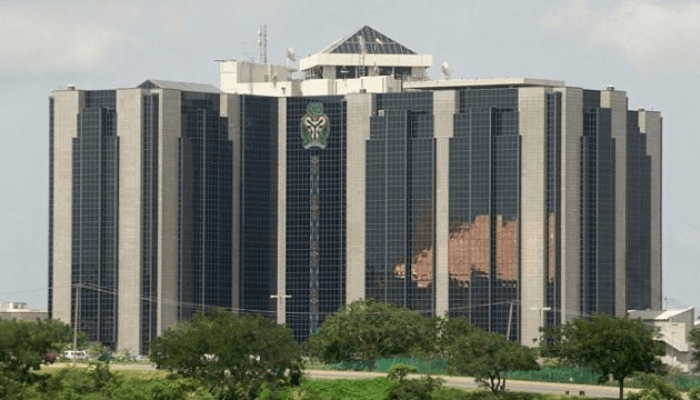
As Nigeria closes the chapter on 2025, the Central Bank of Nigeria (CBN) emerges as the institution that quietly rebuilt the foundation of the country's financial system. It was a year of difficult adjustments, structural reforms and renewed economic discipline. Although the social costs of the reform were heavy, 2025 will likely be remembered as the year Nigeria began to restore credibility to its monetary framework.
At the beginning of the year, Nigeria's financial system was still recovering from years of distortion. Multiple exchange rates, opaque interventions and regulatory tolerance have eroded investor confidence. The foreign exchange market was inactive, inflation remained high, and banks relied heavily on government securities rather than productive lending. Against this backdrop, the CBN deliberately shifted from discretionary intervention to a rules-based approach to monetary management.
FX market liberalization and investor confidence
One of the most important reforms of 2025 was the continued liberalization of the foreign exchange market. Contrary to expectations, capital inflows recovered faster than anticipated. Portfolio investment returned, remittances improved and exporters converted more of their foreign earnings into naira.
By relying on market-driven price signals rather than administrative controls, the FX market achieved efficiency. Officials have described it as a long-missing “shock absorber” – an exchange rate system capable of adjusting to external shocks without causing a crisis.
Perhaps most notably, Nigeria achieved macroeconomic adjustment without a large-scale IMF bailout. By allowing the Naira to find its market equilibrium, policymakers restored transparency and predictability in FX pricing despite increasing public pressure.
Interest Rates, Inflation and SME Challenges
Tight monetary policy till 2025 defined. Higher interest rates helped control inflation expectations and stabilize the Naira. While this strengthened the stability of the financial system, borrowing also became more expensive. Small and medium-sized enterprises (SMEs) faced barriers to access to credit, and banks preferred less risky government instruments rather than longer-term private sector lending.
The result: a secure but slow financial system, highlighting the trade-off between stability and growth.
banking sector reforms
Banking reforms were another cornerstone of this year's transformation. The CBN implemented recapitalization, strengthened supervision, and reversed years of regulatory leniency. These measures improved resilience, reduced systemic risk and ensured that banks could withstand shocks during periods of high interest rates and foreign exchange volatility. Without these reforms, the financial system would have faced much greater instability.
Diversification beyond oil
One of the quietest but most profound developments in 2025 was the changing composition of Nigeria's foreign exchange flows. Oil now accounts for less than 20% of FX flows, with non-oil exports, remittances and miscellaneous trade filling the gap. Cocoa exports, creative services, manufacturing and cross-border informal trade recorded strong growth, aided by a more competitive exchange rate.
It marks a fundamental shift in Nigeria's economic story – from oil dependence to diversified FX generation.
structural challenges
Despite progress, inflation remains stagnant, reflecting structural constraints. High energy costs, insecurity, logistics bottlenecks and import dependence weakened the impact of tight monetary policy. Households suffered a decline in purchasing power, delayed expansion of businesses, and increased government debt service costs.
The lesson of 2025 is clear: monetary stability alone cannot drive growth without deep structural reforms.
Restoring credibility and confidence
Institutional credibility was also restored this year. Remittance flows strengthened, domestic dollar conversions increased, and monthly foreign exchange turnover grew rapidly – sober indicators that confidence was returning. The financial system became more predictable, less speculative, and more rule-driven.
looking ahead:
The challenge for 2026 is no longer stabilization but transmission – converting monetary stability into real economic expansion. Achieving this will require coordinated fiscal discipline, targeted development finance, investment in infrastructure and security improvements to unlock manufacturing, agriculture and housing finance.
2025 can be remembered not as a recovery year but as a foundation year. The CBN chose discipline over convenience, credibility over shortcuts, and long-term stability over short-term relief. The Central Bank didn't fix the economy, but it rebuilt the bones of the financial system – and that may prove to be its most important legacy.
Ayobami Oyelowo is the Executive Director, Finance and Administration at the Ogun-Oshun River Basin Authority.
