
When we are talking about unified communication providers, Nextiva is consistently ranked highly on the list. But there are some reasons why you might consider other platforms. For example, while Nextiva stands out for its contact center subscriptions, the platform can be too much for solopreneurs.
In contrast, many Nextiva alternatives offer more tailored solutions and scalable plans that cater to a variety of business needs. To learn more about which provider is right for you, check out my list of the top Nextiva competitors:
What should I look for in a Nextiva alternative?
Nextiva is one of my favorite providers on the market, offering exceptional customer experience tools, team collaboration features, and contact center subscriptions. The platform is also an innovator in communication technology, consistently offering the latest and most advanced tools, including AI, automation, and agent assistance. They even produce annual reports on “The State of CX.”
However, Nextiva can be somewhat pricey, and its extensive features and complex interface may be overwhelming for smaller teams and startups. Therefore, when searching for an alternative to Nextiva, consider providers that offer more affordable pricing and user-friendly interfaces designed for teams of all sizes and communication needs.
How does Nextiva compare to its top competitors?
Nextiva excels in customer experience, offering shared digital inboxes and omnichannel support. However, competitors like Dialpad, GoTo Connect, and RingCentral offer superior AI features, deeper integrations, and advanced collaboration tools. Additionally, Zoom Phone and Ooma cater to startups and small businesses with streamlined, budget-friendly, and highly collaborative solutions.
Curious about how the top Nextiva competitors stack up? Explore the table below for a quick rundown.
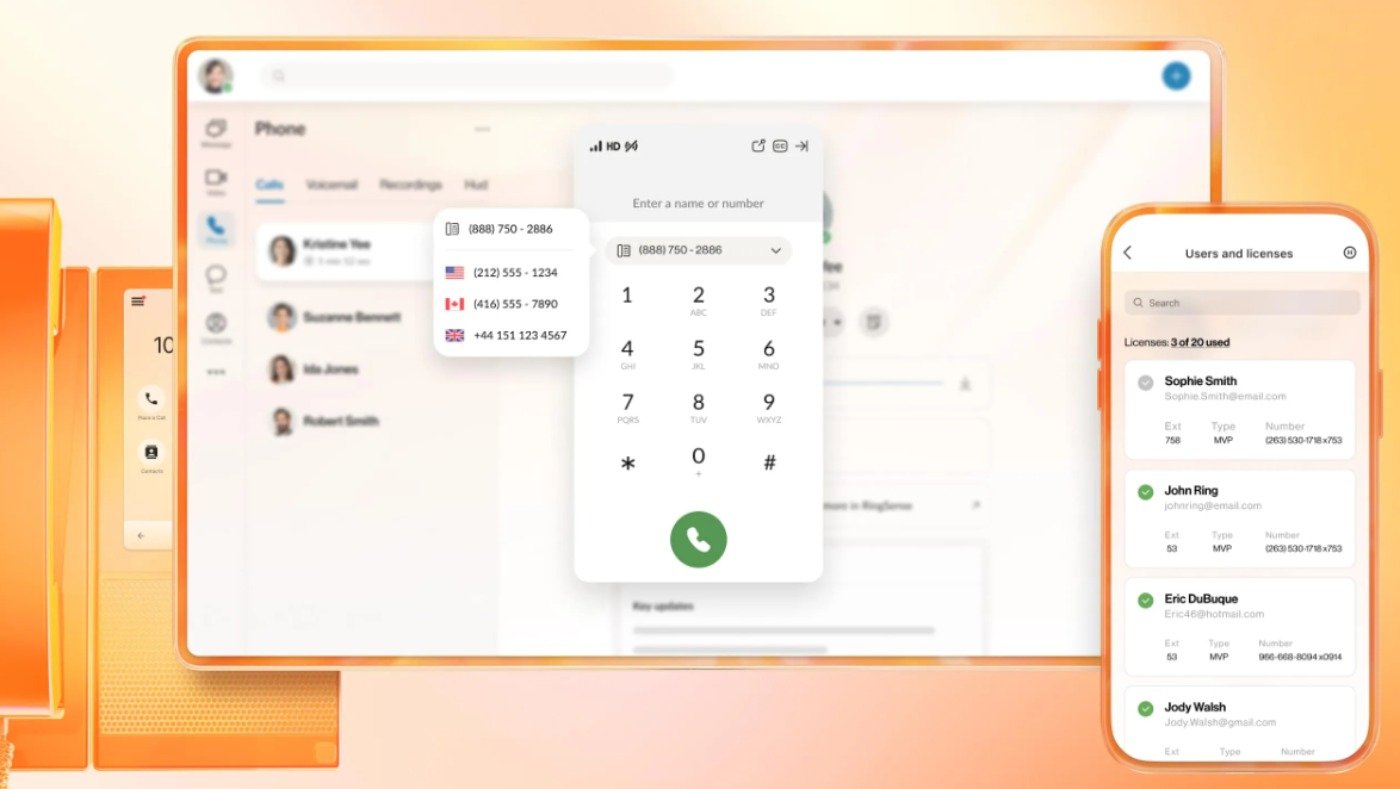
RingCentral: Best overall Nextiva alternative

My rating: 4.83 out of 5
Why I chose RingCentral
When comparing Nextiva and RingCentral, there are many similarities between their offerings, with each provider focusing on unified communications as a service (UCaaS) and contact center solutions. But RingCentral stands out because of its call management features and artificial intelligence tools, like AI receptionists and assistants.
Additionally, it provides advanced analytics and robust integrations with tools like Salesforce, Microsoft Teams, and Slack. However, RingCentral is more expensive than Nextiva, especially for small businesses with limited budgets. For organizations that only require a basic business phone system with limited collaboration tools, Ooma may be a more cost-effective choice.
Pros and cons
| Pros | Cons |
|---|---|
| All-in-one UCaaS platform with calling, messaging, and meetings | Higher cost compared to other Nextiva alternatives |
| 500+ app integrations, including Salesforce and Microsoft Teams | Requires higher-tier plans for advanced analytics |
| Advanced analytics and call monitoring tools | Steeper learning curve for small teams |
Pricing
RingCentral provides two types of business phone subscriptions: the RingEX plans, which include VoIP phone services, and the RingCX plans, which feature contact center subscriptions. They offer volume discounts once you reach 100 users. A free 14-day trial and demo are available for the RingEX plans.
RingEX Plans
- Core: $30/user billed monthly; $20/user/month billed annually
- Advanced: $35/user billed monthly, $25/user/month billed annually
- Ultra: $45/user billed monthly, $35/user/month billed annually
Contact Center Plans
- Ring CX: Starts at $65/per user/month
- RingCentral Contact Center Enterprise: Contact sales for pricing.
Features
- Unlimited domestic calling in the US & Canada
- HD video meetings with up to 200 participants
- AI-driven transcription and summaries for calls and meetings
- Multi-level auto attendant with custom call routing
- Team messaging with file sharing and collaboration tools
Dialpad: Best for artificial intelligence

My rating: 4.74 out of 5
Why I chose Dialpad
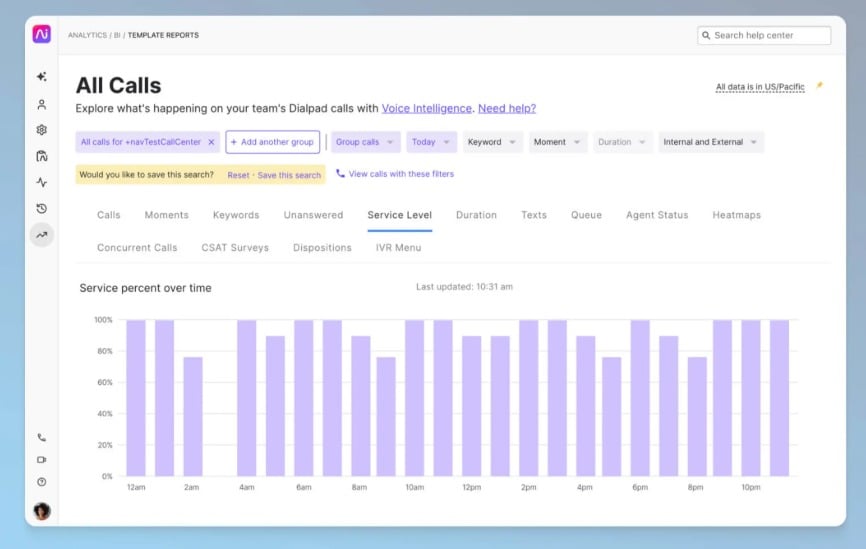
Dialpad is the top Nextiva alternative for businesses prioritizing AI in their communications. While Nextiva provides solid VoIP features, Dialpad distinguishes itself with built-in AI tools like real-time transcription, voicemail summaries, and AI-powered call coaching. This makes it ideal for sales teams, support centers, and organizations that need insights from every conversation.
However, Dialpad’s base plans can feel limited, with some traditional features (like faxing) available only as add-ons. If you require more comprehensive collaboration tools or unlimited integrations out of the box, I recommend Zoom Phone as a strong alternative.
Pros and cons
| Pros | Cons |
|---|---|
| AI features like live call transcription and sentiment analysis | Limited integrations on the base tier |
| HIPAA-compliant audio and video calling on higher-tier plans | Faxing and some features are paid add-ons |
| 24/7 live customer support across plans | Additional numbers aren’t available on the Standard plan |
Pricing
Dialpad offers business communication plans with AI features included at every level.
- Standard: $27/user billed monthly; $15/user/month billed annually
- Pro: $35/user billed monthly; $25/user/month billed annually
- Enterprise: Contact sales for pricing.
Features
- AI-powered voicemail transcription and call summaries
- Multilevel auto attendant with call routing
- Automatic spam call detection and sentiment analysis
- Team messaging with file sharing and chat rooms
- Real-time analytics with customizable dashboards
Zoom Phone: Best for unified communication

My rating: 4.58 out of 5
Why I chose Zoom Phone
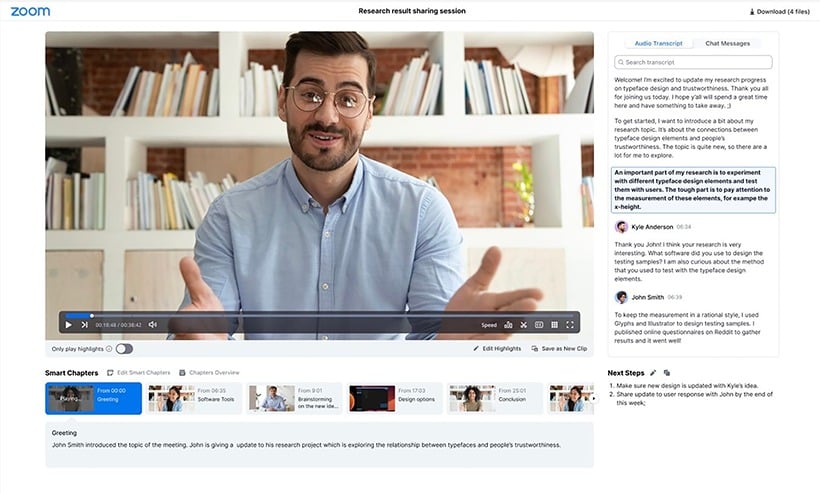
Zoom Phone is my top alternative to Nextiva for those seeking a unified communications (UC) platform that seamlessly combines voice, team messaging, video, and collaboration tools. Although Nextiva offers video conferencing and team chat, Zoom Phone integrates with Zoom Meetings, Team Chat, Whiteboards, and Docs, making it an ideal choice for businesses that want everything within a single ecosystem.
It also provides AI features like call summaries, voicemail prioritization, and post-call action extraction through Zoom’s AI Companion. However, customer experience tools such as advanced call management or call center solutions may require higher-tier plans or additional features. If you need more comprehensive business options, consider RingCentral.
Pros and cons
| Pros | Cons |
|---|---|
| Unified communication within Zoom’s ecosystem with access to team collaboration tools | Advanced call center solutions may require add‑ons or higher plans |
| Elevate calls from audio to video conferencing | SMS summarization with AI requires an add-on package |
| Call handling and evaluation features like IVR, call monitoring, whisper, and barge | Online fax isn’t available on the Global Select plan |
Pricing
Zoom Phone offers flexible pricing options to meet various call usage needs, including metered plans suitable for solopreneurs and small teams, as well as unlimited and international plans. For those who need more team collaboration features, consider one of the Workplace + Phone plans.
- Metered (US & Canada): $10/user billed monthly
- Unlimited (US & Canada): $15/user billed monthly
- Global Select: $20/user billed monthly
- Pro Plus: $21.99/user billed monthly; $18.33/user/month billed annually
- Business Plus: $26.99/user billed monthly; $22.49/user/month billed annually
Features
- Cloud-based phone system with unlimited auto attendants and IVR
- Voicemail transcription, call recording, and monitoring features for in-depth evaluations
- SMS & MMS messaging support with access to team chat during meetings
- The AI Companion provides post-call summaries, action item extraction, and SMS summarization
Ooma: Best for small businesses

My rating: 4.24 out of 5
Why I chose Ooma
Ooma is an excellent alternative to Nextiva for small businesses that prioritize simplicity, ease of use, and budget-friendly options. Unlike Nextiva’s experience management-focused approach, Ooma provides a straightforward, no-frills VoIP experience with quick implementation, making it perfect for non-technical teams or startups.
For example, Ooma’s plans start at just $19.95 per user per month and include over 50 standard business features, such as a virtual receptionist, a mobile app, and a toll-free number. However, Ooma lacks some of the advanced UC features, such as AI tools and extensive integrations. Therefore, I recommend that growing businesses opt for a more scalable solution like GoTo Connect.
Pros and cons
| Pros | Cons |
|---|---|
| Includes essentials like toll-free numbers, virtual receptionist, and mobile/desktop apps | Limited integrations and advanced features are available only on higher tiers |
| User-friendly interface and simple setup, great for nontechnical teams | Video conferencing is limited to 100 participants |
| Transparent, no-contract pricing with month-to-month flexibility | Lacks the AI tools available from other providers on this list |
Pricing
- Essentials: $19.95/user billed monthly
- Pro: $24.95/per user billed monthly
- Pro Plus: $29.95/user billed monthly
Features
- Unlimited calling across the US, Canada, Mexico, and Puerto Rico
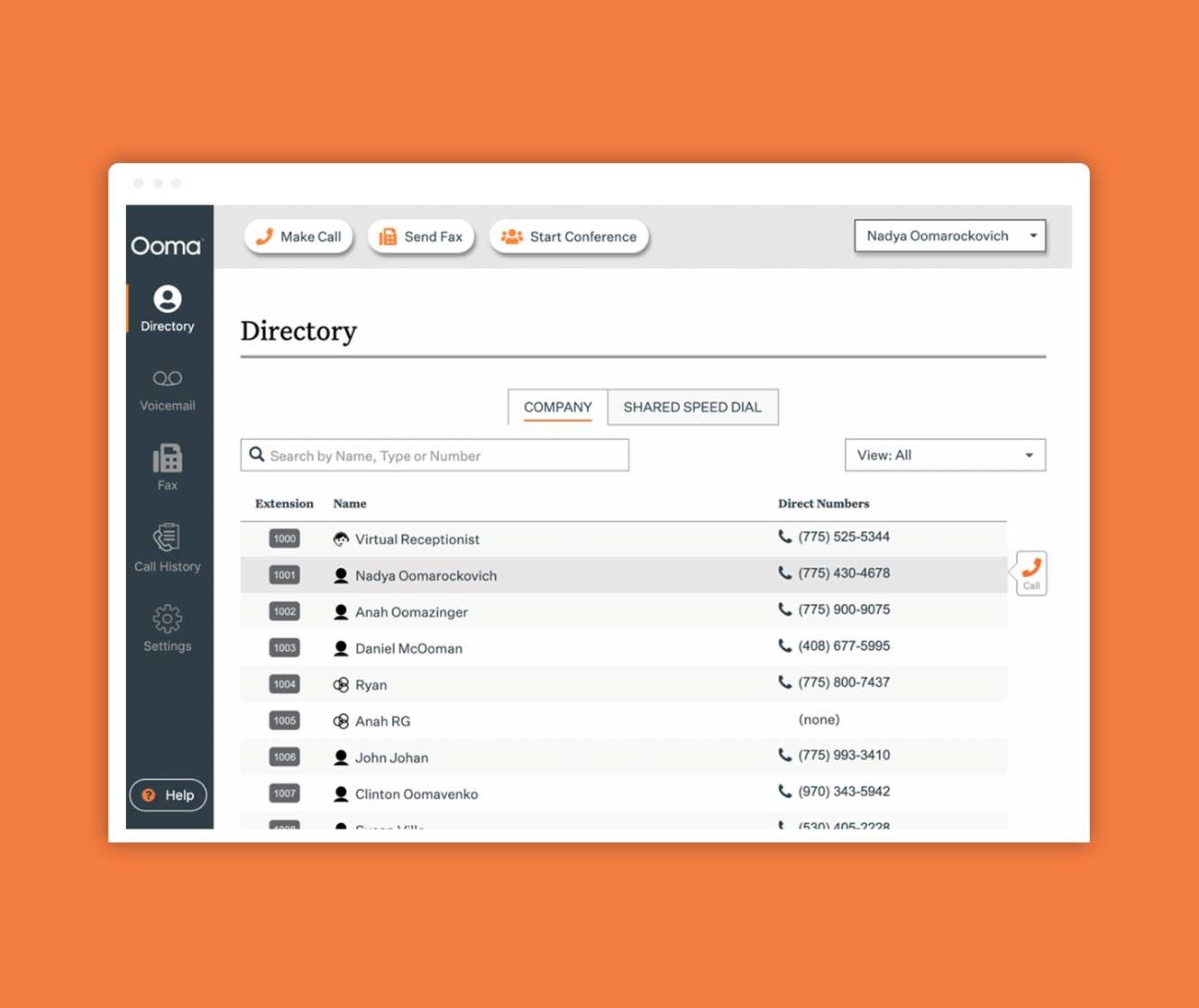
- Virtual receptionist with multi-level menus, customizable greetings, and ring groups
- Mobile app (and desktop app from Pro) for softphone calling and messaging
- Fast deployment and excellent 24/7 support for small business owners
- A company directory that makes it easier for employees to connect with each other
GoTo Connect: Best for customer experience

My rating: 4.16 out of 5
Why I chose GoTo Connect
GoTo Connect stands out as the best Nextiva alternative for customer experience. As an all-in-one UCaaS platform, it provides a comprehensive suite of rich voice, video, messaging, and contact center tools, along with user-friendly administrative controls and 24/7 support. Users frequently praise its ease of use, reliability, and advanced call routing, which are key features for organizations aiming to improve customer satisfaction.
However, some advanced contact center features, such as live call coaching and AI-powered analytics, are only available on the highest-tier plans, which may require budget considerations for teams seeking full CX capabilities. Integrations are also limited on the base plan, so if you want access to more comprehensive features across plans, consider RingCentral.
Pros and cons
| Pros | Cons |
|---|---|
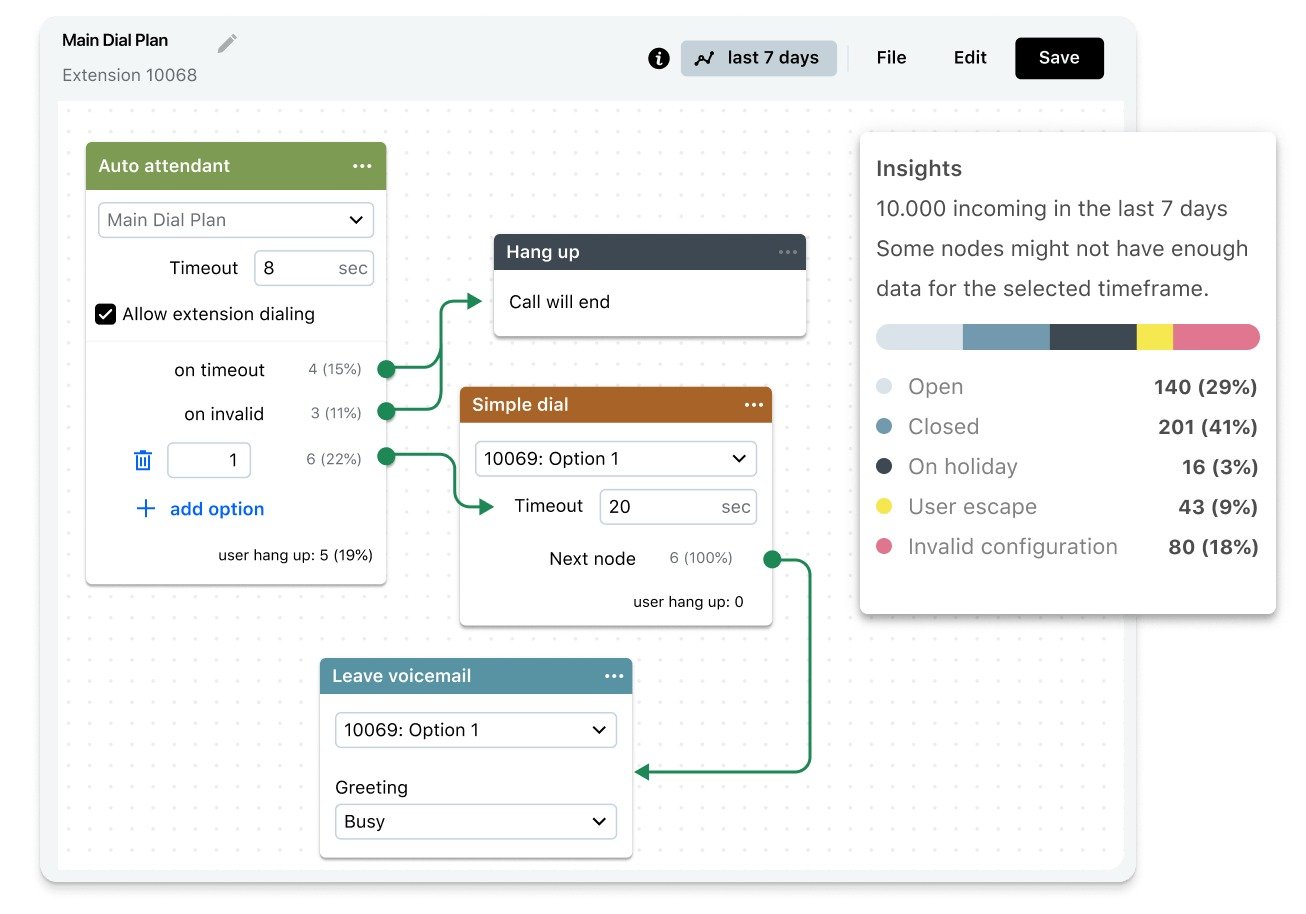
| Intuitive drag-and-drop call flow editor makes advanced routing accessible | Customer experience tools aren’t available on the base plan |
| Visual dashboards to proactively monitor customer experience | CRM integrations and advanced analytics are limited |
| Smart contact center solutions on the highest tier plan | Lacks pricing transparency |
Pricing
- Contact sales for subscription pricing.
Features
- Omnichannel support with access to social messaging, shared inbox, surveys, and AI summaries on the Connect CX plans
- Intelligent call routing and customizable ring strategies on the contact center plan
- Remote-friendly tools like softphone apps for desktop/mobile, consistent UI, hot desking, and an intuitive admin portal
- International calling for over fifty countries, including Canada, France, and the United Kingdom
- Compatible with a wide range of desk phones and peripherals across brands
How to pick the best Nextiva alternative?
Although Nextiva is one of my favorite platforms for innovative customer experience tools, when I’m looking for the best Nextiva alternative, I always consider a few key players. RingCentral is my go-to for an all-around excellent experience with access to contact center and CX tools. At the same time, Dialpad really shines if you are looking for automation and artificial intelligence.
For unified communication, Zoom Phone is my top choice, thanks to its video conferencing and collaboration features that cater to teams of all sizes. However, when considering the needs of small businesses, Ooma is the one I prefer, and for the best customer experience, GoTo Connect is my clear favorite.
Ultimately, selecting the right Nextiva alternative depends on your business’ specific needs. Whether you seek the latest AI tools, unified communication solutions, a focus on small businesses, or outstanding customer support, there’s an option for your team.
My methodology for reviewing Nextiva alternatives
To select the top Nextiva alternatives, I reviewed key phone features for unified communication platforms, including virtual receptionists, video conferencing, and collaboration tools. I then weighed the pricing of each product, assessing its overall value for business owners and IT teams. I also considered how intuitive each platform was to download and operate.
Then, I evaluated the capacity and quality of user support, including customer service options, community forums, and access to knowledge bases. Finally, drawing on my expertise with similar tools, I reviewed each product’s usability, value, and suitability for businesses of all sizes.
Frequently asked questions (FAQs)
Why should businesses consider Nextiva alternatives?
Businesses may consider alternatives to Nextiva due to pricing, particular feature requirements such as advanced analytics, international calling capabilities, or integrations with CRM tools. By exploring a cross-section of the market before making a decision, you can ensure a better alignment with your unique communication needs.
Which Nextiva alternative is most cost-effective for small businesses?
Ooma and Zoom Phone are often viewed as the most cost-effective alternatives to Nextiva for small businesses, offering affordable plans and essential VoIP features, including call management, mobility, and collaboration tools.
Do Nextiva alternatives offer better integrations with business software?
Yes, many Nextiva alternatives, such as RingCentral, offer extensive integrations with popular business apps like Salesforce, Microsoft Teams, and Slack, enabling smoother workflows and increased productivity.