

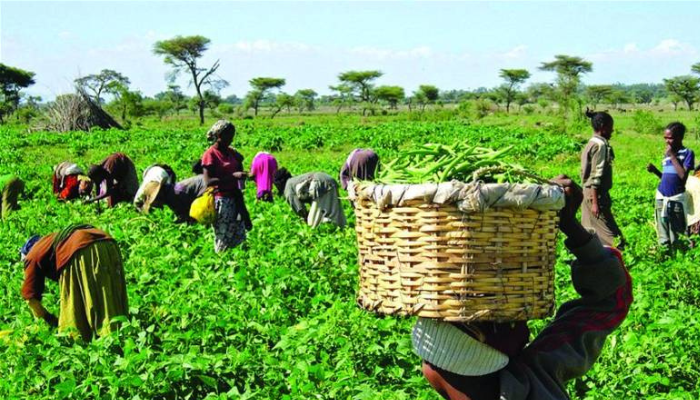
…profits decreased due to increase in imports
Given farmers' growing losses, investors are calling for immediate production subsidies to prevent a worsening food-supply crisis in 2026.
Rising input costs and falling farm-gate prices, now well below the economic cost of production, have left many farmers unable to even harvest crops, threatening food security and eroding returns on investment.
The country's production of key food items declined in 2025 as farmers faced pressure from rising input costs, reducing their profits.
Nigeria had to rely on cheap imports to fill the supply gap. Data from the National Bureau of Statistics (NBS) trade report shows that a total of N3.34 trillion of food products were imported into the country from January to September in 2025, representing a 23 per cent increase compared to N2.7 trillion in the same period in 2024.
“High costs of inputs and farmers’ inability to offset losses are responsible for the volume increase seen in imports,” said agribusiness expert Adesina Laja.
He said farmers are stuck between declining revenues and rising costs of fertilizers, seeds and chemicals.
Laza, a former adviser to the federal agriculture ministry, urged the government to subsidize production costs so that local farmers can compete with imports and maintain the recent moderation in food prices.
Also read: Nigeria's textile imports rise 47% amid rising local production
“We need to address growing insecurity and provide subsidies on fertilizers and seeds to farmers so that people can return to farming,” he said.
“We cannot solve a long-term problem with short-term solutions and that is what the government has done in agriculture,” he said.
Despite the shortfall in food production this year, Laja said the country will not face famine next year, but more imports may be needed to bridge the supply-demand gap if the government fails to subsidize agricultural production.
Input costs have increased this year, with fertilizer prices rising by more than 41 percent, seeds and seedlings almost doubling, and pesticides and herbicides rising by more than 20 percent.
Managing Partner of Prasino Farms, Abiodun Olorundero, urged the government to develop practical and sustainable solutions to ensure food sufficiency, affordability of agricultural commodities and long-term sustainability of the sector.
He said agricultural production should be subsidized to prevent the recent production disruptions in value chains by farmers.
“The way things are going, investors will cut their investments in agriculture and possibly diversify their funds elsewhere if nothing is done to address the falling farm gate prices,” Olorundenro said.
Also read: Skill shortage, value addition, others affecting cashew production
Charles Anudu, Founder Managing Director of Kandel Company Limited, said the fall in farm-gate prices below the economic cost of production has significant macroeconomic consequences.
“Nigerian farmers typically rely on one season's profits to fund the next season. Selling at a loss means they cannot afford the seeds, fertilizers, pesticides and labor needed for the 2026 planting season,” Anudu said.
“They need a lifeline to stay in business,” he said, urging the government to provide a financial bridge for farmers by reducing risks through the ‘crop advance’ loan product to prevent distressed farmers from selling.
He stressed that if nothing is done to solve the problem, the situation will deepen rural poverty, increase prices and lead to a food crisis in 2026.
“This dynamic reinforces the narrative that farming is a poverty trap, which discourages youth participation in agriculture and accelerates rural-urban migration, which puts pressure on urban infrastructure,” he said.
National President of the All Farmers Association of Nigeria (AFAN), Farooq Rabiu-Mudi, said farmers are currently facing rising input costs and falling prices of produce.
“We don’t want food prices to rise, but we must also ensure that farmers can maintain production,” Rabieu-Mudi said at a recent press briefing. He urged the government to subsidize inputs to make farming profitable for farmers and tackle growing insecurity.
