

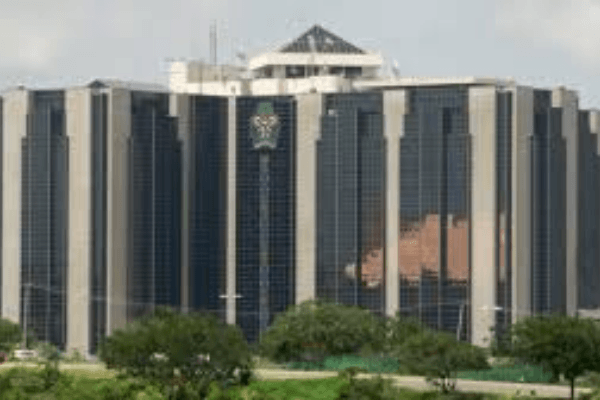
Nigeria's foreign exchange reserves are expected to continue their upward trend next year, giving the Naira the firepower needed to maintain its stability as the central bank estimates that external reserves will increase to $51.04 billion supported by market reforms.
“The improvement in the foreign exchange market is expected to maintain exchange rate stability, while external reserves are projected to increase to US$51.04 billion,” the Central Bank of Nigeria (CBN) said in its macroeconomic outlook on Tuesday.
According to the Abuja-based bank, external reserves are projected to reach $45.01 billion at the end of 2025 – an increase of $6.03 billion over the next 12 months, compared to $40.19 billion in 2024.
Strong reserves mean a strong Naira, a situation that will further boost investor confidence and help build the balance sheets of corporates, especially those with an import focus. This will reduce foreign exchange losses and improve profitability.
Also read: Five charts show how the Nigerian economy will fare in 2025
Africa's most populous economy is seeing a turnaround in its economy after years of currency instability, depleted foreign exchange reserves and stunted growth.
With growth already accelerating in 2025, the top bank sees the economy expanding, projecting annual GDP growth at 4.49 percent next year, compared with 3.89 percent projected by the end of 2025 and 3.38 percent last year.
“This projection is underpinned by continued gains from broad-based structural reforms and a gradually easing monetary policy stance. These are expected to further improve the business environment, boost investor confidence and support private sector-led growth,” the CBN wrote in its report.
“The pace of growth is also projected to be complemented by increased production and investment in the oil sector, supported by improved safety monitoring, as well as benefits from increased domestic refining capacity.”
Also read: Raven believes Nigeria is headed for its biggest economic boom in a decade
CBN sets 13% inflation target to slow prices
The CBN said it would adopt an inflation targeting framework that would reduce prices by 13 percent over the next two years as part of a broader measure to control extremely high inflation and increase purchasing power.
It said the framework, which will be implemented in phases, is designed to enhance policy credibility, strengthen the central bank's commitment, and guide the expectations of the government, markets and the public, given that the transitional inflation target will fall from 18.5 percent in 2025 to 13 percent by 2027.
“Inflation is expected to continue on a downward trend into 2026. The inflation outlook is based on continued stability in foreign exchange and energy markets, the delayed impact of previous rate increases, and improved policy coordination.”
Also read: Raven sees decline in Nigeria's inflation, says economy improving
According to the CBN, the anticipated softening will be driven by declines in food and PMS prices.
The bank noted that the expected decline in PMS prices will be driven by increased competition within the middle segment of the oil industry. While the expected sharp decline in food prices is expected to slow the pace of inflation.
Nigeria's inflation currently stands at 14.45 percent in November, the eighth consecutive decline this year and the lowest since 2020 before the revaluation of the consumer price index.
