

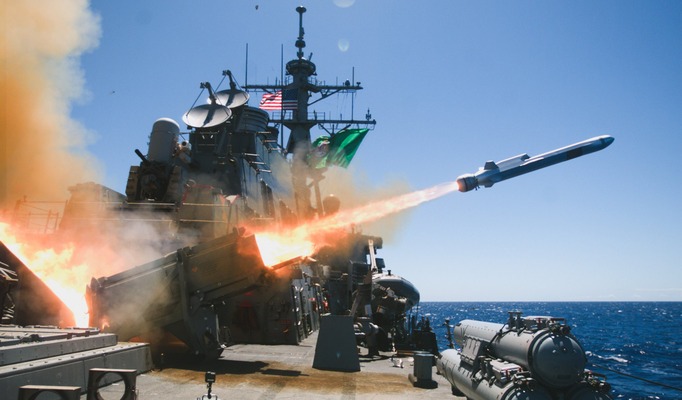
The apparent divergence between Washington's and Abuja's accounts of alleged air strikes on terrorist targets in Nigeria is best understood not as a contradiction, but as a function of different diplomatic responsibilities and political audiences. The United States framed the action through the lens of power projection and domestic political messaging, while Nigeria emphasized sovereignty, legitimacy, and cooperative consensus to protect national unity and international norms. Both narratives may be valid simultaneously: one describes who carried out the attack, and the other describes under what authority and partnership it occurred. In contemporary counter-terrorism diplomacy, alignment of actions matters more than uniformity of language. In that respect, the evidence suggests coherence rather than conflict.
Donald J. The statements by Trump and Nigeria's Foreign Ministry are expected to cause public confusion. While Abuja described the action as the result of structured security cooperation and intelligence cooperation, the US President's message made no mention of Nigerian involvement, presenting the attacks as a unilateral US action.
At first glance this seems contradictory. In fact, this is neither unusual nor necessarily inconsistent. Rather, it is a textbook illustration of how the same security incident can generate legitimately different political narratives, each shaped by audience, legal considerations, and strategic intent.
Different audiences, different responsibilities
The US President's communications were clearly tailored to the domestic audience. Its tone emphasized decisiveness, military capability and moral clarity in countering terrorism. This style is familiar in US presidential messaging, particularly when addressing counter-terrorism.
The emphasis is on U.S. action, resolve, and capability rather than mechanisms of alliance management or host-country consent.
In contrast, Nigeria's statement was tailored to a far broader and more sensitive audience. These are Nigerian citizens, regional neighbours, international partners and legal observers.
Abuja therefore highlighted sovereignty, international law, intelligence sharing and bilateral cooperation. Silence on these points would have been diplomatically risky, potentially inviting speculation about unauthorized foreign military action or erosion of Nigeria's sovereign control.
In short, Washington projected power. Abuja claimed legitimacy. Both are performing their respective state duties.
Operational reality behind “joint” actions
Modern counterterrorism cooperation rarely involves equal visibility or shared public debt.
“Joint” operations often means that local intelligence identifies the target if it has the capability to do so. Access to airspace and political consent are equally provided by the host state. Conversely, enhanced strike capabilities are provided by a partner with superior assets. And execution is fast, judicious, and operationally compartmentalized.
In such scenarios, it is entirely plausible, if not common, that the striking state publicly claims responsibility, while the host state insists on cooperation and consent. These terms are not mutually exclusive. They describe different layers of the same operation.
Why should Nigeria speak with caution?
Nigeria's statement also serves an important legal and social stabilization function. By emphasizing that terrorism is condemned regardless of faith or ethnicity, Abuja deliberately avoids sectarian frameworks. This is important in a religiously pluralistic society where security challenges should not be interpreted as a war on or in defense of any one community.
The US president's religious framing may resonate with his domestic political base, but Nigeria must neutralize any narrative that risks inflaming internal fault lines. This is not diplomatic disobedience. This is responsible governance.
Strategic ambiguity is not cheating
I have argued earlier that in diplomacy, strategic silence or ambiguity is not deception.
Importantly, the absence of an explicit Nigerian accusation in Washington's statement should not be read as a refusal to cooperate. Strategic ambiguity is often intentional. Naming partners could expose local allies, complicate regional diplomacy, or trigger domestic political debate in any country.
On the contrary, Nigeria cannot afford ambiguity. In matters of regional security, it is necessary to emphasize consensus and partnership to maintain both sovereignty and public trust.
One operation, two political communications
So, what we are seeing is not an anomaly but a deviation in political grammar. The United States speaks the language of power projection. Nigeria speaks the language of sovereignty, legitimacy and solidarity. Both narratives can co-exist without invalidating each other.
Finally, I must admit that in an age of instant communication and fragmented public trust, it is tempting to read every difference in official statements as evidence of discord. However, diplomacy does not work on the logic of social media consensus. It works on calibrated messaging, purposeful silence and layered truth.
The real test is not whether the partners use the same words, but whether their actions remain the same. Based on the available evidence it appears so. In counter-terrorism, as in diplomacy, what remains unsaid can be as strategic as what is declared.
Collins Nweke is a Senior Consultant in International Business, Distinguished Fellow Research Administrator (DFRA), and Fellow Chartered Public Manager (FCPM). He is a former Green Councilor at Ostend City Council, Belgium and an ex-HR executive at UBA plc.
