

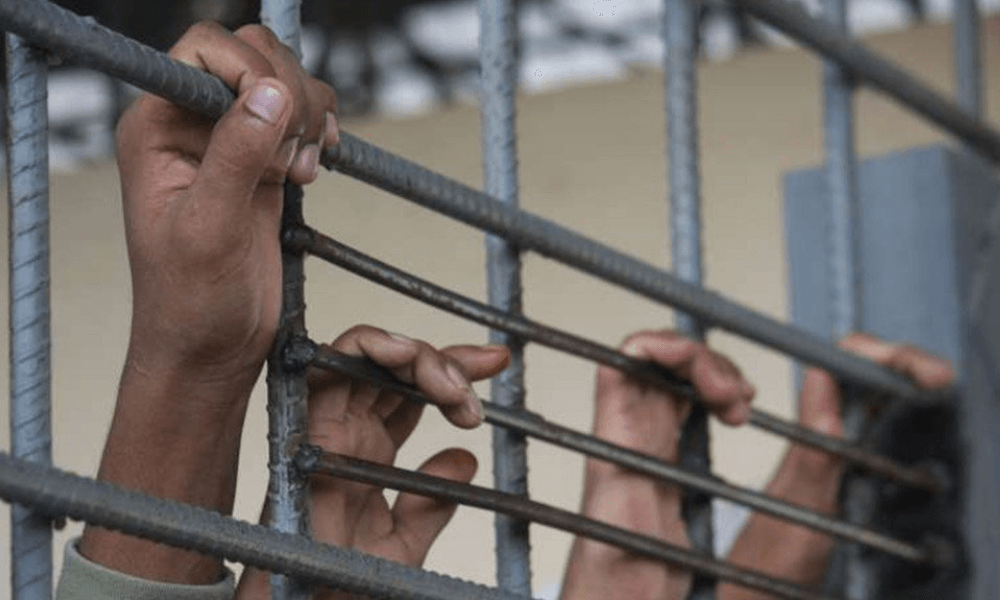
Nigeria's correctional facilities have fallen into disrepair, thus denying a sense of justice in a country with quite high crime rates.
With a large number of prisoners awaiting trial or serving sentences for minor, non-violent crimes, the prison system has become less of a correctional environment and more of a holding center. Adopting community service for minor offenders would be an approach that is consistent with the principles of restorative justice – repairing harm, restoring dignity, and reintegrating offenders into society.
With the gradual impact of the restorative justice system in the country, there is a growing consensus that extensive knowledge of community service at the grassroots level is the panacea to deal with the overwhelming challenges of Nigeria's judiciary.
A magistrate has sentenced a young motorcyclist convicted of obstructing traffic in Ibadan to six weeks of community service, cleaning drainage channels in flood-prone areas.
Within this period, he became aware of how blocked drains increased the problem of flooding in his neighborhood and months later, he became an informal advocate for environmental cleanliness, often warning others against dumping garbage indiscriminately.
A first-time convict of petty theft in Lagos was tasked with assisting at a primary health center as part of a community service program coordinated with civil society groups. Working alongside health workers, she gained basic care skills and empathy for vulnerable patients. After completing his sentence, he reportedly volunteered to remain at the center while seeking legitimate employment – a prison sentence was unlikely to yield any results.
In Makurdi, a young man convicted of damaging public property was ordered to join technicians repairing street lights under the supervision of local works officers, giving him an experience that changed his perception of public property.
Stakeholders recently gathered at this year's Restorative Justice Week in Lagos to promote increased community service as a panacea for reducing overcrowding in correctional centres, rehabilitating petty criminals and promoting the restorative justice system. It is imperative that Lagos State be at the forefront of this campaign, which has gained national recognition and the model has been adopted by other states including Adamawa, Anambra, Edo, Kano, Abia, Plateau and the Federal Capital Territory.
Led by Community Services Officers from the Lagos State Ministry of Justice, the sensitization team visited Ikeja and other communities including Lagos Island.
Lagos State Commissioner for Justice, Mr. Lawal Pedro (SAN), while stressing the importance of community participation and offender rehabilitation, said restorative justice is not just a legal principle but a fundamental human right. According to him, justice must go beyond punishment to include dignity, restitution, accountability and victim empowerment.
This year's Restorative Justice Week was attended by stakeholders from the judiciary and non-governmental organizations such as the Nigerian Bar Association and Prison Fellowship and was funded by the European Union.
The sensitization campaign will provide education on the purpose and value of community service as a corrective and developmental tool in modern justice administration and reinforce the message that justice is not only punitive but also restorative.
The International Institute for Democracy and Electoral Assistance (IDEA), a Swedish-based organization that supports democracy in Africa with electoral management training and risk assessments, said public awareness and understanding of community service is relatively low, especially at the grassroots level.
It says, “Many residents, traditional leaders and local officials still view imprisonment as the only valid form of punishment… This misconception often results in stigmatization of offenders, resistance to placement and weak community cooperation with the justice system.”
According to statistics, in 2024, the Community Service Unit of the Lagos Ministry of Justice monitored 3,765 (3,600 male and 65 female) offenders who were sentenced to perform community service, a figure considered relatively low.
State Coordinator of the Rule of Law and Anti-Corruption Program (ROLAC), Mrs. Ajibola Ijimakinwa, said that although more than 300 cases have been referred to the Restorative Justice Unit, “the numbers are still low, and we anticipate increased referrals from magistrate courts and the police.”
He said, “Before now, justice was mostly about punishment and imprisonment. Now, victims and offenders can come together, discuss what happened and the impact of the crime, and reach agreements that ensure the victim will be looked after. We are here to make the public aware that the Restorative Justice Unit exists in the Ministry of Justice.
“We urge judicial officers to continue reporting minor crimes to the unit, ensuring that people do not go to jail unnecessarily. Awareness must increase so that, in a year, we can see more referrals. Even for cases already in the system, detention centers can create awareness and request restorative justice when the offender appears in court.”
Mrs. Tomi Bodude, Director of the Lagos State Ministry of Justice Community Service Unit, highlighted the three major objectives of community service as rehabilitation, restoration and decongestion.
He said, “Community service is a non-custodial sentence for minor offenders, where offenders are required to carry out unpaid work for the benefit of the community, rather than being sent to prison. Offenders are supervised.
“Community service … helps correct behavior, allows offenders to return to society, and reduces overcrowding in our correctional facilities by keeping minor offenders out of custody. It also saves public resources and prevents first-time offenders from coming into contact with hardened criminals.”
Executive Vice Chairman of Lagos Island East LCDA, Hon. Monsurat Oluwatosin Balogun said the community sensitization program provided an important opportunity to educate residents on the purpose and value of community service as a corrective and developmental tool in modern justice administration. “It reinforced the message that justice is not just punitive, but also restorative – aimed at creating better citizens and strengthening community ties,” he said.
The economic burden of “waiting for trial” can be significant. The federal government reportedly spends an estimated ₦21 billion annually on feeding pre-trial detainees alone – money that could support expanded community service programs and rehabilitation. Nigeria's correctional facilities were designed for approximately 50,000 inmates, but currently house an estimated 80,000 or more individuals, underscoring severe overcrowding and the urgency of non-custodial punishment alternatives such as community service.
Community service as an alternative to custodial sentence allows criminals to repay their debt to society through constructive labor rather than imprisonment. Tasks such as environmental sanitation, public facility maintenance, traffic assistance, or community health outreach not only benefit society but also instill responsibility and civic pride in criminals. Importantly, it helps preserve family structures, employment prospects, and social relationships that are often destroyed by imprisonment.
Nigerian prisons are filled with individuals convicted of minor crimes that pose little threat to public safety, such as petty theft, traffic-related offenses, petty assaults or violations of local bylaws. Imprisoning such individuals is costly and counterproductive.
In addition to being a financial burden on the state, overcrowded prisons create conditions that promote disease, radicalization, and repeat offending. In contrast, community service keeps offenders visible, accountable, and productive.
Onayode is a media advisor to Sweden's International Institute for Democracy and Electoral Assistance (International IDEA) and the Rule of Law and Anti-Corruption (RoLAC) programme.
