
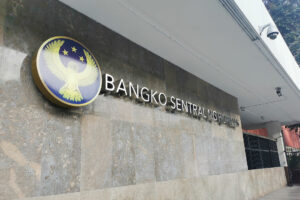
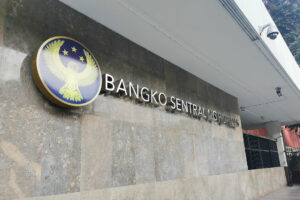
Yields on seven-day time deposits at the Bangko Sentral ng Pilipinas (BSP) edged slightly lower on Wednesday as investors braced for a possible policy easing at the central bank's first monetary board meeting this year.
Total bids for the one-week term deposit facility (TDF) reached P150.07 billion, surpassing BSP's P110 billion offer and last week's P127.6 billion tenders. The central bank accepted the full P110 billion. The resulting bid-to-cover ratio increased from 1.16 to 1.36 times.
Accepted yields narrowed from 4.44% to 4.5149%, with the weighted average rate down 0.89 basis points week on week to 4.501%, roughly matching the BSP's key overnight lending rate of 4.5%.
Rizal Commercial Banking Corp. chief economist Michael L. Ricafort said the modest decline reflected dovish signals from the central bank, which may cut rates in February.
He said BSP is nearing the end of its easing cycle, but strong demand could prompt investors to lock in yields ahead of a potential cut.
The monetary board has cut key borrowing costs by 200 basis points (bps) from August 2024, bringing the benchmark to a more than three-year low of 4.5%.
In 2025, the central bank made five consecutive 25-bp rate cuts. BSP Governor Eli M. Remolona, Jr. has indicated that a further 25-bp cut is possible, but unlikely given the current economic data.
Local inflation remained stable at 1.8% in December 2025, below the BSP's 2%-4% target for the 10th consecutive month. Slow economic growth, partly due to weather-related disruptions and cautious infrastructure spending, also supports a continued accommodative policy.
External factors may influence future moves. A potential US Federal Reserve rate cut would further ease the BSP while maintaining the interest rate differential that stabilizes the peso.
Recent policy reforms and governance measures, including initiatives on anti-corruption and fiscal accountability, have boosted investor confidence, contributing to strong demand in the TDF auction.
TDF and BSP bills act as instruments to absorb excess liquidity and direct market rates toward the policy benchmark.
Investors continue to monitor domestic economic trends and global central bank actions, and assess their impact on borrowing costs, liquidity management and peso stability in the coming months. – Katherine K. chan