
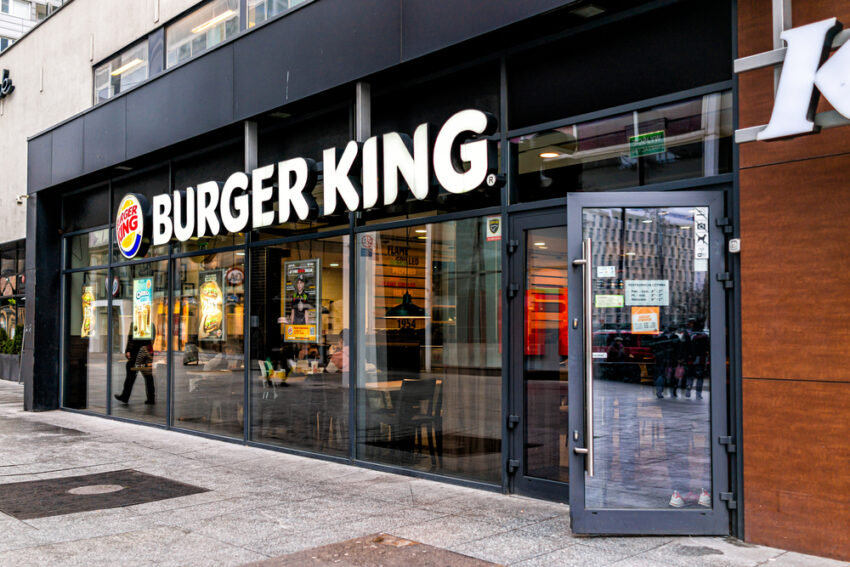
Restaurant Brands International announced a joint venture with Chinese alternative asset manager CPE in November 2025 with the goal of expanding Burger King's presence in China from about 1,250 locations to over 4,000 within the next decade.
The Toronto-based quick-service restaurant operator reported revenue of $2.45 billion in the third quarter of 2025, exceeding analyst estimates of $2.40 billion, driven by international expansion and the performance of Tim Hortons.
Armistice Capital acquired shares of Restaurant Brands during the second quarter of 2025, establishing a position in the company as it executes expansion plans in global markets. Other institutional investors including Vanguard Group, Royal Bank of Canada and Pershing Square Capital Management also hold significant positions.
China accelerates joint venture development strategy
CPE committed $350 million to Burger King China for new capital, planned investment in additional locations, brand marketing, product development and day-to-day management. The joint venture aims to double the brand's restaurant count within five years, allowing Burger King to drive growth in one of the world's fastest-growing consumer markets.
“China remains one of the most exciting long-term opportunities for Burger King globally,” said Joshua Kobza, CEO of Restaurant Brands International. “CPE is a well-capitalized, proven operator with exceptional leadership and extensive consumer and restaurant experience, making them an ideal partner to fuel the next chapter of Burger King China's growth.”
CPE oversees approximately $22 billion in its investment portfolio and maintains offices in major Asian financial centers including Tokyo, New York and Abu Dhabi, as well as Beijing, Shanghai and Hong Kong. This partnership marks a strategic shift towards Restaurant Brands International's stated goal of maintaining a simplified, highly franchised business model while providing greater visibility to achieve its 5%+ net restaurant growth target.
The transaction follows Restaurant Brands International's acquisition of all remaining equity interests in Burger King China from former joint venture partners in February 2025. The company reported it would classify Burger King China as a discontinued operation beginning in the first quarter of 2025 as it worked to identify a new controlling shareholder aligned with its long-term strategy.
Third Quarter Results and Brand Performance
Restaurant Brands International reported third-quarter 2025 adjusted earnings of $1.03 per diluted share, beating analysts' expectations of $1.00. The company reported net income of $315 million, or 96 cents per share, up from $252 million, or 79 cents per share, a year earlier.
System-wide sales across all markets increased 6.9% during the quarter. Globally comparable sales increased 4.0%, international operations increased 6.5% and Tim Hortons locations increased 4.2%.
The company's International segment emerged as the standout performer with system-wide sales growth of more than 12%, with 6.5% same-store sales growth and 5.1% net restaurant growth. Restaurants in Western Europe, China and Japan boosted the segment's performance. Organic adjusted operating income increased 8.8% during the quarter, putting the company on track to deliver at least 8% organic adjusted operating income growth for full year 2025.
Tim Hortons demonstrated continued momentum with same-store sales growth of 4.2% in the third quarter, marking 18 consecutive quarters of positive comparable sales. The coffee and breakfast chain's expanded food offerings and improved iced latte recipe contributed to a 10% increase in cold beverage sales during the period. The combined contribution of Tim Hortons and the international business is approximately 70% of the company's adjusted operating income.
Burger King US same-store sales rose 3.2% in the third quarter, outperforming the broader burger quick-service restaurant category and reflecting progress in the chain's domestic turnaround strategy. Restaurant renovations and marketing focused on key menu items such as the Whopper contributed to the performance. More than half of its U.S. restaurants have been renovated since the transformation began, with the chain targeting 85% completion of its modernization program.
“We made great progress in the second quarter while advancing our strategic priorities with improving sales trends and strong execution led by our two largest businesses, Tim Hortons and International,” Kobza said in the company's second-quarter earnings call. “Across the system, we are seeing strong franchisee alignment, impactful marketing and focused operational initiatives that drive meaningful improvements to the guest experience.”
Popeyes emerged as the portfolio's underperformer during the third quarter, reporting a 2.4% decline in same-store sales. The fried chicken chain has struggled to keep pace with competitors, especially with respect to value-minded customer competition. Third quarter results showed an improvement compared to a 4.0% decline in the first quarter.
Five Year Expansion Outlook
Restaurant Brands International is targeting 40,000 restaurants, $60 billion in system-wide sales and $3.2 billion in adjusted operating income by 2028. The growth plan requires average annual results of 3%+ comparable sales, 5%+ net restaurant growth, and 8%+ system-wide sales growth.
Of the new outlets planned by 2028, about 7,000 are in international markets. The company operates in more than 120 countries through a network of master franchise partners with proven restaurant experience and capital resources. By the third quarter of 2025, the company expects to maintain 32,229 restaurant locations globally, representing 2.8% net restaurant growth.
Among domestic market opportunities, Tim Hortons is planning the most aggressive US expansion, targeting 1,000 US locations by 2028 compared to 627 in early 2023. The growth strategy aims to replicate Tim Hortons' Canadian market dominance in the United States, where the brand emphasizes afternoon offerings and cold beverages.
The company is targeting a $2.48 dividend per common share and partnership unit for 2025, which represents a 3.5% yield based on recent share prices. Restaurant Brands generated $566 million of free cash flow during the third quarter of 2025, with total liquidity of approximately $2.5 billion, including $1.2 billion of cash on hand.
Institutional Holdings and Market Position
Institutional investors own about 82.3% of Restaurant Brands International's outstanding shares. Capital World Investors, Royal Bank of Canada and Pershing Square Capital Management are among the largest shareholders.
While Armistice Capital and other funds established new positions in Restaurant Brands, institutional investors such as Vanguard Group, Goldman Sachs Group and 1832 Asset Management continue to hold substantial positions.
Restaurant Brands International had a market capitalization of approximately $23.45 billion at the beginning of January 2026.