The government has invested £25 million in Kraken Technologies to persuade the fast-growing artificial intelligence business to list in London rather than New York.
The investment by the British Business Bank is the state lender's largest-ever direct commitment to a single company and is part of Kraken's wider $1 billion funding round ahead of its separation from Octopus Energy.
Amid growing concerns about Britain's ability to retain high-growth technology companies, ministers hope the support will help establish a $9 billion AI platform in the UK and support a future flotation on the London Stock Exchange.
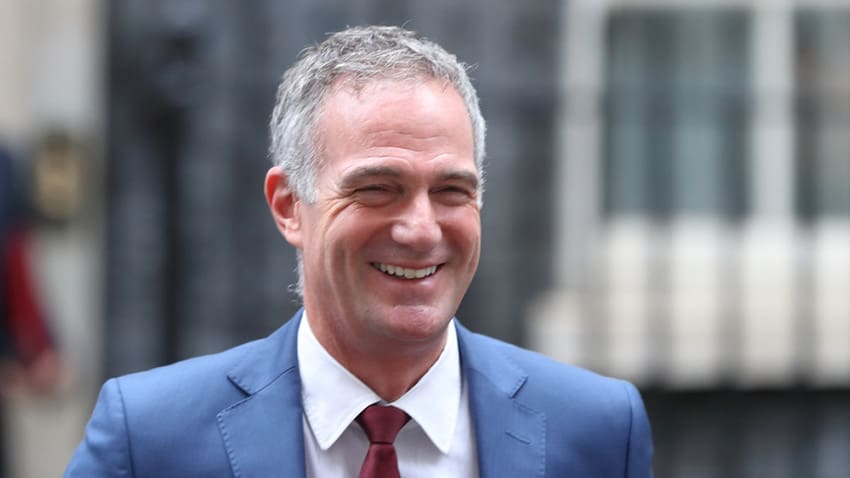
Speaking during a visit to Kraken's London headquarters, Business Secretary Peter Kyle said the investment is part of a wider £125 million package designed to help large-scale companies grow and list domestically.
“I want Kraken to be known as a British success,” said Kyle. “I want the London Stock Exchange to be a guide for global investors as well as British companies looking to go public.”
Kraken is an AI-powered software platform that manages billing and customer services for energy companies. Originally developed by Octopus Energy, the platform has been licensed to a number of rival suppliers and now handles billing for almost half of UK households, as well as around 55 million households worldwide.
Last month, Kraken secured a $1 billion investment from new and existing shareholders as part of its separation from Octopus Energy, valuing the business at $8.65 billion.
Octopus Energy founder and government adviser Greg Jackson said he personally would love to see Kraken list in London, but acknowledged competition from overseas markets.
“The UK has to win this on its own merits,” he said. “Keeping the British Business Bank on the table means it could influence whether the listing ends up in London or New York.”
Jackson said Kraken could be ready to list as early as 2027, but stressed there is no firm timetable. “This will happen when the company is ready,” he said.
The move comes amid intense scrutiny of UK capital markets following a wave of de-listings, aborted IPO plans and companies moving their primary listings overseas, particularly to the United States. While there have been tentative signs of recovery in London's IPO market, ministers are under pressure to demonstrate that Britain can support companies through the critical scale-up phase.
As well as the Kraken investment, the government announced two commitments of £50 million to life sciences and technology funds including Epidarex Capital and IQ Capital, which Kyle described as “big bets on industries where Britain can win”.
The government has pledged £180 million to battery research and development through a £452 million innovation program as part of its industrial strategy, and is moving forward on plans to reduce regulation, including a review of health and safety and agricultural technology rules.
The role of the British Business Bank has been expanded following Labour's spending review and industrial strategy last year. The bank, which is headquartered in Sheffield and was established in 2014 to improve access to finance for UK businesses, received £6.6 billion of new capital in June, bringing its total financing capacity to £25.6 billion.
Kyle, who took over as business secretary in September, said the aim was to ensure Britain's most promising companies grow at home rather than being sold or listed abroad.
“We are the start-up capital of Europe,” he said. “But we're still not so good at growing a business here, building here, developing here, and expanding here. Too often, companies reach a certain size and then move on.”
Ministers say targeted state-backed investment in areas such as AI, life sciences and advanced batteries will be vital if Britain is to compete with the United States' deep capital markets and retain its next generation of global technology champions.