
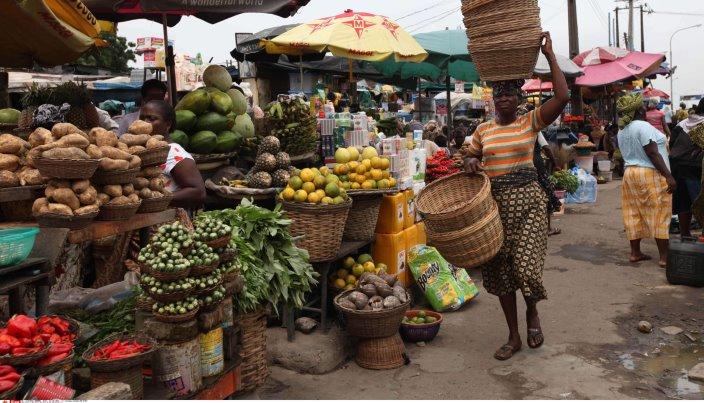
…seeking quick profits by carrying out unethical, harmful practices
…Fruit sellers force the items to ripen unnaturally
…to increase the quantity of food items, harmful substances were added to them
… Regulatory oversight is minimal as agencies appear overwhelmed
The National Agency for Food and Drug Administration and Control (NAFDAC) and other regulatory agencies have a huge task to clean up the food market in Nigeria.
Nigerians are drinking death in the name of food on a daily basis, as producers and retailers are adulterating every food item in an effort to make extra profits.
Over time, people use carbide to cook false fruits, some people add a lot of things like palm oil and other foods to increase the volume; While some people preserve foods with harmful chemicals for economic gain. the list is endless.
The end result is that people face unexplained health challenges every day, many of which can be traced back to the food they eat.
There is a popular quote among Nigerians that says “We are what we eat.” The question now is who will save Nigerians?
“What we eat today shapes our health tomorrow,” said Professor of Food and Industrial Microbiology, Department of Science Laboratory Technology, Faculty of Pure and Applied Sciences, Ladoke Akintola University of Technology (LAUTECH), Ogbomoso, Oyo State.
According to him, protecting the food value chain from unsafe chemicals is not optional; But there is an essential duty to stakeholders.
Over the past few years, there has been an increasing trend of unauthorized chemical applications in food processing and preservation in the contemporary food supply chain, especially in developing regions.
Similarly, research has also shown that the food supply is increasingly linked to diet-related diseases, poisoning, cancer, and other health harms, which is partly attributable to loopholes in federal law that allow the food industry to self-regulate and determine which substances get classified as “generally recognized as safe” (GRAS).
This phenomenon is widespread globally, with informal food markets often employing unapproved additives to enhance product appearance and extend shelf life.
In markets in Nigeria and many parts of the developing world, food is being altered not by nature or proper processing, but by chemicals added to improve appearance, accelerate sales or increase profits.
Also read: Adulterated fertilizers threaten Nigeria's food security
These practices are often hidden from consumers and justified as conservation, yet many of the substances used are unsafe, unapproved, or misused.
The result is a growing threat to public health and confidence in our food system. “Education is the key to ending harmful practices that prioritize profit over health,” Oladipo said.
He said that food security is everyone's responsibility. According to him, regulators should enforce standards, while traders should abandon unsafe shortcuts, and consumers should remain informed and alert.
Chairman of the All Farmers Association of Nigeria (AFAN), Lagos Chapter, Femi Oke, said many traders make money in an attempt to make more money, believing that such practices will increase their profits.
However, these actions come at a serious cost to public health. According to OK, protection of life should be given priority over profit.
“We are working to make traders aware of the dangers and long-term consequences of using harmful chemicals, as these substances are unsafe for human consumption,” Oke said.
Food coloring generally serves to improve the visual and aesthetic appeal of food products, and sometimes serves as a form of identification without having anything to do with preservation.
Preservatives are another group of food additives that generally serve the primary purpose of improving the shelf-life of food products by preventing oxidation and microbial growth.
Professor of Industrial Microbiology at the Ladoke Akintola University of Technology (LAUTECH), Ogbomoso, Elijah Adegoke Adebayo, said the use of alum in improving the physical and functional properties of cassava and cassava starch has been studied with positive results, and also in some commercial applications.
However, this is done in a controlled environment and various analyzes are conducted on the amount of alum used, time of addition, and other preparation procedures to ensure safety and prevent toxicity.
The traditional mixing of alum (and other chemicals) in cassava preparations without proper toxicity analysis can pose serious risks and hazards to consumers.
The addition of azo dyes (one of the most common food coloring agents) to palm oil has also been linked to ROS production, posing a serious risk to consumers.
“Natural approaches to food preservation are the best techniques: freezing, drying, fermentation, pasteurization and salting,” Adebayo said.
According to them, these approaches help prevent/limit microbial growth and oxidation without low toxicity risks.
He said that fermentation not only preserves food but also improves the taste and nutritional profile of the food product.
Effects of unapproved chemicals in food
Food is meant to nourish the body, but when chemicals are added to food that are not approved for use in food, it can become a source of harm.
Similarly, unapproved additives may contain toxic metals, industrial residues, or compounds that accumulate in the body over time.
“Continuous exposure to even small amounts can lead to organ damage, hormonal disruption, weakened immunity and increased risk of chronic diseases,” Oladipo said.
Chemical adulteration of foods is often driven by the presence of informal food markets.
While bright colors, unnatural whiteness, or uniform ripeness give buyers a false sense of freshness and quality, even if the food is old, thin, or poorly processed.
Why is the misuse of additives a food safety concern?
According to Food Export, not all additives are dangerous. However, safety depends on proper approval, correct dosage, and proper use.
When chemicals made for textiles, farming or industrial processes are added to food, safety limits are ignored.
“There is no quality control, no monitoring, and no assurance that the food is safe for long-term consumption,” Oladipo said.
According to him, the use of chemicals to hide spoilage or poor processing also weakens the food value chain. “Consumers are defrauded, honest traders suffer losses and public trust in local foods is diminished,” he said.
Also read: Economics of adulterated palm oil in Nigeria
Dangers of unnatural ripening
Naturally ripe fruits develop flavor, aroma, and nutrients through biological processes.
When fruits are forced to ripen using chemicals, they may appear ripe on the outside but remain immature on the inside. “Such fruits often spoil faster and lack essential nutrients,” says Oladipo.
However, Adebayo said that forcing fruits to ripen unnaturally may serve to negate the benefits of fruit consumption.
“Fruits that naturally act as antioxidants in regulating oxidation in various cells will also rather cause an increase in ROS production.”
According to him, consumption of such products exposes the consumer to various toxins that accumulate as a result of the artificial ripening process.
However, Oladipo said frequent consumption of chemically ripened fruits is linked to digestive troubles, kidney stress and other health complaints. “Vulnerable groups such as children, pregnant women and the elderly are at greater risk,” he said.
Additives, Colors, and the Myth of Preservation
There is a common belief that the chemicals used to color food also help in preserving it. “That's pretty much a lie,” Oladipo said.
According to them, coloring agents do not prevent microbial growth, toxin formation or spoilage. “They only improve appearances and hide flaws.”
For example, adding dye to palm oil does not improve its stability or nutritional value. Similarly, adding alum to cassava flour does not prevent fermentation or contamination.
“These practices only mask underlying quality problems and create a false sense of security,” Oladipo said.
Although some of these additives may not be harmful, using them for inappropriate purposes raises concerns over the safety nature of our food value-chain.
“The use of additives in food products is strongly regulated, requiring concentration limits, clear disclosure, and adequate toxicity and long-term safety testing before use,” Adebayo said.
According to them, safety analysis of an additive in a particulate food product does not make it safe for use in all food products and food ingredients.
Safe Ways to Preserve Food While Staying Close to Nature
Proper food preservation focuses on controlling moisture, temperature, and microorganisms, not artificially changing color or texture.
According to Oladipo, traditional methods such as fermentation, drying, smoking and proper cooking remain effective when done correctly.
He said fermentation of cassava reduces natural toxins and improves safety. On the other hand, proper drying of grains reduces the growth of mold. Whereas smoking fish using hygienic methods limits spoilage.
“Modern science also supports safer technologies such as controlled heat treatment, natural preservatives and improved storage conditions. Preservation should protect food, not hide its deterioration,” he said.
regulatory oversight
NAFDAC, mandated to regulate and control the manufacturing, import, export, advertising, distribution and use of food and drugs, faces a daunting challenge.
While the agency has repeatedly warned against food adulteration and the use of hazardous chemicals for food preservation and cooking, enforcement is uneven, especially in open markets dominated by informal traders.
Limited manpower, lack of funding and the extensive scale of Nigeria's informal economy complicate regular inspections and sustained monitoring.
Apart from NAFDAC, other regulatory and enforcement bodies also have important roles.
The Standards Organization of Nigeria (SON), the State Ministry of Health, the Consumer Protection Council and local government market authorities are part of the ecosystem required to ensure food safety.
However, weak coordination between these institutions often creates regulatory gaps that are exploited by unscrupulous traders.
Consumer awareness is another weak link. Many buyers prioritize appearance and price, inadvertently rewarding merchants who use unsafe methods to make products appear fresher or more attractive.
Without adequate public education, demand-side pressure for safe food remains limited, reducing the deterrent effect of regulations.
To effectively sanitize public food spaces, regulatory agencies must take a multi-pronged approach. This includes intensive market surveillance, tough penalties for offenders, and close cooperation with market associations to enforce self-regulation.
Regular, visible enforcement actions can serve as a deterrent, while mobile testing units can help detect adulterated products on the spot. Equally important is continued public education to help consumers identify the warning signs of adulteration and understand the health risks involved.
Ensuring food safety in Nigerian markets is not just a regulatory burden; It is a public health imperative. As economic pressures push traders to shore up, the responsibility falls heavily on NAFDAC and allied agencies.
Without decisive and coordinated action, unsafe market practices will continue to flourish – the cost of profit-making for traders will be quietly passed on to the health of the Nigerian public.
