
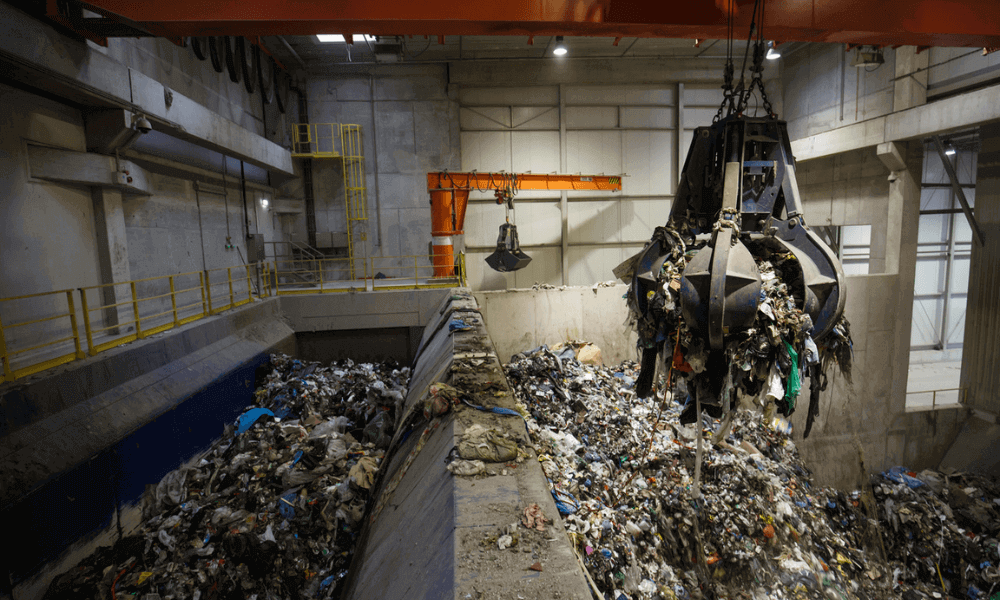
Nigeria is potentially losing more than $100 million annually due to inefficiencies in its waste management system, but experts believe the country can turn this liability into a billion-dollar opportunity with the right reforms.
Igwebuike Izeoma, a global authority on climate change governance who serves as Nigeria's country representative to the World Council on Renewable Energy (WCRE) and CEO of Schrödinger Greentech, says the problem is not just about waste – it's about governance.
“The challenges in Nigeria’s waste sector are structural,” Ijeoma told BusinessDay. “There is an issue of governance at the foundation.
Also read: Akwa Ibom Assembly urges private participation on waste recycling
The government is acting as both operator and regulator. This dual role is the same challenge that has long plagued the oil and gas sector.
Ijeoma draws parallels with Nigerian National Petroleum Corporation (NNPC) joint ventures, where the government's simultaneous role as regulator and operator has hindered enforcement of regulations such as gas flaring. “It's like asking yourself to fail. Unless we separate these roles, progress will be limited,” he said.
Currently, Nigeria operates its waste sector on a linear economic model, relying heavily on traditional waste collection and disposal methods. Ijeoma advocates a shift to a circular resource recovery ecosystem. This approach not only addresses environmental concerns but also creates economic opportunities.
He said his consultancy has developed a framework designed to help state governments move out of the current inefficient system to leverage private sector expertise and global climate investment, which he says could amount to $1.5 trillion internationally.
“In Nigeria we have no structured, engineered sanitary landfills. Most cities rely on dump sites, some closed for more than a decade. In Wales, we harnessed methane from a closed dump site to generate 4 MW of electricity,” she explained. “This is a model that can be replicated in Nigeria to produce electricity, biogas for clean cooking and organic fertilizers for climate-smart agriculture.”
According to Ijeoma, Nigeria has been losing about $1 billion from plastic waste over the past decade alone – about $100 million annually. They argue that adopting new governance and business models could offset these losses and potentially generate a similar amount within the next five years.
“The government will save money by reducing inefficient expenses and generate revenue from an efficient ecosystem. Investors are not only interested in the data, but also in the readiness and legal framework of the systems. Once these are in place, the actual data collection will happen naturally,” he said.
The expert stressed the role of state governments and said environmental issues are in the concurrent list of the Constitution of Nigeria. It gives states the power and responsibility to independently legislate and manage their waste areas. “State governors need to take personal responsibility for transforming the waste management system into an efficient, circular resource recovery ecosystem,” he said.
Also read: Sahara Group, Plan International partner on waste-to-wealth program targeting Nigerian girls
He stressed that the benefits go beyond financial gain: “This transition will create good green jobs. Each state can create at least 5,000 jobs. If we deploy 1,000 people per local government, we are talking about hundreds of thousands of employment opportunities across the country.”
Ijeoma also challenged Abuja city officials to adopt this framework. “It's not just about paying contractors to empty the waste. There are no engineered landfills anywhere. It's where this waste goes that matters – it's a public health risk,” he said.
Highlighting the systemic nature of the problem, he concluded: “This is the core issue. Unless we address the dual operator-regulator role, every other solution is temporary. Now is the time for state governments to step up, adopt this model and unlock both economic and environmental benefits for Nigeria.”
If implemented, Ijeoma believes Nigeria can transform its waste sector into a profitable, sustainable and globally competitive industry – turning what was once a billion-dollar loss into a billion-dollar opportunity.
