
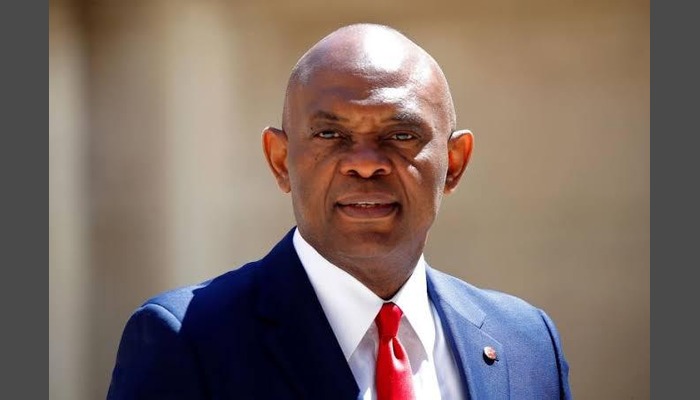
When Founder and Group Chairman of Heirs Holdings, Tony O.Elumelu, CFR, took the stage at the 14th Nordic-African Business Summit in Oslo, Norway, he did so with conviction and clarity; “You make your money in Africa; invest in Africa. Create jobs on the continent. Help provide the infrastructure we need.” The sentiments he expressed in his interviews with Norwegian business media in Oslo and beyond could mark the beginning of a turning point in how Africa-Nordic trade relations will evolve from an aid-mindset to an enterprise-mindset.
Context
At the summit organized by the Norwegian-African Business Association (NABA) in collaboration with Norfund, Africa Finance Corporation and the Norwegian Ministry of Foreign Affairs, the agenda was framed around key sectors such as agriculture, trade, energy and infrastructure which are vital catalysts for growth and development of any economy. It was in the context of these areas that Mr. Elumelu highlighted that Africa should stop being viewed through the lens of charity and aid, but rather as a continent of investment, innovation and entrepreneurship.
In his words, “Africa needs partners, not donations.” He also pointed out that Norwegian investment in Africa has declined sharply while global investment flows to the continent are increasing, which Norwegian Development Minister Asmund Okrust agreed with and encouraged Norwegian companies to invest and think about development policy in their business models.
According to the latest data from the United Nations Conference on Trade and Development (UNCTAD), foreign direct investment in Africa is expected to grow from US$40.94 billion in 2020 to US$97.03 billion in 2024, representing a compound annual growth rate (CAGR) of 24% during the period. This reflects new global confidence in the development path of the continent. Meanwhile, the private sector in Africa provides more than 80% of total output, almost two-thirds of investment and three-quarters of lending, making it a powerful engine for economic transformation. And in Nigeria, Africa's most populous country with a population of 237.53 million, representing 15.5% of the African population of 1.53 billion, the contribution of the service sector to the gross domestic product (GDP) is significant and growing, averaging 56%. This is testament to the fact that Africa is fast becoming a story of performance and scale.
From a Nordic perspective, Tony Elumelu's presentation is of vital importance. Norwegian investments in Africa represent a small share of total investments, at a time when other global players, including China, the Gulf countries and India, are filling the gap.
Aligning with the Nordic Strategy
The Nordic Africa Institute (NAI) policy note marks a decisive shift from the traditional donor-recipient model to one rooted in reciprocal trade, investment and shared prosperity. While each Nordic country (Denmark, Finland, Iceland, Norway and Sweden) has different priorities, they agree on expanding trade ties with Africa, strengthening the continent's voice on global forums, and promoting responsible business practices.
Finland, Norway and Denmark have launched Africa strategies that emphasize mutual partnerships, African-led solutions, green transition and multilateralism. With Africa's population set to almost double by 2050, the Nordics must recognize both the opportunities and challenges of engaging with the African business ecosystem on a larger scale. At the heart of these strategies are commitments to climate adaptation, renewable energy, digital skills development, democratic stability and migration governance. These are all areas that closely align with Africa's development priorities.
Recently, United Bank for Africa Plc (UBA) adopted a long-term Power-as-a-Service (PaaS) partnership with Renuvia, Incremental Energy Solutions (IES) and Norway-based renewable energy investor, Empower New Energy, to install solar and battery hybrid systems in twenty-five (25) UBA branches across five Nigerian states.
The project will provide approximately 1.5 megawatt-peak (MWp) of solar capacity and 3.6 megawatt-hour (MWh) of battery storage. The installations now generate more than 166,000 kilowatt hours of clean electricity monthly, reducing UBA’s carbon footprint by more than 228,000 kg of CO₂ each month. Upon full implementation, the project will cover fifty (50) branches in eighteen (18) states with a total of 3 MW of solar power and 7 MW of energy storage.
The important thing is that it is not charity. It is a private sector-driven, commercially structured initiative, co-led by Nordic Capital in partnership with African Entrepreneurship. This is the model. African ambition plus global partnerships equals scalable impact. As Svein Borra, Norway's ambassador to Nigeria, said, “This partnership is a shining example of what can be achieved when African ambition meets Nordic investment and innovation.”
What does this mean for different stakeholders? For African governments and enterprises, it becomes imperative to create transparent frameworks and ensure local ownership. For investors, Africa is no longer a frontier of high risk and low returns. For civil society and development actors, investing in Africa is not incompatible with social impact. Conversely, large-scale deployment of private capital is critical to addressing jobs, infrastructure, climate challenges and meeting the Sustainable Development Goals (SDGs). For Heirs Holdings, the importance is that the Nordic region's renewed Africa agenda not only provides fresh funding and partnership models, but also a mindset shift that aligns with Africapitalism's core belief that the private sector should lead Africa's transformation.
a call-to-action
Africa's population is projected to grow to 2.47 billion by 2050 and will represent 25.52% of the world population. The continent's infrastructure financing gap is estimated at US$130–US$170 billion annually. Now is the time for Norwegian and Nordic companies to join the train. For Africa, the message is equally strong: the opportunity must be seized with African leadership and global cooperation.
When trade replaces philanthropy, and partnership replaces conservation, inclusive, equitable and sustainable prosperity becomes possible. heir holdings
Committed to that vision, not only for Africa, but also for the world connected to Africa.
.Ndubisi is the Executive Director of Heirs Holdings
