
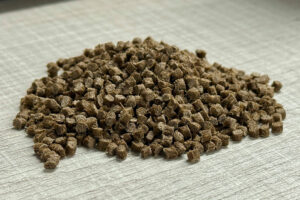
Listed D&L Industries, Inc. A subsidiary of D&L Polymers & Colors, Inc. (DLPC) said its abaca pellet has reached commercial scale and is now being offered to potential customers across Asia for testing.
On Friday last week, DLPC President and CEO Lester Lao introduced 100% abaca pellets, which allows upstream plastic compounders to blend the product directly into their formulations instead of relying solely on DLPC-processed composites.
“This milestone marks a new chapter in our natural fiber journey. What started as an idea decades ago has now evolved into a commercially viable material that can help industries meet their sustainability goals, and we believe this is just the beginning of what natural fibers can achieve for the future of plastics,” Mr. Lao said.
“As we move toward widespread commercialization, the 100% abaca pellet represents a transformative step toward a more sustainable, fiber-integrated plastics ecosystem,” he said.
The pill is based on DLPC's work from last year, when the company first blended abaca into plastic.
“Pelletization is the turning point that ultimately makes natural fibers easier to use on a large scale. With ready-to-compound 100% abaca pellet, manufacturers can incorporate sustainability into their products without changing their processes, opening up an entirely new market where abaca can be handled just like any traditional polymer ingredient,” Mr. Lao said.
In January last year, DLPC said it was already in discussions with potential partners interested in using the technology to make their plastic products more sustainable.
While abaca fiber is currently the base material, the technology has also been tested with other locally available fibers including pineapple, spider-lily.bakong), and vetiver.
Natural fiber composites enhance the mechanical and chemical performance of traditional plastics while improving sustainability. These lightweight materials are strong enough to float in water and are suitable for applications ranging from consumer goods to industrial uses such as construction and automotive parts.
DLPC said it is working with manufacturers in the consumer goods, packaging, construction and automotive sectors to explore applications for the new abaca pellets.
The company said the pelletized forms simplify production, accelerate the adoption of natural fibers in mainstream manufacturing and support global goals of reducing plastic use and environmental harm.
“From a broader sustainability perspective, the implications are considerable. Natural fiber composites produced using these pellets could replace a meaningful portion of virgin polymers – current formulations allow dosages up to 40% and have the potential to go higher as technology advances – reducing reliance on fossil-based plastics while providing improvements in strength, durability and weight efficiency,” DLPC said.
The company said it is also enhancing market education efforts and joint development programs to help partners transition to natural fiber-enhanced materials. — Alexandria Grace C. Magno