
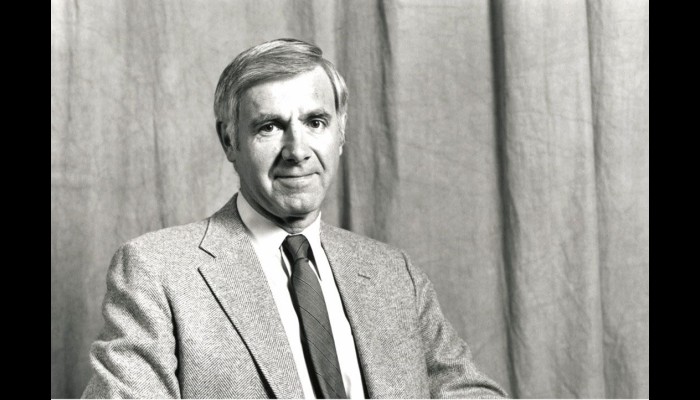
When historians talk about the eradication of smallpox, they often start in Geneva, Washington, or New Delhi. But the turning point came earlier, and even further south, in Nigeria, in the late 1960s, where a young American epidemiologist made a pragmatic decision that reshaped global health.
William H. Foege, who died on January 24 at the age of 89, was not a public health legend by the time he arrived in northern Nigeria. He was a field doctor facing a familiar problem in post-independence Africa: too little money, too few vaccines, and a disease that moves faster than governments can handle it.
At that time smallpox was still endemic in large parts of Nigeria. The vaccine existed, but it was unrealistic to vaccinate the entire population in the vast country with weak logistics and poor cold-chain infrastructure. Many abolition efforts before him had stalled simply because they tried to do too much with too little.
Foege's insight was extremely simple. Instead of vaccinating everyone, vaccinate strategically. Identify each new case, trace its contacts, and vaccinate only those at risk around it. Contain outbreaks in tight “rings.”
It was a logistics hack born out of Nigerian realities.
The approach worked. Vaccine use tapered off rapidly, surveillance improved, and the outbreak ended faster than expected. What started as a reform in Nigeria soon became a principle. Ring vaccination was adopted throughout West Africa, then India, and eventually formalized by the World Health Organization as the backbone of the global smallpox eradication program.
In 1980, smallpox became the first infectious disease to be eradicated. The intellectual structure of that victory was, largely, built in Nigeria.
Those who worked with Foege often emphasize that he never saw it as a solo achievement. Nigeria makes sense not only as a testing ground, but also as a partner. Local health workers tracked cases, negotiated access to resistant communities, and adapted protocols in ways that foreign experts could not. Foege had already understood what many global health programs are still struggling to accept: solutions imposed from above are rarely in touch with reality.
That humility followed him throughout his career.
After returning to the United States, Foege led the US Centers for Disease Control and Prevention under President Jimmy Carter, later helping to establish the institutions that now dominate the global health architecture, including the Carter Center, the Task Force for Global Health, and indirectly, Gavi, the Vaccine Alliance. But as his influence grew, Nigeria remained central to how he explained public health success.
In speeches and writings, he repeatedly returned to the lesson he learned there: abolition is not about heroic medicine, but about systems, monitoring, trust, incentives, and local ownership.
Bill Gates, who later described Foege as a mentor, recalled that Foege was imprisoned twice in Nigeria during a smallpox campaign, a detail he mentioned not for drama but to underscore the political and humanitarian friction involved in real-world health work. It was not enough to have the right science; Fear, suspicion and bureaucracy had to be dealt with.
That sensitivity shaped Foaz's later thinking on HIV, neglected tropical diseases, and child health. It also shaped their skepticism toward technological fixes divorced from social context – a situation that seems newly relevant as global health funding tightens and geopolitics intervenes more strongly in disease control.
When Barack Obama awarded Foege the Presidential Medal of Freedom in 2012, the citation celebrated his global impact. But his most important contribution remains a Nigerian contribution: proof that scarcity can accelerate innovation rather than defeat it.
To young global health professionals, including the co-authors of his last book, Change Is Possible, Foege was less interested in reliving victories than in drawing out patterns. What happened in Nigeria? Why was cooperation more important than control? How can success be replicated without erasing local agency?
In today's world, where eradication targets are being missed, trust in institutions is declining, and funding is increasingly politicized, these questions matter more than ever.
William Foege did not eradicate smallpox alone. But without the insights he developed in Nigeria, the world might still be living with them.
This is his quiet legacy: not just a disease eliminated, but a methodology, born in Africa, that taught us how to think about global health.
