
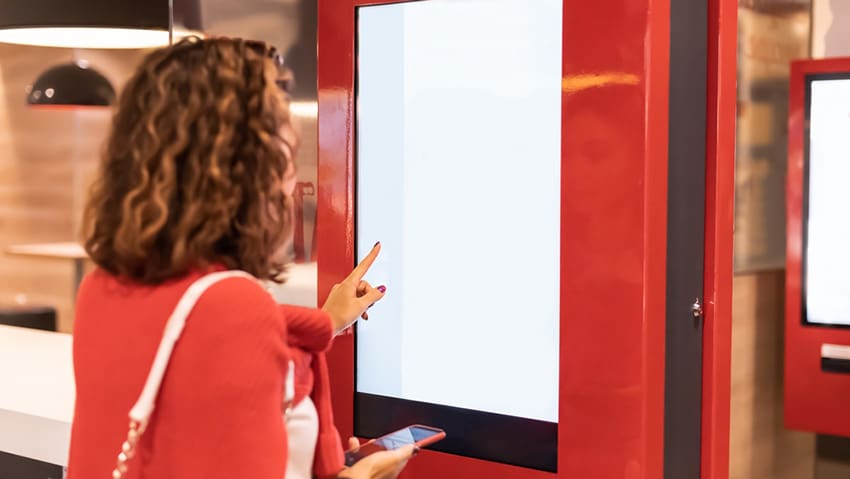
The lunch time rush is the ultimate stress test for any quick-service restaurant (QSR). There's a line out the door, the kitchen is packed, and front-of-the-house staff are struggling to take orders while managing payment.
In this high-pressure environment, a single disruption can lead to customer churn and loss of revenue.
For years, the solution was simply to add more employees. However, modern cuisine demands a better approach. Self-service kiosks have gone from being a novelty to a necessity in the QSR sector. They're not just replacing cash registers; They're fundamentally reshaping the way restaurants operate. By putting control directly into the hands of customers, businesses are seeing faster transactions, higher spend and smoother operations.
Here are five ways self-service kiosks are revolutionizing the quick-service industry.
1. Reducing waiting times and eliminating queues
Speed is the currency of the QSR industry. If a customer sees a long line, he or she often decides to eat elsewhere before even going inside. Traditional counter service is limited by the number of staff available to take orders. A cashier can only process one transaction at a time, creating a natural choke point during peak hours.
Self-service kiosks act as force multipliers. By installing three or four kiosks in place of one traditional counter, you effectively quadruple your order taking capacity. Customers can quickly move on to the next available screen instead of waiting for a staff member to finish dealing with the person in front of them.
This creates a constant flow of orders into the kitchen, preventing the “batching” effect that often overwhelms cooks when a cashier churns out five orders at once. outcome? Faster access to customers and significant reduction in perceived and actual wait times.
2. Eliminate order errors for good
“I said no pickles.” It's a phrase every restaurant manager dreads hearing. Misunderstandings are inevitable in a noisy and fast-paced environment. Cashiers may mishear an order, press the wrong button, or forget a particular request altogether. These mistakes lead to food waste, refunds, and most seriously, disappointed customers.
Kiosks eliminate the “telephone” game between the customer and the kitchen. The customer chooses what he wants. They tap “no onions,” “extra cheese,” or “sauce on the side” and review their order on the screen before paying. What they see is what the kitchen gets.
This precision is critical to operational efficiency. When recooking and refunds are reduced, your food costs are reduced and customer loyalty increases.
3. Automatically increasing average order value
One of the most powerful features of a self-service kiosk is its ability to sell consistently and persuasively. Human employees often forget to suggest add-ons during busy shifts, or they may feel awkward pressing for additional items. A kiosk never looks awkward or forgettable.
When a customer orders a burger, the kiosk can immediately display a high quality image of premium fries or a milkshake with an “Add for £1.50” button. It's subtle, visual, and highly effective.
Industry data consistently shows that customers spend more when ordering through kiosks – often by 12% to 20%. This is partly due to the lack of “social friction”; Customers feel less judged than someone who orders an extra dessert or large drink from a screen. By automating this process, you maximize the revenue potential of every customer who walks in the door.
4. Redeploying employees to where they add value
A common misconception is that kiosks are designed to replace employees. In fact, they free up your team to do more valuable work. Standing in the back waiting to punch in orders is one of the least productive uses of a human employee's time.
While kiosks handle the transactional heavy lifting, you can shift your employees into production or hospitality roles. You can hire more hands in the kitchen to speed up prep time, or bring employees out from behind the counter to deliver food to tables, clean the dining area, and check in customers.
This change changes the QSR environment. Instead of purely transactional interactions, employees become brand ambassadors who ensure the environment is clean and welcoming. This focus on quality of service rather than just order processing turns a one-time visitor into a regular visitor.
5. Empowering the modern customer
Today's diners are tech-savvy and value autonomy. They are used to ordering taxis, groceries and holidays from their phones. They appreciate the ability to browse the menu at their own pace without having to worry about a line of people behind them.
Kiosks satisfy this desire for control. Customers can view menu details, clearly see allergen information and customize their meals without any pressure. This empowerment leads to higher satisfaction scores. When the ordering process is seamless, intuitive, and engaging, the customer's perception of the entire brand improves.
Additionally, integrating loyalty programs into kiosks allows customers to easily scan their phones to earn or redeem points, making the experience even more rewarding and encouraging repeat visits.
Are you ready to streamline your operations?
The shift to self-service technology is no longer just for global burger giants. Independent QSRs, bakeries, and casual dining spots are all taking advantage of digital ordering. It's about working smarter, not harder, to provide the speed and convenience your customers demand.
If you're ready to reduce wait times, improve order accuracy, and increase your bottom line, it's time to review your ordering infrastructure.
Empower your business with Kayana. Explore our innovative self-service kiosk solutions today and see how we can help you transform your customer experience.