
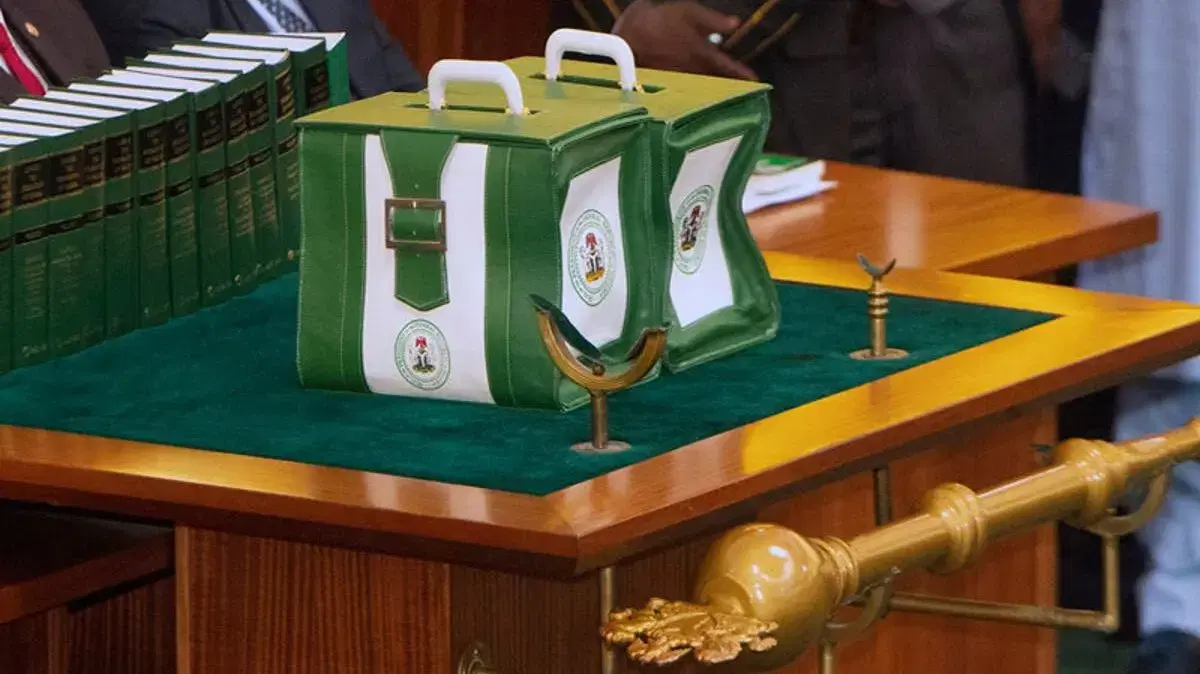
Budgets are never just spreadsheets. They are political and economic statements that quietly reveal what the government is most concerned about, what it is trying to protect and where it is willing to take risks. Nigeria's 2026 budget tells the story of a state that is still busy staying afloat. Insecurity, debt pressures and institutional tensions dominate thinking, even as policymakers make cautious efforts to adjust.
What immediately stands out is how concentrated the spending is. Agencies dealing with defence, works, finance, budget and economic planning, education, health and security take major part. The trend here is clear: stabilize first, transform later. The Ministry of Finance alone contributes ₦16.78 trillion, which is more than the allocation of ministries directly involved in production and development. This reflects the increasing burden of debt servicing, transfers and financial administration. In contrast, housing, power, agriculture, solid minerals and the digital economy receive far more modest funding. The message is subtle but solid. This is not a development manifesto. It is a risk-management budget designed to keep the state functioning during a difficult transition.

ALSO READ: Senate probing existence of NBET after failure to release N858bn budget
Security and high cost of holding the line
Security expenditure is once again at the center of discretionary expenditure. Defense gets ₦3.15 trillion, Police Affairs gets ₦1.33 trillion, the Office of the National Security Adviser gets ₦664 billion, and Interior gets ₦696 billion, with the respective institutions bringing the total amount even higher. This reflects a bitter reality. Insecurity remains the most compelling constraint on Nigeria's growth, investment and fiscal efficiency. Without basic stability, roads deteriorate faster than they can be built, farms go underutilized and private capital remains cautious. But the economic compromise is uncomfortable. Every naira poured into security is a naira not spent on housing, technology or industrial policy. For investors, this signals that security risk premiums will not disappear in 2026. For families, this means that the subsistence pressures associated with disrupted supply chains will only gradually ease. For policymakers, the dilemma is grave. Security spending may stabilize the present, but it does not automatically create the future. Without clear efficiency gains and accountability, Nigeria risks spending more each year just to remain stagnant.

Fiscal core and weight of state
The real center of gravity in the 2026 budget lies in two institutions: the Ministry of Finance at ₦16.78 trillion and the Ministry of Budget and Economic Planning at ₦9.10 trillion. Together, they absorb an inordinate share of the total allocation. This is what a balance-sheet-driven situation looks like. Debt service, statutory transfers and cash-flow management now shape spending choices more than growth ambitions. For investors, this is a sign of greater fiscal realism, but also tighter limits. Large capital projects will remain constrained by debt obligations. For MDAs going forward, execution risk remains high, as the actual release depends more on the fiscal position than what is written in the budget. For families, this structure crystallizes a familiar frustration: Budgets get bigger, but everyday services don't improve at the same pace. Most spending is about staying solvent, not expanding what the state provides. Unless revenues grow meaningfully, fiscal pressures will continue to impact interest rates, credit availability and overall economic conditions.

Social spending: big numbers, modest results
Education at Rs 2.40 trillion and health and social welfare at Rs 2.15 trillion are among the largest social allocations. On paper, these are big numbers, and politically they should be. Nigeria's demography leaves little choice. But once population growth, wage bills, infrastructure backlogs and inefficiencies are taken into account, their impact diminishes. These allocations look more like maintenance than changes. They keep the system running but do not fundamentally improve outcomes. Youth development, women's affairs, and humanitarian and poverty alleviation programs reinforce this pattern. They act as a buffer against economic pain rather than an engine of job creation. For families, this means that social support will continue to feel fragmented and inadequate. For businesses, this suggests that skills shortages and productivity gaps will persist. For policymakers, the inconvenient truth is that more spending without deep reform risks producing the same results year after year.

Infrastructure, power, and the limits of development ambitions
Infrastructure-related allocations reveal the limitations of promoting Nigeria's development. Works receives ₦3.49 trillion and Power receives ₦1.11 trillion, which seems adequate until they are measured on the scale of the infrastructure deficit. Housing and urban development gets just ₦106 billion, transportation ₦432 billion, aviation ₦88 billion, and maritime and blue economy ₦149 billion. These figures point to gradual progress, not acceleration. Electricity, the backbone of productivity, is underfunded relative to what is actually needed for grid expansion and modernization. Housing allocations are too small to meaningfully address affordability or urban overcrowding. For investors, the signal is clear: infrastructure constraints remain, and private capital, concessions and public-private partnerships remain essential. For manufacturers and small businesses, energy and logistics costs will remain high. Public expenditure alone will not achieve large-scale development.

Also read: Nigeria plans asset sale to plug N25trn budget deficit
what the numbers really say
Overall, the allocations present a consistent picture. The largest shares go to fiscal management, security and core state functions. Development-oriented and future-oriented areas come second. This is not accidental. This shows that the government is still managing risks rather than chasing lift-off.

Conclusion: Stability first, development later
Nigeria's 2026 budget is seen as a holding-pattern budget. It prioritizes security, fiscal survival and institutional continuity over bold growth bets. The challenge for policymakers is to transform sustainability into momentum by improving efficiency and attracting large-scale private investment. The signals for investors are mixed. Macroeconomic discipline is strengthening, but structural constraints remain. For businesses, cost pressures from energy, logistics and finance will continue to demand flexibility and innovation. For families, relief will be gradual and uneven. In the end, the Budget gives a clear answer to a question. Nigeria is still focused on risk management. How this moves from risk management to sustainable development is a difficult question that remains unresolved.


