
Public scrutiny of government actions is essential for democratic accountability. Investigative journalism, when balanced with context and evidence, plays a vital role in improving governance and service delivery. However, recurring narratives that divorce the challenges from historical context, ongoing reforms, and measurable progress risk presenting an incomplete picture to the public.
Recent media reports on primary health care (PHC) facilities in Ogun State have again painted a picture of stagnation and neglect, often implying that existing deficiencies are recent and have not been noticed. Such portrayals neither reflect the complexity of the challenges nor acknowledge the scale of reforms already underway.
The reality is more subtle.
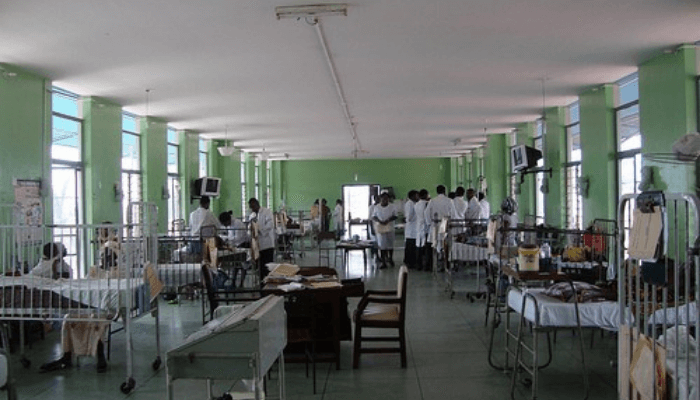
When Governor Prince Dapo Abiodun, CON, assumed office in 2019, the primary healthcare system of Ogun State was already in a critically weak state. Many PHCs, especially in rural, border and hard-to-reach communities, had been experiencing years – sometimes decades – of infrastructure degradation. Electricity supplies were unreliable or absent, water sources were inadequate, employee housing was either inadequate or non-existent, equipment was obsolete, and community confidence in the system was eroded. In many places, health workers improvised to keep essential services running.
These conditions were inherited. They were not created by the current administration, and they cannot realistically be reversed overnight. Healthcare systems, especially at the primary level, deteriorate over the long term – and rebuilding them requires sustained, phased and systemic interventions.
Upon assuming office, Governor Abiodun conducted a statewide assessment of health facilities, involving frontline workers and directly observing infrastructure deficiencies, manpower shortages and governance weaknesses.
It informed a well-thought-out reform strategy based on leadership, system strengthening and partnerships. Recognizing that effective recovery went beyond funding, the Administration formed a technically competent leadership team within the health sector with a clear mandate to drive recovery, institutional reform, and improve service delivery. This governance architecture has since shaped policy coherence, inter-agency coordination and effective engagement with development partners.
Instead of pursuing ad-hoc or cosmetic interventions, the administration adopted a system-strengthening approach to PHC revitalization. Across the state, facilities that once relied on torchlight during deliveries now benefit from 24-hour solar power solutions. Purpose built residential quarters have improved retention of staff in rural postings. Many PHCs are secured with perimeter fencing, advanced infrastructure and modern equipment to support essential services including maternal, newborn and child health, routine immunization and disease surveillance.
Ogun State Government has renovated over 60 PHCs across the state. Furthermore, through strategic partnerships, particularly through the World Bank supported Impact Project and the Basic Healthcare Provision Fund, Ogun State has revitalized 80 PHCs in all 20 local government areas as the first phase of a comprehensive reform programme.
The project was designed to create conducive, standardized and well-equipped health care environments capable of providing quality services, with an emphasis on reducing under-five mortality and improving health outcomes for women and children. Rigorous contractor selection processes and a multi-level monitoring framework – involving World Bank representatives, state teams, and independent monitors – have been established to ensure accountability, quality assurance and value for money.
In parallel, the State Government, in partnership with IMPACT, has embarked on the recruitment of over 400 community health workers across 20 local government areas to address workforce shortage, especially in disadvantaged communities. This recruitment drive complements the ongoing efforts to strengthen human capital through continuous training, supportive supervision and deployment of senior community health workers to increase service coverage and quality. Workforce development is central to the sustainability of PHC reforms, as infrastructure alone cannot provide quality health care without skilled, motivated and adequately supported personnel.
It is also important to contextualize specific features highlighted in recent reports. For example, the Ikereku Health Post in Abeokuta North is a small, colonial-era facility that became largely defunct over time due to significant rural-urban migration and population decline.
Before the current administration, the post was discontinued. It has since reopened as a basic day facility, not designated for maternity services, reflecting both staff shortages and limited service demand. Only a few houses remain in the immediate catchment area and service use.
To optimize scarce human resources, outreach services are provided to nearby communities with high population density, while residents are served by three functional health centers in close proximity. Plans are underway to further rationalize services following the completion of a new health center under construction in Ibarra Orile, with staff redeployed to strengthen service delivery where needs are greatest.
This reflects responsible resource management rather than neglect.
External validation of Ogun State's reform trajectory further underlines the reality of progress.
The World Bank, during the recent visit of its Vice President on 28 January 2026, commended the State's investment in primary health care, recognizing the contribution of strong PHC to improving population health outcomes and system resilience.
Additionally, Ogun State emerged runner-up in the Nigeria Governors Forum Primary Health Care Leadership Challenge for the second consecutive year, securing a $400,000 prize in recognition of sustained reforms, accountability, innovation and political commitment to strengthen PHC. Such validations are data-based and benchmarked against governance and performance indicators, rather than provided on the basis of rhetoric.
Beyond infrastructure and workforce expansion, the administration has prioritized continued professional development and capacity building for health workers. To ensure that PHC personnel are equipped with current competencies, regular training programs in maternal and child health, immunization, disease surveillance, data management and patient-centered care are being implemented. Investment in digital tools, including provision of laptops for data collection, further strengthens evidence-based planning, monitoring and service improvement under IMPACT projects.
The collective goal of these efforts is to create a responsive, skilled and flexible PHC workforce capable of meeting emerging community health needs.
None of this indicates that all PHCs in Ogun State have reached optimal standards. Some facilities have yet to benefit from the current phases of intervention, while demographic pressures, resource constraints and geographical challenges remain.
However, governance is measured not by the absence of challenges but by clarity of direction, consistency of effort and credibility of intent. More PHCs have already been earmarked for upgradation in subsequent budget cycles, reinforcing the state's phased and sustainable reform strategy.
Healthcare reporting should highlight both gaps and progress. Portraying Ogun State's PHC system as stagnant since 2019 ignores the deliberate, incremental and often uneconomical work of rebuilding a fragile system. The more accurate narrative is one of transition: from long-term neglect to structured recovery.
Work is underway to lay a new foundation for primary health care in Ogun State – based on infrastructure renewal, energy security, workforce strengthening, institutional leadership and strategic partnerships.
While the journey toward universal, high-quality primary health care continues, the foundation being laid today provides a reliable platform for sustainable and equitable improvement in the years to come.
Goke Gbadamosi is a Public Relations and Information Officer in the Ogun State Ministry of Information and Strategy, with experience in the Environment and Health Ministries.

