
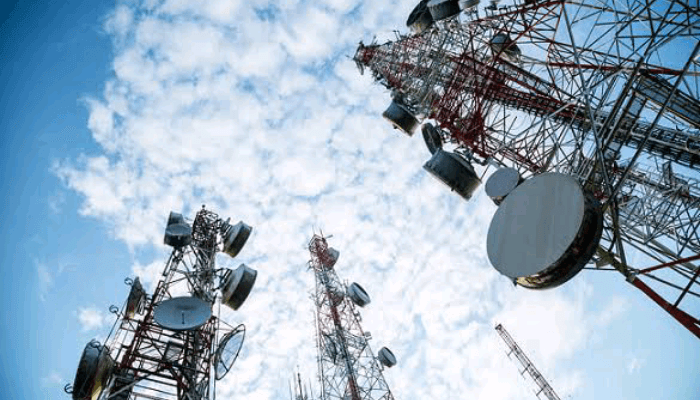
Nigeria's major telecommunications operators have rejected claims by some National Assembly members that the country lacks the infrastructure for real-time electronic transmission of election results.
He stressed that the objections are based on half-truths rather than existing industry data.
Operators including MTN Nigeria, Airtel Nigeria, Globacom and T2 Mobile argued that Nigeria has sufficient network coverage to support the electronic transmission of polling unit results at the Independent National Electoral Commission Results Viewing Portal (IREV) and combination centers ahead of the 2027 general elections.
Telecom companies under the umbrella of the Association of Licensed Telecom Operators of Nigeria (ALTON) challenged the Senate to rely on verified data from the industry regulator, which is the Nigerian Communications Commission (NCC), instead of making sweeping claims about inadequate infrastructure.
ALTON Chairman Gbenga Adebayo told journalists that any assessment of telecommunications coverage not obtained from the NCC should not be considered reliable.
“As we speak today, more than 70 percent of the country is covered by 3G and 4G networks, with 5G reaching about 11 percent coverage, while the remaining areas are on 2G,” Adebayo said.
“In reality, too, 2G is robust enough to transmit results electronically. We cannot accept a complete ban on electronic transmission based on half-truths about our infrastructure and investments.”
He acknowledged that security challenges in some parts of the country, particularly in almost two states affected by insurgency, have limited the ability of operators to maintain facilities, but stressed that such issues should be addressed through stakeholder collaboration rather than justifying nationwide rejection of electronic transmission.
“That's what all the stakeholders can do if they can sit together and decide how to cover it,” he said. “It is not enough to say the country is not prepared.”
Elton's position coincides with that of the Independent National Electoral Commission (INEC), which had earlier dismissed similar concerns ahead of the 2023 elections.
INEC said that where network challenges existed, the results uploaded to IREV would be automatically transmitted as soon as the device entered the coverage area.
The renewed debate comes as preparations for the 2027 elections gather pace, with electronic broadcasts widely seen by civil society groups and voters as key to improving transparency and public trust in the electoral process.
Increasingly, people argue that efforts to restrict e-transmission risk undermining democratic gains, leading to concerns among Nigerians that some lawmakers are seeking to weaken rather than strengthen electoral accountability.

