
The projects call on built environment professionals to promote climate resilience, support evidence-based regulations, and invest in local solutions.
Dorcas Ayeni, Professor of Architecture at the Federal University of Technology, Akure, called for the theme during the 2026 (SET) FUTA Annual Lecture and Postgraduate Conference on Friday; “Climate Resilient Communities: The Role of Built Environment Professionals in the Global South” held at TY Francis Auditorium, FUTA.
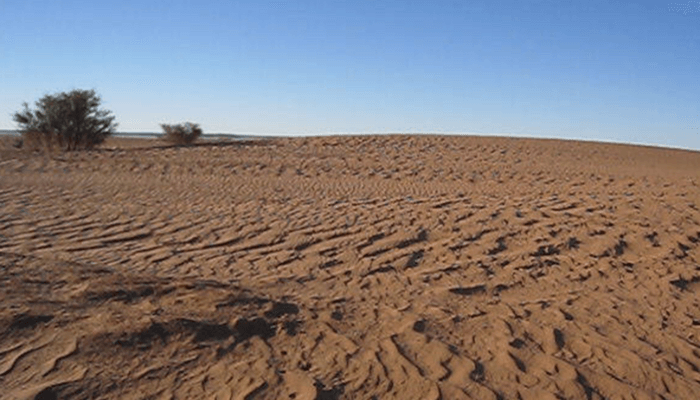
Ayeni said; “The Global South stands at a critical crossroads, facing many challenges. Our cities are expanding at an unprecedented rate, with urban populations projected to double by 2050. Yet, we are confronting this growth against a backdrop of increasingly severe climate impacts in many countries in Africa, particularly Nigeria, including devastating floods in Lagos and our cities, prolonged drought affecting food security, rising temperatures that make our cities nearly uninhabitable, and coastal Erosion threatens many communities.
“The figures are sobering; climate change could push an additional 100 million people in the global South into extreme poverty by 2030, and our infrastructure deficit is estimated to be several billion dollars annually.
“But, I stand before you today not in despair, but with determination, because we, the built environment professionals, hold the key to transformative solutions.
“What is our collective responsibility as built environment professionals? As architects, urban planners, quality surveyors, property managers, industrial designers, textile designers, surveyors and geoinformaticians, and builders, we shape the physical spaces where life unfolds. Every building we design and construct, every city we plan, and every role we play in the built environment either maintains vulnerability or builds resilience. Our input shapes tomorrow's climate. There must be a fortress against change.”
Abimbola Tofowomo, a town planner and Director of the Master Plan Department of the Ondo State Ministry of Physical Planning and Urban Development, who was awarded the 2026 School of Environmental Technology (SET) Conference Sponsors (Special Recognition Award) of the Federal University of Technology, Akure, tasked his fellow professionals to be honest, work very hard and support upcoming planners to nurture them in their basic The matter can be taken forward.
He said, “I can say that the award given to me today is a special recognition in terms of my contribution to the efforts and work of the Postgraduate School at FUTA and I feel very excited.”
Vice Chancellor (FUTA) Adenike Oladiji, in his opening address, said that the theme of this year’s conference, “Climate Resilient Communities: The Role of Built Environment Professionals in the Global South”, was timely and deeply relevant.
Oladiji, who spoke at the event through the Vice-Chancellor (Development), Sunday Oluyamo, said that across the Global South, the impacts of climate change, ranging from extreme weather events and environmental degradation to housing insecurity and infrastructure stress, are no longer distant projections but stark realities.
According to him, “These challenges demand solutions that are context-specific, innovative, inclusive and sustainable. The built environment sits at the center of this conversation. We shape the spaces in which people live, work and interact. It is therefore imperative that built environment professionals take up the responsibility of designing and managing communities that can withstand, adapt and recover from climate-induced shocks.”

