

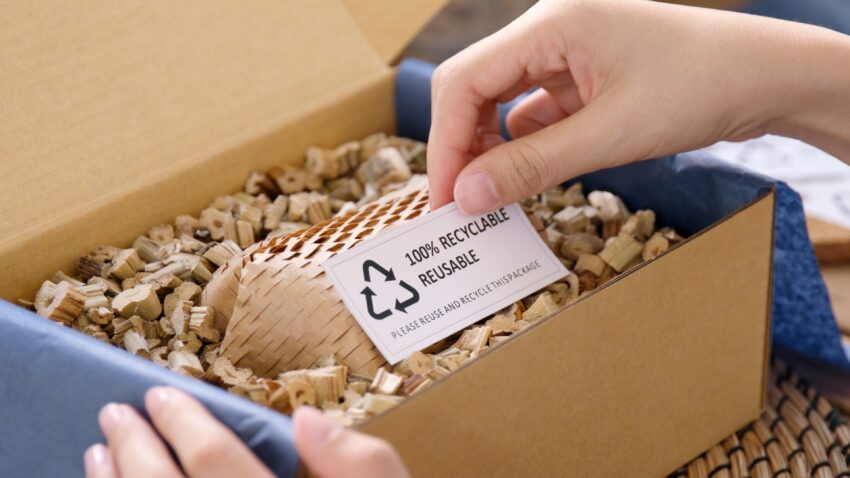
As a sustainable business owner, I've always believed that every choice we make, from the suppliers we trust to the packaging our products carry, reflects our values.
But the conversation around packaging sustainability is rapidly evolving, and 2025 is shaping up to be a defining year for anyone in this area.
The EU Deforestation Regulation (EUDR) will soon change the way every business that uses wood or paper packaging operates. Whether you export to the EU or source materials that pass through European supply chains, you will soon have to prove where your wood came from, right down to the patch of land where the trees were grown.
On paper, this is an extremely positive step. It is designed to prevent deforestation and ensure that every pallet, crate, box, or sheet of paperboard comes from responsibly managed forests. But for small and medium size
For sustainable businesses like mine, this new law brings both recognition and significant challenges.
For larger corporations, compliance may simply mean hiring dedicated teams or investing in advanced traceability systems. For small businesses, the impact is more personal and more complex.
Many packaging suppliers, particularly those sourcing globally, are not yet prepared to provide the level of GPS traceability that EUDR demands. As buyers, we are several steps away from the original forest.
This makes collecting original data extremely difficult. The reality is that small businesses do not have the same resources as large corporations.
Collecting, verifying and documenting the provenance of each piece of packaging takes time, money and capacity that many SMEs do not have. Even for companies like mine, which have been based on sustainability from day one, the administrative burden is significant. There is also a clear imbalance of power.
When small businesses seek detailed traceability information from larger suppliers, we often encounter delays and lack of data, yet we are still held to the same legal standards as larger companies.
The scale of work involved in compliance is huge. Every box, tag and piece of paper now requires a documented chain of custody, which means the majority of our products go to the packaging company. For a small business, this is not just a quick compliance exercise, it is an ongoing operational project that touches almost every department.
Teams that once focused on creative design, marketing or customer experience now find themselves deep in due diligence, spreadsheets and certification systems. This is exhausting work, but necessary if we want to maintain the integrity of our sustainability commitments and continue to trade responsibly in the years to come.
At Tiny Box Company, we have been reviewing for months what EUDR would mean for us. We are working closely with our suppliers to ensure that the data we need is being obtained at the source, and we are doing our best to obtain information that is verifiable.
It's a huge endeavor, and sometimes it feels like we're trying to rebuild the foundation of something we already thought was strong. But we also know that laying this groundwork now will set us up for a stronger, more transparent future.
Despite these challenges, the EUDR represents a powerful opportunity for businesses like ours. This is a chance to demonstrate what we have been advocating for years: transparency and traceability are not just ideals, but achievable and necessary goals.
For those who are already committed to sustainability, this regulation provides a platform to prove it. Having verifiable data about our packaging not only meets compliance requirements, but it builds trust with our customers, who care not only about what a product is made of, but where it came from.
EUDR is also encouraging more meaningful interactions between businesses and suppliers. To meet these needs, we will need closer collaboration and greater openness, which could ultimately strengthen relationships and lead to more resilient supply chains. Above
Over time, this transparency could help change the market, rewarding those who act responsibly and incentivizing lagging suppliers to step up.
Another positive outcome is that it's forcing us all to rethink how much packaging we really need. When every gram of wood or paper must be traced to its original source, suddenly using less makes both environmental and financial sense for many businesses.
At Tiny Box Company, we have already begun to rethink our designs and processes to reduce complexity, choosing materials that are easy to trace and verify. Improving what we are doing and the way we work is an ongoing process.
It's easy to see why some small businesses might feel overwhelmed – the paperwork, the data management, the coordination between global suppliers. But once these systems are in place, the benefits will start to appear. We will have cleaner data, fewer vulnerabilities in our supply chains and more confidence in the materials we use.
Over time, the hours invested now can translate into a strong story for clients who value lower risk, easier audits and transparency. EUDR can seem daunting, especially for small sustainable businesses that are already trying to do the right thing.
But it's important to see this as an opportunity to align values with verifiable action. It's a reminder that sustainability is something that can be measured, proven, and improved.
Knowing where our packaging comes from isn't just about compliance. It's about honesty and accountability, about running a business that really understands what it's selling and where its products come from.

Rachel Watkin
Eco entrepreneur Rachel Watkin is the founder of the Tiny Box company which has an annual turnover of £10,000,000. www.tinyboxcompany.com and Know The Origin www.knowtheorigin.com allows consumers to choose sustainable options on home goods, activewear and gifts based on their personal values. Rachel is a renowned expert on sustainability and is the most successful woman to appear on Dragon's Den to date. Rachel runs a large team in Sussex and is a frequent speaker at business events. Rachel runs a free business clinic once a week for people who want to get back into the workforce or have a new business idea.