
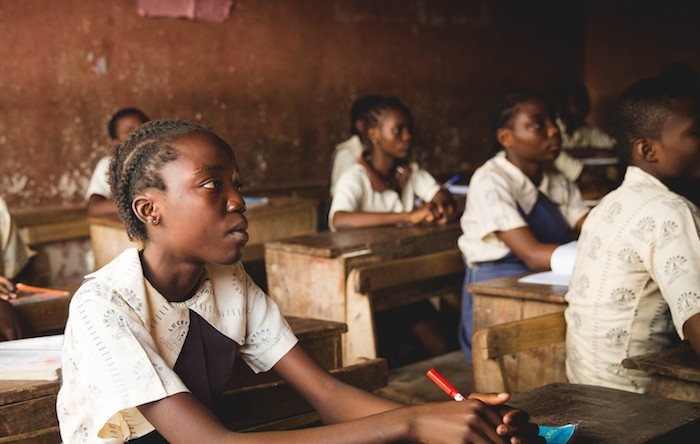
Among the various sectors of the Nigerian economy, education is the most important, being a major incubator for human capital.
Anambra, Enugu, Kano, Jigawa, Abia and Taraba states have topped education spending this year as they provide significant resources for learning, aligning with the United Nations Educational, Scientific and Cultural Organization (UNESCO) benchmark for public spending.
UNESCO recommends that governments allocate 15 percent to 20 percent of their public expenditure to education. Developing countries are advised to aim for four to six percent of gross domestic product (GDP), although some advocates insist on a higher target such as 26 percent to meet educational needs.
Anambra State leads the way with an allocation of N757 billion (46.9 per cent) for education. Enugu ranked second with an allocation of N522 billion (32.3 per cent), while Kano State has earmarked N405.3 billion (30 per cent) out of its N1.368 trillion for 2026.
Similarly, Abia State allocated N203.2 billion (20 percent), Jigawa earmarked N234.48 billion (26 percent of its 2026 budget), while Taraba State dedicated N131.6 billion (20 percent) to education.
While Kaduna allocated N985.9 billion (25 percent) for education, Oyo dedicated N155.21 billion (17.40 percent), while Bauchi earmarked N131.71 billion (15 percent).
Also read: How insurance can protect your child's education?
Also, Ondo earmarked N77.024 billion (15 percent) for education, while Sokoto budgeted N115.9 billion (15 percent).
Nevertheless, several states fell below the UNESCO recommended benchmark, such as Niger State, which allocated N107.9 billion (8.24 percent), and Gombe, which earmarked N49.482 billion (8.01 percent).
Adamawa earmarked N40 billion out of its total budget of N583 billion (6.86 per cent); Bayelsa budgeted N75.1 billion out of N1.01 trillion (7.43 per cent), while Delta dedicated N105.086 billion out of N1.72 trillion (6.11 per cent) to education.
Similarly, Zamfara allocated N65 billion, which is 7.55 per cent of its total budget, while Lagos earmarked N249.13 billion (5.87 per cent) out of its N4.237 trillion budget proposal.
Despite large budgetary allocations by many states, effective implementation is lagging.
A report by Budgit shows that Yobe State spent N53.83 billion on education in 2022, achieving 89.40 per cent performance rate and per capita expenditure of N4,293.
In 2023, the state allocated N20.47 billion to the sector, recording 84.81 per cent performance and per capita expenditure of N4,863. By 2024, education expenditure is expected to increase to N32.78 billion, with performance at 84.38 per cent.
Taraba State's education expenditure was N14.81 billion in 2022, reflecting a 55.99 per cent performance rate and a per capita expenditure of N4,058. In 2023, the allocation increased slightly to N15.49 billion, but the performance dropped to 36.95 per cent with per capita expenditure at N4,123. The trend worsened in 2024, as expenditure increased to N20.08 billion, while performance declined to 22.00 per cent despite per capita expenditure increasing to N5,192.
In Abia State, education expenditure in 2022 was N4.38 billion, representing 20.29 per cent performance and N999 per capita expenditure. The figure increased marginally to N4.88 billion in 2023, with performance improving by 28.30 per cent and per capita expenditure rising to N1,085. A sharp increase was recorded in 2024, when the state spent N71.5 billion on education, achieving 62.20 per cent performance and per capita expenditure of N15,458.
Also read: FG takes steps to cut education costs, introduces reusable textbook policy
Anambra State recorded N5.98 billion in education expenditure in 2022, which is 54.57 per cent performance rate and per capita expenditure of N914. In 2023, expenditure increased to N30.88 billion with performance increasing by 56.49 per cent and per capita expenditure at N4,592. By 2024, expenditure is expected to decline to N15.85 billion, although performance has improved to 61.90 per cent, with per capita expenditure reduced to N2,292.
Lagos State spent N134.31 billion on education in 2022, achieving 72.84 per cent performance rate and per capita expenditure of N8,832. In 2023, expenditure increased slightly to N135.15 billion, with performance improving to 85.66 per cent and per capita expenditure to N8,607. In 2024, the allocation dropped to N127.49 billion, while performance stood at 79.99 per cent and per capita expenditure dropped to N7,864.
Ogun State allocated N41.21 billion for education in 2022, recording 73.30 per cent performance rate and per capita expenditure of N6,479. In 2023, expenditure increased to N46.57 billion, although performance dropped to 66.93 per cent with per capita expenditure at N7,085. By 2024, education expenditure increased to N58.25 billion, but performance fell to 56.90 per cent, even as per capita expenditure increased to N8,574.
Over the past few years, the education sector has continued to be underfunded, with underpaid teachers and inadequate teaching facilities, weakening efforts to expand the system and ensure equitable access to quality learning outcomes.
Notably, Nigeria's national education budget allocation has failed to exceed 10 percent for more than eight consecutive years.
Education remains the cornerstone of sustainable national development and is central to the advancement of the socio-economic system of any country.
The 59th President of the Institute of Chartered Accountants of Nigeria (ICAN), Innocent Okwuosa, has called for the improvement of education standards as a strategy to stem brain drain.
According to him, adequate financing of education will raise standards of learning, attract international students to Nigerian institutions and promote foreign exchange inflows.
“Proper financing of education will improve the level of learning and attract students from other countries to study in Nigeria,” he said.
“There was a time when students from other countries came to study in Nigeria,” he recalled.
Similarly, Kingsley Moghalu, President of the Institute for Governance and Economic Transformation, stressed that inadequate financing remains a major factor undermining the quality of education in the country and limiting capacity-building.
He said the sector urgently needs increased funding supported by transparent and objective funding guidelines that are free from political interference.
Moghalu also stressed the importance of diversifying education funding sources beyond government allocations by encouraging greater private sector participation.
