
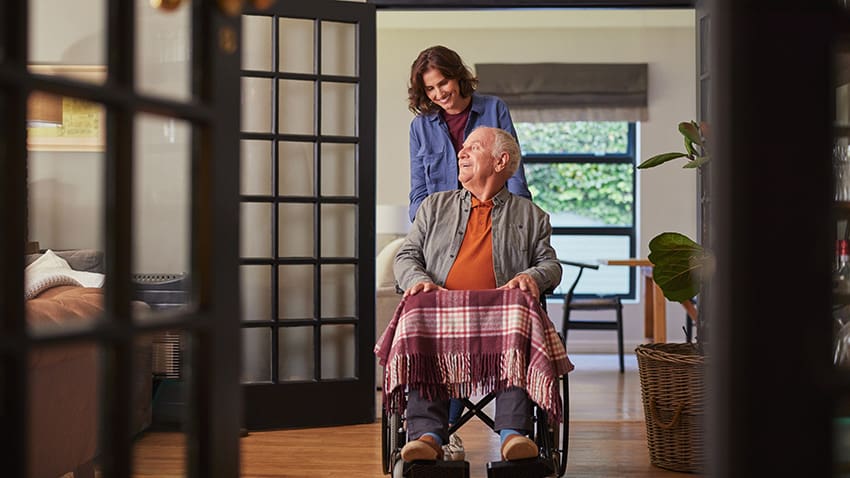
ComforCare Mercer is a family-owned home care business built on life experience. The Mercer County, New Jersey location has been owned and operated by Mike Durkin, his wife and son for 15 years.
Durkin did not enter the home care industry through formal training or corporate planning. He entered it out of compulsion. While trying to find reliable help for elderly family members, she saw firsthand how confusing and frustrating the process can be.
“We were just trying to help our family,” he says, “and it shouldn't have been this hard.”
That experience shaped his career and subsequent business. From the beginning, Durkin focused on non-medical home care that allows older people to live at home with dignity. Services include 24/7 care, live-in care and overnight care.
His leadership style is practical and straightforward. He believes in answering the phone, being accessible, and solving problems as they arise. ComforCare Mercer works closely with families, hospitals, rehabilitation centers, assisted living communities and elder care attorneys.
Durkin is known for her focus on caregiver matching. He believes that care only works when the right person is placed with the right client.
“Skills matter, but personality matters equally,” he says.
Over time, ComforCare Mercer has built a reputation based on sustainability rather than growth goals. Durkin's career reflects an enduring commitment to service, patience and faith. Their work focuses on one idea: good care starts with listening.
Interview: ComforCare Mercer on Building Trust in Home Care
Q: How did your career in home care begin?
It started with our own family. We were trying to find help for elderly relatives and were facing the same problems again and again. The call was not answered. Unclear expectations. It felt harder than it should have been.
That experience stayed with me. I realized that families should not have to struggle like this when they are already under stress.
Q: What inspired you to open ComforCare Mercer?
I wanted to fix the problems we experienced. Not in theory, but in practice. We opened the Mercer County location as a family business. My wife, my son and I are all involved in this.
From day one, we focused on being present. If someone calls, we answer. If something goes wrong we deal with it straight away.
Q: What were the initial challenges?
One of the hardest parts was matching caregivers with clients. Home care is personal. You are entering someone's house. If the fit isn't right, it's immediately visible.
We've had situations where customers were unhappy before. Not because the caregiver was bad, but because it wasn't the right match.
Question: How did you solve that problem?
We built a stronger caregiver base and spent more time understanding both parties. Personality, routine, communication style. Those things matter.
I remember one customer who was dissatisfied right from the start. We listened, made changes, and found a better option. That relationship was to last for years.
Q: How would you describe your leadership approach?
I don't believe in running this business remotely. Leadership in home care means being available.
“If something happens at night, you don't want voicemail,” I always say. “You want a person.”
This applies to families and carers. People need to know someone is there.
Q: How has the home care industry changed over the years?
Demand has increased. Families are more spread out. There is also more confusion about what quality care will look like.
Observation is not always obvious. This may pose a danger to elderly people. I have spoken publicly about the need for better standards because I see the impact of this every day.
Q: What remains your focus after 15 years?
People. Every situation is different. Every family has a story.
In this work you learn patience. There are no quick solutions. You earn trust by showing up again and again.
Q: What defines success for you now?
People who know feel supported. Knowing that they can stay in their homes longer. Knowing that they can reach anyone who listens.
It's not about business growth charts. It's about doing the job right.