
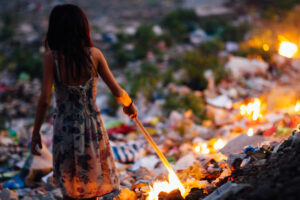

EMany times I pass by heaps of garbage on our streets, what I smell is not just rot. I smell a system failure. And we keep debating on waste management as if we still only have the luxury of choosing elegant solutions. It's like being in a burning house and wasting time debating over the best brand of fire extinguisher.
For years, the debate on waste-to-energy (WTE) has been stalled by a category error. We debate about it as if it were either an environmental or an energy issue. We want energy, but we avoid burning because burning garbage releases carbon. Meanwhile, we create mountains of trash on the groundfiLLS.
Now is the time to be honest about what WTE really means to our country. It is not about generating electricity. Electricity is a by-product. WTE Waste Reduction, a sanitation machine, is a way to stop polluting and clogging our lands, waterways and beaches.
Admittedly, the global conversation on incineration is changing. As the world decarbonizes, facilities that burn plastics, which are fossil-based, are becoming unpopular. Critics have also warned against cities building WTE plants, which must be fed garbage for decades to remain profitable, tacitly discouraging recycling.
These are legitimate concerns. But we should not confuse the “First World” dilemma of improving or adapting already functioning waste disposal systems with the “Third World” crisis of basic sanitation. Countries that consume have gone through a long process to achieve circularity. We should expect to do the same.
When we invoke the Clean Air Act to stop modern trash incineration, we deceive ourselves into thinking we are choosing clean air over dirty air. In reality we are just spreading pollution. We transfer it to the ground from a smokestack that can be cleaned and controlledfill, where damage is widespread and policing is poor.
We send garbage to open landfills where it decomposes and produces methane, which increases global warming. landfiLLS also produces leachate that seeps into our groundwater. Plastic fragments and microplastics in landfiLLS also end up in our waterways. We congratulate ourselves for rejecting incineration, cleaning our air, while we are poisoning our land and our water.
If we want to talk about sustainability, we have to stop treating the landfiLLS as an ethically superior alternative to garbage burning. They are not. a landfill is not a quiet hill of garbage. It is a living mass that can move, fail and bury. Look at cebu. litter slide on landfiDozens of people took their lives in January.
Last year, smoke from a landfill fire in Rodriguez, Rizal spread over Quezon City, prompting health advisories and evacuations. there was heat, methane and a fiIt was difficult to extinguish it because it was burning from within the heap. In 2024, a dumpsite fiEvacuation also began in Talisay city.
These were not unique accidents. These were the inevitable consequences of a disposal strategy that relied on dumping tons of garbage and praying for the cooperation of gravity, weather, and governance. They rarely do this. Of those three factors, only one is controllable, and even just barely.
So when we talk about WTE, let's at least describe the real tradeoffs. The choice is not burning versus clean air. The choice is managed combustion versus unmanaged decay. This is regulated emissions versus leachate. Even better, it's smoke monitoring versus land and groundwater pollution monitoring.
I'm not suggesting we burn everything. But I am suggesting that we look at our litter problem, recognize the trade-offs, and decide on the best approach to solid waste management without necessarily choosing clean air over green space and safe water.
Ultimately, garbage is a local problem. When Metro Manila needs to dump its garbage outside its own area, it transfers the problem to someone else's backyard. The same applies to Baguio City, Boracay and most other places that generate tons of garbage and probably have no place to put it. The garbage is sent elsewhere.
By pursuing WTE, my primary goal is not electricity, but to prevent waste from encroaching our space and polluting our land and water. We produce a lot of waste, and we must redefine WTE as volume reduction, a way to create space, electricity as a byproduct, and a means to offset operating costs.
Incineration and combustion-based systems can reduce the amount of solid waste materialsfieasily. Admittedly, burning also produces ash that requires space, safe management, and disposal. Yet, there is a world of difference between managing mere ashes and managing mountains of rotting mixed waste.
Handling incineration safely also requires investment in filtration and pollution control. This requires enforcement that won't bend. We also need to acknowledge that our laws were written for a different technological moment. The Clean Air Act bans burning, but what this ban legally covers remains a matter of debate.
Unfortunately, sanctions have also become a convenient excuse for doing nothing. The Clean Air Act is 25 years old. Modern thermal treatment is not the same as burning in the backyard. And modern WTs bear no resemblance to the primitive incinerators that shaped public fear two decades ago.
Proponents now point to cleaner conversion technologies and advanced gas cleaning systems. But the real challenge is for the WTE facility to prove to the public that it can consistently and consistently meet strict emissions standards when it operates here, and not just on inspection day.
We could argue that WTE is unnecessary with “zero waste”. But in the case of the Philippines, “zero waste” is a myth. Even if we ban single-use plastics tomorrow, and even if we enforce it with the utmost rigor, we will still be faced with tons of residual waste every day across the country.
We generate waste every day without fail. Diaper. Contaminated packaging. medical waste. mud. Materials that no recycler wants. They will not disappear just because we call for zero waste. Garbage will remain present. In the last 20 years, we tried solid waste management while we kept thermal treatment away. What do we have to show for this?
By refusing to build high-standard thermal treatment facilities because they are not circular enough, we choose landfill by default. We choose methane by default. We choose Leachate by default. and stubbornly fiIn the search for a perfect disposal system, we are losing the battle against waste. The way we are losing the battle of road maintenance because of potholes.
The problem is not just technical. It is institutional. Few LGUs have the financial capacity to finance a modern WTE facility. Technical expertise is rare. Inspection may be weak. At this point, there is little incentive to pursue WTE because many people make money from hauling and dumping garbage.
A thermal treatment facility could disrupt this ecosystem. It centralizes settlement. This requires a fee that reflects the cost of processing, not just the cost of dumping. It also demands stable contracts, reliable regulation and competent monitoring as well as massive upfront capital.
But even when we can aggressively reduce single-use plastics, implement extended producer responsibility, and build collection and sorting systems that make recycling real, we will still need high-standard thermal treatment for residual waste as an alternative to landfill.fiLLS. Medical waste, for one, must be incinerated.
Let's look at 20 years of transition. Within that period, we can allow and support thermal treatment for residual waste that cannot in practice be recycled or composted. Mandate the highest emissions standards and require continuous emissions monitoring. Emissions data should be public and real-time.
If the smoke stack emits dangerous levels of pollutants, the plant automatically shuts down. No human intervention. No conscience. no explanation. No room for bribe. The plant does not reopen until its operator, whether government or private, fiSolve the problem to everyone's satisfaction.
But for that to happen, legislators must review the Clean Air Act, the Clean Water Act and the Solid Waste Management Act. These laws are now more than 20 years old. We must take stock of how these laws and their implementing regulations have actually served us over the past two decades.
In particular, we should review the incineration ban to allow practical changes. The Clean Air Act is at the center of this debate. We must establish technological neutrality: if an incineration facility can prove that it meets stringent emissions standards, the method should not be explicitly banned.
Rejecting thermal treatment is not the same as protecting the environment. We push out clean air while being buried in garbage that takes up land and pollutes water. There will always be arguments for and against waste incineration. But now the time has come to take a decision. I believe it's time we shed light fiagain.
Marvin is the former managing editor of Tort businessworldand former chairman of the Philippine Press Council.
matort@yahoo.com