
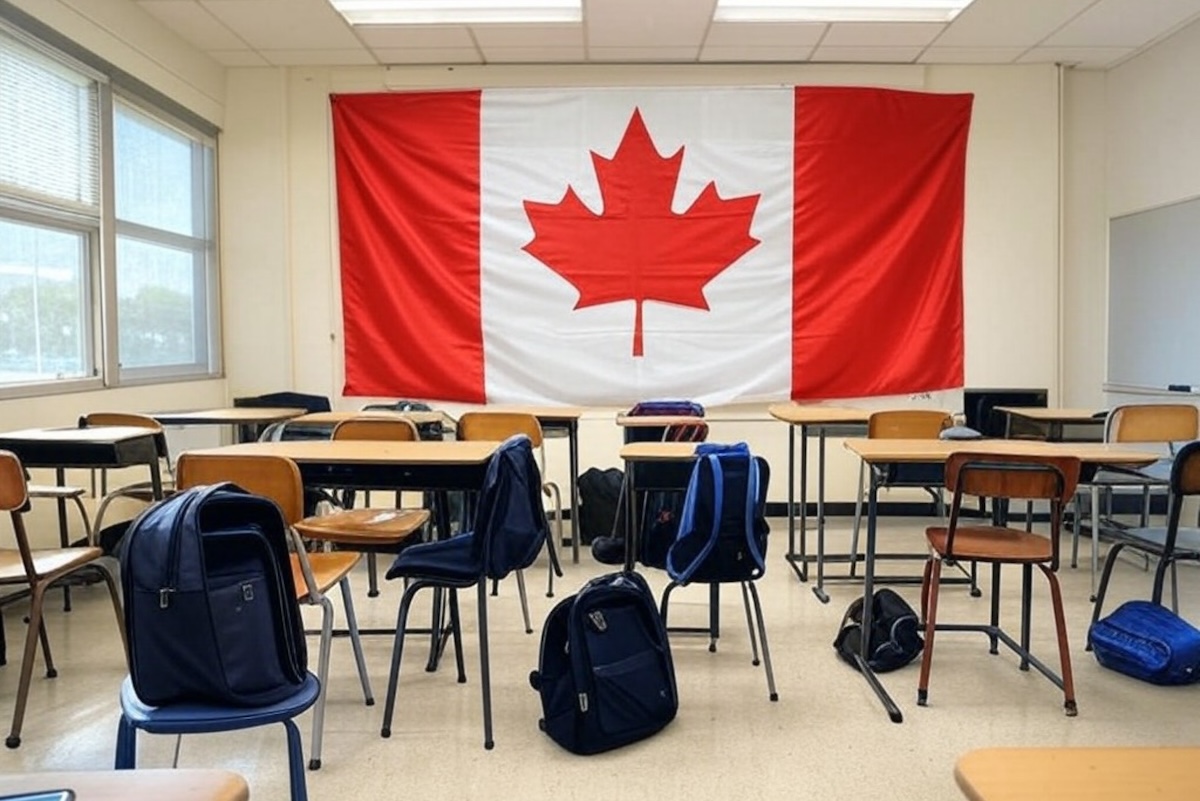
Canadian higher institutions are facing unprecedented disruption as new federal policies sharply cut international student enrollments, which will have a direct impact on Nigerian students, who will be the top four source countries for international students in Canada by 2023.
…Conestoga College, Ontario has seen a 62 per cent drop in enrollment
Conestoga College in Ontario, one of the country's largest institutions, has experienced a dramatic decline in foreign enrollments. Last spring, more than 8,500 international students registered, a 62 percent decline from the same period last year.
“Just over 8,500 international students are enrolled this semester, a steep decline from more than 22,600 last spring,” said Vicki Poirier, president of the support staff union. “We can see the difference in the number of students on site. I'm not surprised. About 180 jobs were cut earlier this year.”
Also read: Canada sees dramatic 97% drop in international student arrivals in 2 years
Poirier highlighted the broader consequences of staff cuts on student aid. “The college is moving backwards by cutting the areas where support is needed most: writing advisors, scheduling, student success advisors. These are roles that provide direct support to students. I do not think students will receive the same quality or quantity of services that were previously available”.
…Manitoba Institute of Trades and Technology (MIT), set to close
Similar pressures are emerging at the Manitoba Institute of Trades and Technology (MIT), which previously trained more than 4,500 students annually, which is set to close after a 61 percent decline in international enrollments.
Renee Cable, Manitoba's Minister of Advanced Education, placed responsibility on federal policy. She said, “When the federal government decided to unilaterally cut the number of international students, it was devastating. From day one, we have been telling the federal government that this policy change will have real-world impacts on real people.”
However, doubts persist. Education critic Wayne Iwasco questioned whether the transition could be managed effectively. “I doubt the minister will be able to get it done,” he said. Meanwhile, Chris Lorenc of the Manitoba Heavy Construction Association criticized the closure for contradicting government statements about the importance of training for the construction sector.
Immigration Minister Lena Métalz Diab recently confirmed that Canada's international student population is set to decline from one million in early 2024 to about 700,000 by November 2025. This reduction follows policy changes including national limits on international student enrolment, stricter rules on post-study work and higher study permit refusal rates.
Immigration, Refugees and Citizenship Canada (IRCC) data shows study permit holders fell from 673,970 in December 2023 to 476,330 in November 2025. People holding both study and work permits decreased from 320,830 to 244,900, an overall decline of 27.5 percent or 273,570 students. The arrival of new students between January and November 2025 was 60 percent less than the same period in 2024.
Also Read: PGWP moratorium brings certainty to international students in Canada
Why does it matter?
International students contribute significantly to the revenue of Canadian institutions and fill labor gaps in service sectors such as retail, hospitality and care services. Nigerian students, historically one of the top groups studying in Canada, now face higher visa rejection risks, fewer post-study work opportunities and greater financial uncertainty. Families financing foreign education and Nigerian education consultants and recruitment agencies are also affected.
Nigerian students had over 53,000 active permit holders by the end of 2023. Study permits increased rapidly by 1,397 percent between 2017 and 2023 as federal restrictions tightened, including a 30 percent drop in permits by the end of 2024 and a decline in approval rates of about 30-33 percent in 2025.
Municipalities and policy makers may benefit from reduced pressure on housing and public services, while colleges that rely on tuition fees, local employers using student labour, and potential international students, including Nigerians, bear the cost.
Analysts will monitor whether colleges can stabilize operations amid declining foreign enrollments, how domestic recruiting strategies evolve, and whether Canada revises its outlook if skills shortages persist. For Nigerian students, the focus will be on alternative study destinations, adjusted admission strategies and future access to Canada as a study and work pathway.

