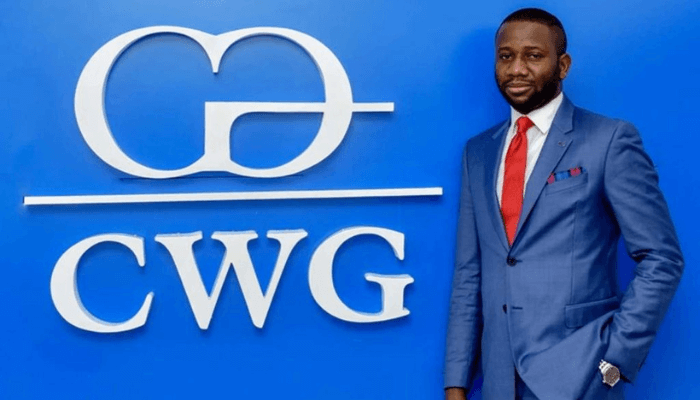
Adewale Adeyepo, Managing Director and Chief Executive Officer of CWG Plc.
CWG Plc is strengthening its role in Nigeria’s growing digital economy after being certified by the Federal Inland Revenue Service (FIRS) as a systems integrator for the country’s mandatory electronic invoicing programme, thereby positioning the company as a key enabler of transaction-level tax compliance.
The approval places CWG at the center of the infrastructure that will connect businesses' enterprise systems to FIRS's Monitoring, Billing and Settlement (MBS) platform, a framework designed to validate commercial transactions in real-time. Rather than relying on retroactive filing, the arrangement requires invoices to be authenticated at the source, making system integration a regulatory requirement rather than a technical option.
For CWG, the certification extends its footprint beyond enterprise digital transformation to the delivery of national digital infrastructure. As a systems integrator, the company will connect enterprise resource planning (ERP), accounting and invoicing platforms directly to the FIRS engine, enabling the secure transmission of structured transaction data without disrupting business operations.
Also read: CWG PLC's profits more than double on IT services growth
“This certification is an important validation of our technical capabilities and our position as a trusted partner for both enterprise and public sector digital transformation,” said Afolabi Sobande, Chief Operating Officer of CWG Plc. “As a certified systems integrator, our priority is to ensure a seamless, non-disruptive transition for organizations, supporting them in achieving compliance and empowering them to focus on their core operations.”
The electronic invoicing mandate represents a fundamental change in Nigeria’s tax compliance architecture. While earlier reforms digitalized filing and payment processes, the MBS framework embeds compliance directly into commercial workflows. Companies operating fragmented data environments or relying on manual reconciliation processes face increasing pressure as real-time verification becomes the benchmark for invoice validity.
The management of CWG says this recognition is in line with its long-term strategy of building an enabling ecosystem that supports critical sectors of the economy. Group Managing Director and Chief Executive of CWG Plc, Adewale Adeyepo, said the initiative allows the company to deploy its platform capabilities in response to a national priority.
“Being recognized as a System Integrator for the FIRS e-Invoice program aligns perfectly with our vision of creating an enabling ecosystem that drives sustainable value,” Adeyipo said. “This initiative allows us to deploy our platform capabilities to meet a critical national need, and we are excited to partner with organizations as they navigate this new regulatory landscape. Ultimately, this is about building the digital infrastructure for a more transparent and accountable future.”
Also read: CWG PLC recognized as a great place to work: Celebrating people-driven excellence
Austin Okyere, founder of CWG, described the development as validation of the company's execution capabilities and institutional relevance. In a LinkedIn post, he said, “The confidence placed in us enables us to leverage our platform capabilities to meet a critical national need, and we look forward to collaborating with organizations as they adapt to this evolving regulatory landscape. At its core, this effort is about building the digital infrastructure needed for a more transparent and accountable future.”
Industry analysts say CWG's status as a certified integrator strengthens its ability to support high-volume sectors and public institutions with complex ERP environments, where integration risks are highest. As transaction-level verification becomes embedded throughout the economy, system integrators are expected to play a decisive role in shaping compliance outcomes.
For CWG, the certification reinforces its strategic relevance at the intersection of enterprise technology, regulatory compliance and Nigeria’s push towards data-driven governance, deepening its role as a critical digital backbone of the e-invoicing system.