
The Federal Government has requested the World Bank through the Ministry of Works to consider financing road infrastructure projects through the Ministry and the Presidency, stressing that Nigeria needs additional funds to complete critical infrastructure projects.
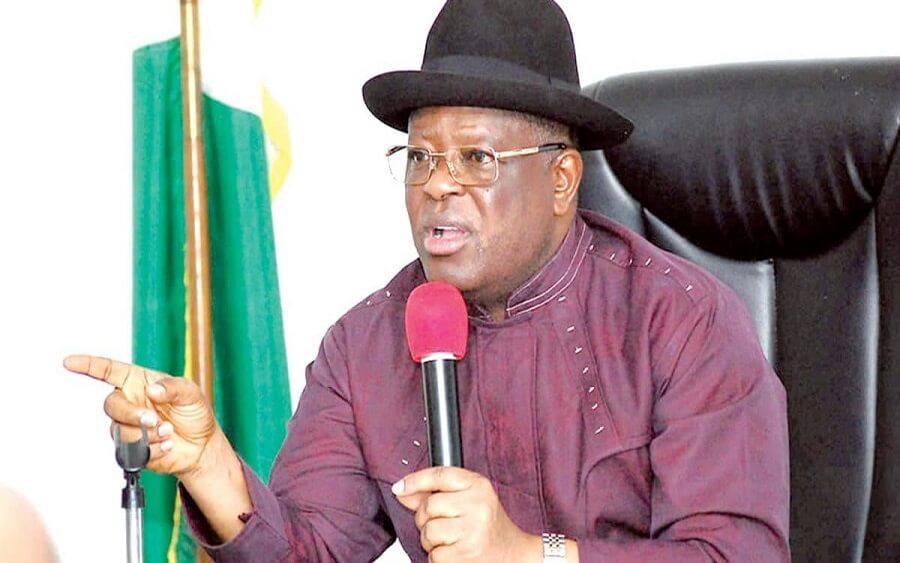
Works Minister David Umahi said this while welcoming a World Bank delegation to his office on Friday. The funds from the bank will be committed to complete several strategic ongoing road projects, he said, adding that tolling mechanism will be introduced on these roads to ensure sustainability and repayment.
In a statement issued to journalists on Friday, Umahi highlighted the cost of road construction and availability of funds while speaking on challenges affecting the roads sector.
“Infrastructure development remains the most critical need for Nigeria to achieve its desired position in global economic competition,” he said, stressing that efficient road networks are fundamental to national growth, trade and social development.
“When I assumed office, the Ministry inherited about 260 weak road links, 50 dilapidated bridges and several failed road sections across the country. To address these urgent challenges, GCFR Chairman Bola Ahmed Tinubu approved N20 billion to complete some priority road projects, many of which are currently being commissioned across the country.
“Given current realities, long-term planning is less feasible, and the focus must be on the short-term.”
He stressed that funding remains a major hurdle and reiterated that new projects cannot be started if existing projects remain incomplete.
He hinted at the growth management initiative of the federal government as well as the 'build, update and maintain' strategy, under which the government is responsible for building roads while the private sector is engaged in maintaining them. According to him, this model is designed to ensure sustainability, efficiency and value for money in the delivery of road infrastructure.
He identified the major priority road projects currently being handled by the Ministry, which include: the East-West road, consisting of eight sections, the Enugu-Onitsha road project, and the Kano-Jigawa-Maiduguri road corridor, and the Lagos-Ibadan Expressway.
In his remarks, World Bank Country Director Matthew Varghese explained that the purpose of the visit was to discuss practical ways to improve Nigerian roads, which he described as the country's most important infrastructure asset.
Varghese further said that the World Bank can only fund contracts that comply with the World Bank's procurement standards, emphasizing the importance of transparency, accountability and due process in project execution.
Speaking during the meeting, Franz Driss-Gross, a member of the delegation, explained that the overarching objective of the World Bank is to create employment and reduce poverty.
He emphasized that infrastructure is central to poverty alleviation, as it creates employment both directly and indirectly in various sectors of the economy.
He also highlighted priority areas of interest, including creation of state road funds, establishment of state road maintenance agencies, better flood control through effective drainage systems and increased private sector funding.
