The federal government is facing fresh scrutiny over its 2026 budget projections after it revealed a ₦30 trillion shortfall in 2025 revenue, raising concerns among lawmakers about persistent borrowing, overlapping budgets and weak execution of capital projects.
Concerns dominated an interactive session between the Senate Committee on Finance and the Economic Management Team of the Federal Government in Abuja on Monday, as lawmakers began scrutinizing the 2026-2028 Medium Term Expenditure Framework and Fiscal Strategy Paper (MTEF/FSP).
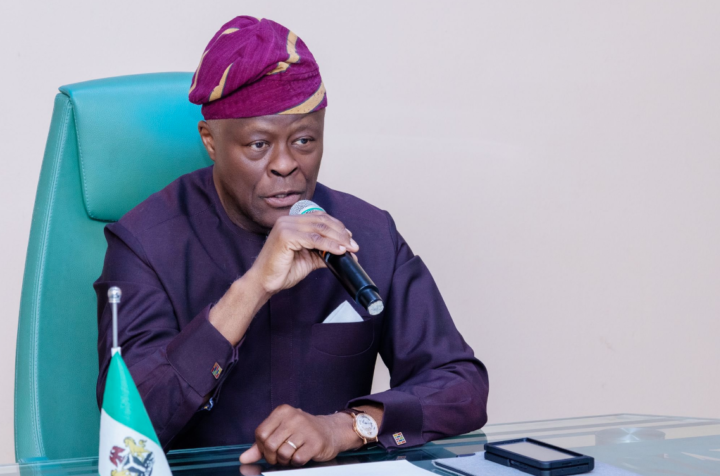
Vele Edun, Coordinating Minister of Finance and Economy, acknowledged that revenue performance in both 2024 and 2025 remained well below projections, creating structural pressure on budget implementation and increased capital expenditure in subsequent years.
ALSO READ: 2026 Budget: FG targets 2.06 million bpd, $64 crude, N1,512/$1 exchange rate
“We have projected about ₦40 trillion revenue for 2025, but the actual federal government cash revenue is about ₦10 trillion,” Edun told senators.
“This gives us the funding capacity for only about 30 percent of the budget, which means about 70 percent of capital projects will start in 2026.”
The admission effectively confirmed that Nigeria is operating multiple budgets within the same fiscal year, an outcome senators across party lines described as unsustainable and unacceptable.
Danjuma Goje, a senator representing Gombe Central District and former governor of Gombe State, called the situation “ugly”, warning that it undermines fiscal discipline and public confidence.
“Are the projects in the 2024 budget fully paid for? The 2025 budget has not actually been implemented. How can we return to a normal budget instead of running three budgets at the same time?” Goje asked.
Other MPs including Senators Ireti Kingibe, Victor Umeh and Aminu Iya Abbas pressured the finance team to explain how over N17 trillion was borrowed within the first 10 months of 2025, given the huge shortfall in revenues and stalled capital projects.
Available data presented at the session showed that Nigeria borrowed about ₦17.36 trillion domestically and ₦1.56 trillion externally during the period, raising fresh concerns about debt sustainability amid weak revenue flows.
Edun also clarified President Bola Tinubu's earlier claim that the revenue target had been met by August 2025, pointing out that the statement referred solely to non-oil revenues and not total government income.
“In 2024, we projected revenues to be ₦25.9 trillion, but actual receipts were about ₦8.27 trillion. In 2025, the pattern repeated,” Edun said. “This historical trend clearly shows that we must adopt a far more realistic revenue structure by 2026.”
Senator Adams Oshiomhole added a labour-market dimension to the debate, warning that poor capital budget performance was stifling job creation.
“How will we create jobs when capital projects are not implemented? Once the capital budget fails, the system fails to create jobs,” he said.
Defending the government's approach, the Chairman of the Federal Inland Revenue Service (FIRS), Jack Adedeji, argued that until cash is received, budget revenues remain estimates, noting that loans embedded in the budget do not automatically translate into available funds.
Although senators protested vehemently, the Senate Committee on Finance formally tasked FIRS to increase its 2026 revenue target from ₦31 trillion to ₦35 trillion, indicating lawmakers' insistence on more aggressive domestic revenue mobilization.
Committee Chairman Sani Musa said the Senate will not consider the 2026-2028 MTEF/FSP until an extensive public hearing is held to examine revenue performance for the 2024 and 2025 budgets.
“We must understand why revenues continue to underperform before presenting new figures for 2026,” Moses ruled. He said a three-member ad-hoc committee would involve the Finance Ministry and the Accountant General to ensure that contractors are paid for the verified 2024 projects before the end of the budget on December 31.
Under the proposed framework, the federal government plans a ₦54.5 trillion budget for 2026, with projected revenues of ₦34.33 trillion, implying a deficit of about ₦20 trillion and an estimated debt service obligation of ₦15.9 trillion.
MTEF estimates crude oil production at 1.84 million barrels per day, a $64.85 benchmark price, an exchange rate of $1,512/$ and 4.68% GDP growth – assumptions defended by Edun along with Minister of Budget and National Planning Atiku Bagudu and Minister of State for Petroleum (Oil) Heineken Lokpobiri.
However, lawmakers were not convinced, especially given that the MTEF arrived late to the National Assembly, contrary to the Fiscal Responsibility Act deadline.