

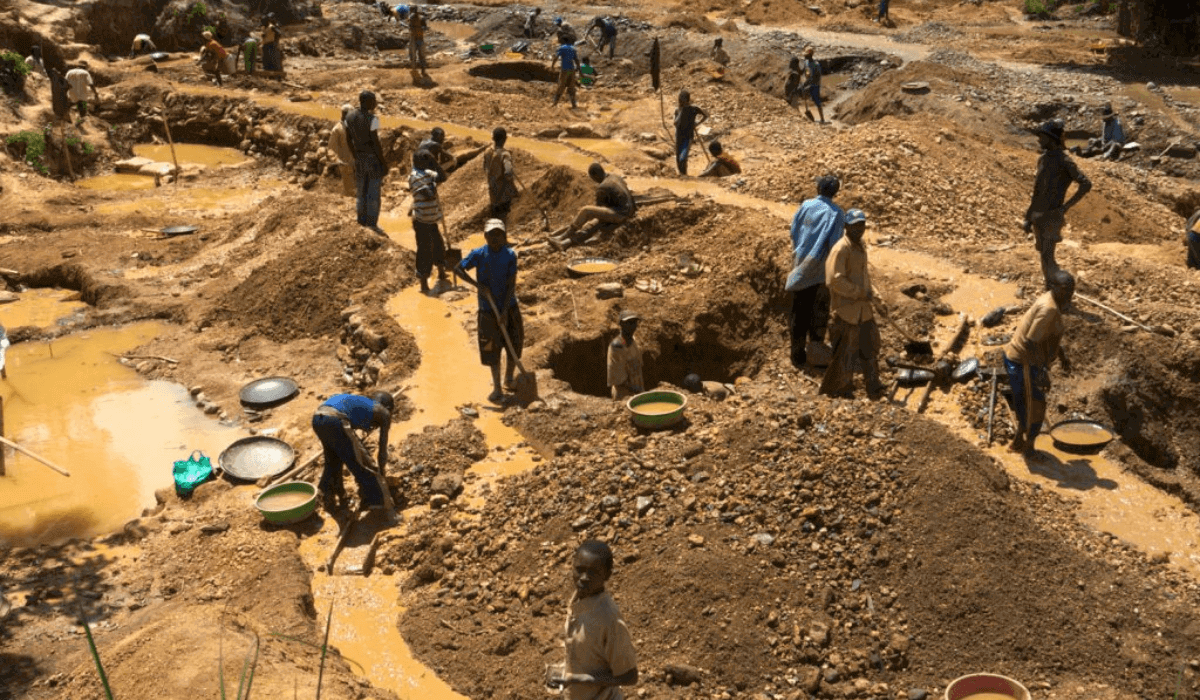
In industrial and mining areas around the world, groundwater pollution poses a persistent threat to drinking water safety, public health, and long-term environmental sustainability. In many affected areas, heavy metals and legacy pollutants remain trapped in aquifers decades after surface remediation efforts have ended, posing a complex challenge to regulators, industries, and host communities.
While traditional remedial approaches often rely on mechanical extraction and treatment systems, these methods are often associated with high operating costs and long-term maintenance burdens. Against this background, emerging research is increasingly focusing on whether subsurface geochemical processes can be deliberately harnessed to deliver more sustainable and cost-effective remedial outcomes.
Akintunde S., environmental and hydrology researcher at Michigan Technological University, USA. Recent findings led by Samakinde, documented in his article titled 'Geochemical barriers to groundwater treatment and mineral precipitation: advances in natural and engineered systems', are contributing to this shift in thinking. The study, first presented at the Geological Society of America Annual Forum and later published in the International Journal of Environment and Climate Change, examines how engineered geochemical conditions can be used to control contaminant dynamics in groundwater systems. This work is attracting international attention for its implications on long-term environmental management and sustainable treatment policy.
From pollutant mobility to mineral stability
For decades, scientists have recognized that groundwater chemistry plays a central role in determining whether pollutants remain mobile or become stable within the subsurface. Samakinde's research is based on the understanding of how geochemical barriers can be intentionally designed to promote mineral precipitation, effectively converting dissolved contaminants into stable solid phases.
By analyzing changes in pH, redox conditions, and mineral saturation conditions, the study reveals how pollutants such as heavy metals can transform from mobile aqueous forms to stable mineral formations within aquifers. This change significantly reduces the risk of pollutant migration, offering a prevention-focused strategy that contrasts with traditional removal-based approaches.
Also read: Nigeria records 54.5% decline in net forex inflows in one month
Importantly, the research highlights mineral stability as a long-term control mechanism. Rather than relying on continuous extraction or treatment, the approach aims to stabilize contaminants in place, reducing the potential for rebound effects and reducing long-term treatment costs.
Linking geochemical theory to real world hydrology.
A long-standing challenge in groundwater remediation is to translate laboratory-based geochemical theory into practical field applications. According to experts, one of the defining strengths of Samakinde's work is its emphasis on real-world hydrogeological systems rather than idealized models.
In the United States, Susan Brantley, distinguished professor of geology at Pennsylvania State University, underlined the broader significance of the study. He said that “This research advances the practical application of geochemical principles in environmental remediation. The strength of the work lies in its ability to link geochemical theory with real-world hydrogeological systems.”
Such integration is important for regulators and practitioners looking for remediation strategies that remain effective under variable field conditions, including heterogeneous geology and fluctuating groundwater chemistry.
Advancing Groundwater Remediation Science
The study has also attracted the attention of experts on contaminant fate and transport, particularly those focused on long-term treatment performance. Charles J., professor of environmental engineering at the University of Texas at Austin. Worth called this work a meaningful step in prevention science.
According to Worth, the research demonstrates how engineered geochemical conditions can improve containment outcomes in complex subsurface environments where mechanical treatment alone may prove inadequate. By prioritizing geochemical sustainability, the approach offers a framework that can reduce operational demands while enhancing long-term effectiveness.
For policy makers and site managers, this change has potential economic implications, particularly in reducing lifecycle treatment costs and limiting the need for prolonged active treatment.
Implications for developing regions and legacy pollution
Beyond its technical contribution, this research has important implications for regions facing extensive legacy contamination and limited remediation budgets. In Nigeria, Abiodun Odukoya, professor of applied geochemistry at the University of Lagos, highlighted the relevance of the findings to developing countries.
He explained that the study “provides an important scientific framework for groundwater treatment in developing regions, where cost-effective and sustainable solutions are urgently needed.” Many affected areas lack the financial capacity to operate and maintain long-term mechanical treatment systems, making geochemically driven treatment strategies particularly attractive.
Therefore, the research contributes to the broader discussion about environmental equity, resilience, and access to sustainable treatment technologies in resource-limited settings.
Future directions and research collaborations
Reflecting on the broader objectives of the study, Mr Samakinde said the research was driven by a desire to more closely align remedial strategies with natural subsurface processes. He explained that the team sought to demonstrate how geochemistry could be deliberately applied as a practical treatment tool rather than treated as a passive background condition.
Although he emphasizes that site-specific evaluation is necessary, the study represents an important step toward integrating geochemical design into mainstream groundwater treatment practice. As governments, regulators and industry increasingly prioritize flexible and low-impact environmental solutions, research of this nature continues to inform evolving policy and technical standards.
