
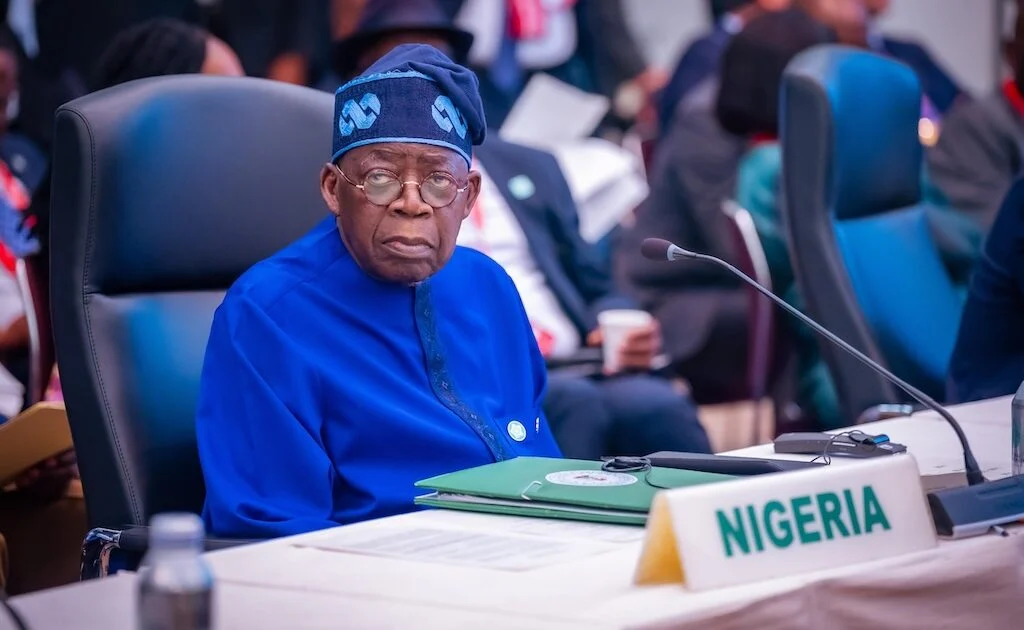
With measurable reforms and bold policy decisions reshaping Nigeria's learning landscape, education has emerged as a defining pillar of President Bola Tinubu's administration.
In just two years, President Tinubu's education agenda has earned an impressive 88 percent performance score, reflecting strategic investment, expanded access and a renewed focus on quality and innovation across the sector.
According to the federal education ministry's quarterly report seen by BusinessDay, the federal government's success card includes “increasing education expenditure from 0.5 to 24.5 per cent of government expenditure over the next 10 years, guaranteeing and implementing nine years of compulsory education for all children, including marginalized groups like Tsangya and nomadic learners.”
Other landmark performances of President Tinubu's administration have been expanding access to primary, secondary and tertiary education, including targeted programs to increase transition ratios and the establishment of new institutions.
Furthermore, in the federal government's effort to establish education as a key area for reforms, the President Tinubu administration introduced a National Core Curriculum, enhanced teacher training, and improved infrastructure and working conditions for teachers.
The Federal Ministry of Education has recently partnered with the National Security for Civil Defense Corps (NSCDC) to improve the security of our schools through a real-time tracking system for school security.
At the forefront of this collaboration, NSCDC has unveiled a platform with 15,000 schools registered and data on 141,000 geolocated schools from FME's De-Nemis platform. Additionally, FME is establishing a School Security Department to support the security framework and infrastructure of all schools in the country.
Education Minister Tunji Alausa told BusinessDay that under the ministry's Education Public-Private (EPPP) framework, FME has partnered with the UK-funded Partnership for Learning for All in Nigeria (PLANE), telecommunications companies including MTN and Airtel to enhance professional development and learning.
“The pilot will provide zero-rated internet access to 8,000 teachers in each geo-political zone,” he said.
The Ministry has deployed over 1000 smart boards in federal and state basic education schools across the country through UBEC to help equip teachers and students with future-ready skills.
In November 2025, the Federal Ministry of Education unveiled the Federal Tertiary Institutions Administration Transparency Portal (FTIGP) as an integrated platform to track and analyze key performance and funding metrics across Nigerian tertiary education institutions, universities, polytechnics and colleges of education.
Current data shows that 47 out of 67 federal universities, 35 out of 39 polytechnics and 25 out of 30 colleges of education are to be included on the portal.
The Federal Ministry of Education has also distributed a stipend of N2.97 billion to 160,000 young Nigerians and a stipend of N4.6 billion to skills training centres/TVET centers enrolled in the programme.
Additionally, the ministry distributed 240 electric tricycles and 12 solar powered charging stations to 12 universities in each geo-political zone to support student welfare and reduce campus transportation by 70 percent.
Earlier this year, the Federal Government and the Academic Staff Support Union (ASSU) reached a new agreement with a 40 per cent hike in academic emoluments to end the impasse between the two parties, which had left students as victims; The agreement is subject to negotiation every three years.
Similar agreements are also being prepared for polytechnics and education colleges.
The 88 percent rating within two years underlines the significant progress made in repositioning Nigeria's education sector under the leadership of President Tinubu.
Still, maintaining momentum will require continued funding, accountability, and stakeholder collaboration. If the current momentum continues, education could become the defining legacy of his administration.

