

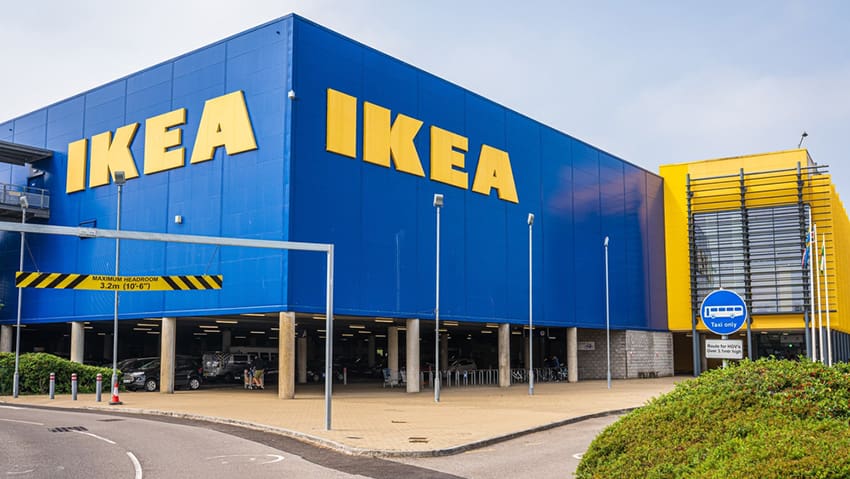
Ikea is accelerating its shift towards smaller city-centre stores in Britain, as rising property taxes and changing shopping habits blunt the appeal of traditional out-of-town megastores.
Peter Jelkeby, outgoing chief executive of Ikea UK and Ireland, said the Swedish retailer would focus future expansion on compact urban formats after strong trading at its new Oxford Street flagship and central Brighton store.
The strategy reflects a clear move away from Ikea's historic “big box” warehouse model, which dominated retail parks for decades and defined the brand's British expansion since the late 1980s.
While the group has no immediate plans to close existing megastores, Jelkeby confirmed that Ikea does not intend to open any new megastores in the UK.
“We see more potential in opening smaller stores like Oxford Street and Hammersmith,” he said. “That's where the customers are, and that's where the growth is.”
Jelkeby acknowledged that the rising cost of business rates had played a role in the strategic rethink. Larger retail units generally attract far higher rateable values, leaving operators facing disproportionately large tax bills.
Upcoming reforms will further increase that pressure, with a new surcharge being imposed on commercial properties worth more than £500,000. Although intended to support small businesses, the changes will increase the burden on supermarkets, department stores and warehouse-style retailers.
“We definitely want lower business rates,” Jelkeby said, adding that reform “needs to be brought in sooner rather than later so that the environment can be positive for the retail sector”.
As well as its city-centre push, Ikea is also experimenting with medium-sized stores in retail parks that sit between its smallest urban outlets and traditional megastores. The new sites in Harlow, Norwich and Chester reflect what Jelkeby describes as a more flexible approach to brick-and-mortar retailing.
Ikea believes it now has “enough big box” locations in the UK and Ireland, but it will continue to invest in those sites by improving fulfillment, click-and-collect and in-store services rather than expanding its footprint.
The retailer closed its Tottenham megastore in north London in 2022 after concluding that central, smaller locations offer greater long-term prospects in the capital.
The Oxford Street store, which opened in May, has seen strong sales across furniture, accessories and food, with demand for its restaurants exceeding forecasts.
“We are learning fast,” Jelkeby said. “We will have to increase checkout capacity and expand food operations to deal with the number of customers.”
The UK business is owned by Ingka Group, the largest global franchisee of Ikea. Jelkeby will now move on to lead Ikea's German division, where he plans to explore a similar change using the UK as a testing ground.
“Germany is our biggest market and is more traditional than Britain,” he said. “The UK has allowed us to test new ways of meeting customers where they are.”

Amy Ingham
Amy is a newly qualified journalist specializing in business journalism with responsibility for news content at Business Matters, the UK's largest print and online source of current business news.