
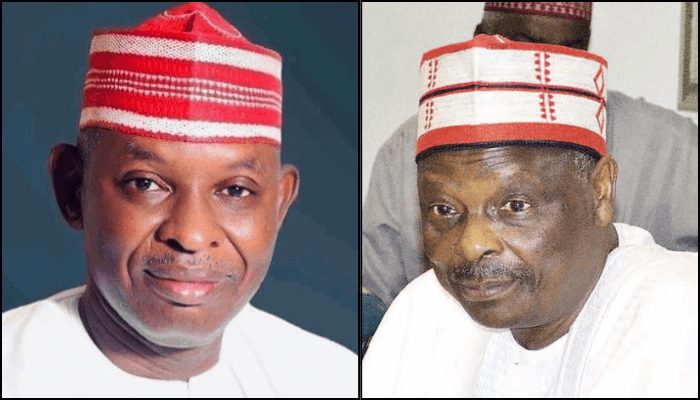
The decision of Kano State Governor Abba Yusuf to defect from the New Nigeria Peoples Party (NNPP) to the ruling All Progressives Congress (APC) has heightened political tensions in the ancient city, triggering a fierce power struggle with far-reaching implications on the influence of former governor and NNPP leader Rabiu Kwankwaso.
Governor Yusuf, Kwankwaso's longtime mentor and a product of the Kwankwasia political movement, came to power in 2023 largely on the back of the former governor's political machinery.
However, recent developments suggest a gradual shift in the balance of power, as governors consolidate authority and assert increasing independence from the structure that produced them.
ALSO READ: Kano NNPP crisis deepens as Deputy Governor Gwarzo joins Kwankwaso camp
Yusuf's silent move towards APC power brokers
Perhaps, to facilitate his entry and acceptance into the ruling party, the Kano governor has, in recent months, been cozying up to political actors in the APC and individuals seen as Kwankwaso's direct political rivals. One of such personalities is former Governor of Kano State, Abdullahi Kwankwaso.
Ganduje was Kwankwaso's deputy during his tenure as governor of Kano State, but in recent years, the two political giants have become arch rivals in Kano politics.
Political analysts say the defection of Governor Yusuf under Ganduje's watch would be a major political victory for the former APC national chairman and a direct blow to Kwankwaso.
Construction of a power base outside Kwankwasia
Political observers say the Kano governor's recent appointments, policy decisions and political engagements point to a deliberate attempt to create a personal power base separate from the Kwankwasia movement.
Although there has been no open conflict between the two leaders, insiders say that their relations are not cordial.
Over the past months, sources say Governor Yusuf has reshuffled key positions within the government and party structures, sidelining some considered loyal to Kwankwaso, while elevating others considered primarily loyal to him. Analysts say the changes reflect an effort by Yusuf to tighten his grip on the state ahead of future political contests.
“In recent months we have seen the Kano governor take steps to reassert his authority and free himself from Kwankwaso by gradually building up his political structure across the state,” an NNPP source, who did not want to be named, told BusinessDay.
“This is a move aimed at building his political identity, and it's certainly part of what's causing the friction.”
APC's strategy and Tinubu's 2027 calculations
Olarewaju Adesanya, a political analyst, told BusinessDay that Kwankwaso's refusal to join the ruling party may require the APC to court Governor Yusuf, given how important Kano is to President Bola Tinubu's re-election bid.
According to him, Tinubu has weighed his political prospects in Kano and decided to give Kwankwaso a political punch, as it appears that the Kano governor has decided to pitch his tent with Tinubu and the APC.
“So, given that Kwankwaso’s base must be eroded if he is to succeed in the state in the 2027 general elections, the game was successfully hatched in a quick move to dilute Kwankwaso’s influence in Kano politics,” Adesanya said.
“The political landscape in Kano is changing, and Governor Yusuf’s rapprochement with Ganduje is a strong indicator of this effect.”
ALSO READ: NNPP says Kano executive dissolution is irreversible, alleged court judgment flawed
The Kwankwas movement and its enduring hold
Kwankwaso, a former governor and two-time presidential candidate, remains the undisputed symbol of the Kwankwasia movement, which has dominated Kano politics for more than a decade.
The movement's red cap symbolism, grassroots network and disciplined structure played a significant role in Yusuf's electoral victory. Any perceived weakness in Kwankwaso's control therefore has huge implications for the future of the movement.
Observers say the tension reflects a familiar pattern in Nigerian politics, where godfathers and political heirs often clash once power is secured. From Lagos to Rivers and beyond, governors who emerged through prominent political patrons have historically sought autonomy after assuming office.
Analysts exploit Kwankwaso's popularity
Hammad Muritala, a political commentator, said that the Kano governor's defection to the APC may create fissures and internal tensions within the NNPP and the Kwankwasya movement, but it may not immediately reduce Kwankwaso's influence in Kano politics.
Muritala described Kwankwaso as a political enigma in the state, arguing that he has not only created a political structure, but a loyal and formidable grassroots movement that transcends party lines and has survived similar political shifts in the past.
“While the governor's defection may temporarily weaken internal cohesion within the NNPP, history shows that Kwankwaso's political base has repeatedly adapted, reorganized and, in many cases, emerged stronger.
“We saw what happened in the last general election, where their candidate defeated the sitting governor and the ruling party candidate at the Centre,” he said.
Similarly, Emmanuel Taiwo, a politician, said that Kwankwaso Kano remains a household name in politics because of his long-term investment in human capital in the state and its environs, stressing that this has made him very popular among the downtrodden and even the elite.
According to him, this explains how Kwankwaso returned as Kano governor in 2011 and subsequently rallied support for the current government.
Taiwo argued that support for Kwankwaso in Kano was natural and warned that the governor might suffer consequences if he left the party without Kwankwaso's blessing or support.
He said, “Kwankwaso is the leader of politics in Kano State and to some extent in the North-West. I believe Yusuf will not move forward without his blessings and whoever Kwankwaso supports will win the next election because of his popularity.”
National implications and 2027 stakes
For now, the stakes remain especially high in Kano. Kwankwaso's influence extended beyond the state, establishing him as a leading opposition figure at the national level.
Analysts say any erosion in his authority in Kano could weaken his bargaining power ahead of the 2027 general elections.
Meanwhile, political observers say Governor Yusuf's moves may also be influenced by the national political environment, where defection and realignment have become common as politicians seek relevance within the ruling APC or the emerging opposition coalition.
Although the Kano Governor has repeatedly reaffirmed loyalty to the NNPP, speculation continues in political circles about a possible future realignment.
ALSO READ: Shekarau defends Governor Yusuf, says defection is not betrayal of Kwankwaso, NNPP
Why is Governor Yusuf leaving NNPP and Kwankwaso
Speaking on the need for Governor Yusuf's defection to the ruling party, a source close to the Kano government told BusinessDay that the move was explained by the governor's desperation to secure re-election in 2027, which he considers a viable platform.
According to the source, the Governor is apprehensive about the viability of the NNPP in the 2027 elections, due to divisions within the party arising from the unresolved leadership crisis.
The source also said Governor Kano is worried about the wide popularity and rising profile of Senate Deputy President Jibrin Barau in politics.
“You should know that Barau enjoys immense support from the leadership of the APC in Kano and at the national level for the 2027 governorship ticket, which he is likely to receive on a platter.
“You may also be aware that Barau had long ago declared his interest in the Kano Governorship and he is working hard for it because he has strong grassroots support.”
Speaking further the source said:
“It is the fear of Barau that is driving Governor Yusuf to APC because he has assessed his chances and knows that he has no chance if Barau contests on the APC ticket.”
