
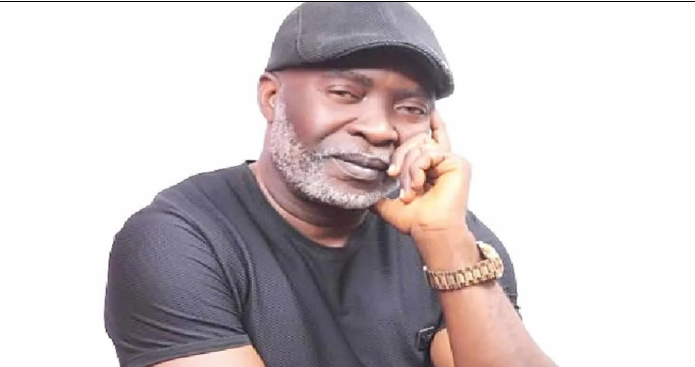
The arrest of Nollywood actor and former president of the Enugu State chapter of the Actors Guild of Nigeria, Stanley Amandi, came quietly and with little initial clarity, reflecting the sensitivity surrounding Nigeria's latest national security investigation.
According to people familiar with the matter, Amandi was detained in Enugu earlier this week. The operation was carried out without public announcement, and for several hours even his family was unsure which part of the security services was responsible.
Relatives initially believed that the arrest was carried out by Nigeria's domestic intelligence agency, the Department of State Services (DSS), a conclusion drawn from the manner of the operation and the lack of immediate information. Later, after receiving formal correspondence, the family was informed that Amandi was being held by the Defense Intelligence Agency (DIA), the external intelligence arm of the military.
The delayed clarification underlined the opaque nature of the investigation, which involves both serving military officers and civilian suspects linked to an alleged plot to overthrow Bola Tinubu's government. Security agencies have so far refused to issue public statements detailing the arrests or the charges against those detained.
Following confirmation of his detention, Amandi's family reportedly contacted the DIA to request access to his wife, legal counsel and a medical doctor, citing concerns over his health, including high blood pressure. It is unclear whether such access has been granted.
According to findings reported by Premium Times, investigators suspect that the actor was not involved in operational or military planning, but was linked to the media and messaging dimension of the alleged plot. Officials believe he may have been deployed to help shape stories that might justify or popularize the unconstitutional takeover, placing him in the category of a civilian collaborator rather than a major actor.
The arrest is part of a broader crackdown that previously followed discretionary detentions within the armed forces. Intelligence officials say the investigation began when a serving officer alerted senior commanders about unusual meetings and conversations between colleagues. Subsequent intelligence assessments revealed that a smaller network was exploring ways to destabilize the country's democratic system.
Security agencies then moved to neutralize the alleged network through coordinated arrests at multiple locations, which authorities said prevented the scheme from progressing. What initially appeared to be matters of routine internal military discipline were reclassified as matters of national security.
Amandi's detention has drawn particular attention due to her public profile and the rarity of an entertainment personality being implicated in such major charges. As the investigation progresses, authorities face increasing pressure to clarify the legal basis for the arrests and the evidence underpinning the claims, even as they seek to protect what they describe as an ongoing and highly sensitive operation.
