
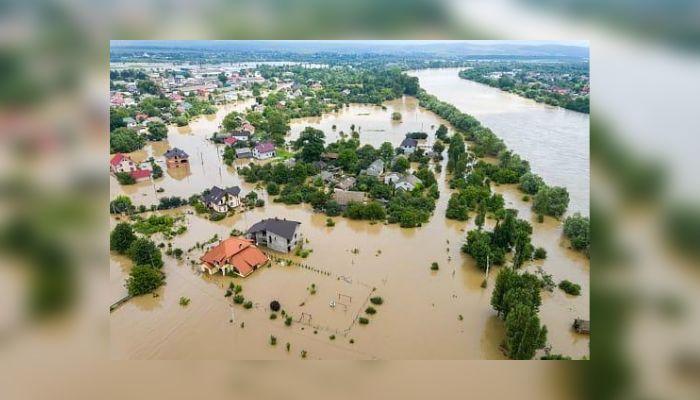
Climate risk is no longer theoretical. This is now actuarial.
In global insurance markets, climate-related losses are moving from “once in a century” to recurring balance sheet events. In 2025 alone, natural disasters are expected to cause losses of approximately $224 billion globally, with insurers incurring losses of approximately $108 billion. This is another year in which insured losses have exceeded the $100 billion threshold.
For insurers, this is not an abstract sustainability discussion. This is the reality of pricing. And increasingly, ESG performance is becoming a proxy for risk quality.
For Nigerian and African businesses, this change is significant. Many organizations still treat ESG as a form of reputation management. The insurance industry is redefining it as risk management and risk pricing.
The implication is simple: companies with weak environmental controls will pay more for cover. Some people may struggle to get cover.
Nigeria provides a unique lens into this transition.
Insurance penetration remains low. It is estimated to reach around 1.5% of GDP in 2024, much lower than the global average of around 7%. Other datasets put penetration even lower historically, underscoring how underinsured the economy is.
This low penetration is often discussed as a growth opportunity. But climate risk is quietly changing how development will happen. As insurers absorb higher catastrophe losses globally, underwriting discipline is tightening. Risk selection is becoming acute. Data requirements are increasing. ESG disclosure is becoming underwriting intelligence.
For Nigerian businesses seeking affordable cover, particularly in the agriculture, energy, infrastructure and manufacturing sectors, environmental risk management will increasingly determine premium outcomes.
Across Africa, the contrast is instructive.
South Africa's insurance penetration is in double digits, reflecting a mature risk pricing ecosystem. Meanwhile, many African markets remain under-penetrated, a sign of both opportunity and weakness.
But penetration alone does not determine resilience. Risk does quality.
Consider the areas most affected by environmental instability:
-Agriculture is facing the instability of floods and droughts.
-Energy assets are exposed to transition and physical climate risks
-Infrastructure is vulnerable to extreme weather.
-Real estate is exposed to floodplain and heat stress risks
In these areas, ESG is increasingly becoming an underwriting lingo.
flood mapping
emissions transition plan
water management. impact on biodiversity
I. Supply Chain Traceability.
These are no longer sustainability reporting topics. Those are insurance conversations.
Another structural change is taking place beneath the surface.
Globally, weather-related events now cause the majority of disaster losses, and have accounted for more than 90% of total losses and almost all insured losses in recent years.
This means that climate instability is not cyclical. This is structural.
For insurers, this translates into three immediate actions:
-First, re-evaluate high-risk geographic areas and sectors.
-Second, rewarding companies that demonstrate measurable risk mitigation.
-Third, embedding climate analysis into underwriting models.
For businesses, this means that ESG maturity will impact not just the cost of capital, but also the cost of risk.
In Nigeria, this change is already visible in subtle ways.
The insurance sector is also growing along with the broader financial ecosystem, with finance and insurance showing strong real-term growth in recent economic data.
But growth alone will not solve the risk appetite. Without strong ESG integration, development may only increase vulnerabilities.
The next phase of insurance expansion in Nigeria will likely be ESG-informed expansion, where data-rich, climate-conscious businesses will gain access to better cover and pricing.
So what should Nigerian and African CEOs do now?
-Start by transitioning ESG from compliance to operational risk control.
-Environmental risk mapping should become standard enterprise risk practice.
-Climate scenario modeling should inform capital planning.
-Environmental risks of the supply chain must be quantified.
-Insurance discussions should include sustainability teams, not just finance and risk.
The most forward-looking companies are already doing this, not because regulators demand it, but because insurers increasingly expect it.
The future of insurance in Africa will not be limited to just expanding coverage. This will be about improving insurability. And insurability will depend on ESG credibility.
Businesses that treat ESG as a reporting practice may find themselves paying a premium, and that's literally it. Those who consider ESG as risk intelligence are likely to receive better pricing, broader cover and stronger long-term resilience.
Climate risks are being included in insurance.
The question is no longer whether ESG matters to insurers.
The question is whether African businesses will grow fast enough to remain insurable.
Sarah Esangbedo Ajose-Adeogun is the Founder and Managing Partner of Tisu Consulting Limited, a leading ESG consulting firm. He is a former Community Content Manager at Shell Petroleum Development Company and has served as Special Adviser on Strategy, Policy, Projects and Performance Management to the Edo State Government. She is also the host of the #SarahSpeaks podcast on YouTube @WinningBigWithSarah, where she shares insights on leadership, strategy, and sustainable development.

