
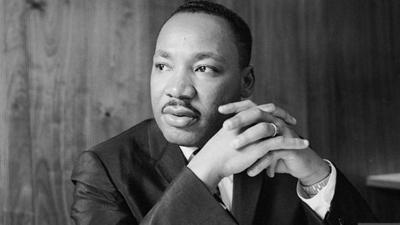
Monday, January 19 was the 39th anniversary of MLK Day, a U.S. federal holiday on the third Monday in January. It is a memorial to the life and legacy of civil rights leader, Dr. Martin Luther King Jr., which was established in 1986 after a long campaign. A 1994 law declared it the National Day of Volunteer Service, making it a unique day to celebrate community improvement, reflection on racial equality, and their advocacy for nonviolence.
Martin Luther King Jr. is not alone in America. He belongs to every society that is still compromising on the distance between power and justice. MLK Day should not be relegated to borrowed nostalgia in Nigeria. It should act as a mirror. Not about who America has become or is becoming, but about what demands change wherever injustice survives.
The king had not inherited a just system. He faced a system designed to exclude him. He did not wait for permission. He did not hold the post. He neither commanded the police force, nor the treasury, nor the army. Yet he changed laws, transformed institutions, and reset the nation's conscience. He proved a dangerous truth. Moral clarity can increase political power.
Many Nigerians wait for titled saviors. King reminds us that movements don't start in offices. They start with conviction. When citizens hand over justice to politicians alone, injustice endures for a long time.
The cost of speaking up when it's dangerous
We celebrate King today because time has preserved his courage. While they were alive, courage was considered a threat. The state kept surveillance on him. Put him in jail. Defamed him. Threatened him. Then murdered him. Powers in real time rarely appreciate dissent.
It matters in Nigeria. We punish voices that cause inconvenience to officials, respecting them later when their courage does not disturb the comfort. We consider protest a crime, question the motive, and call the justice movement anarchy. King's life highlights this habit. If your courage has no price, you are probably nowhere near the power.
The dream was not sentimental. this structure was
The king's dream did not revolve around poetry. It was based on discipline. Organization. Conversation. Pressure. Law. They marched, but they also strategized. They prayed, but they also drafted demands. They disrupted, but they also built coalitions. He understood that justice requires systems, not speeches.
Nigeria struggles here. We like rhetoric. We struggle with follow-through. We celebrate announcements while institutions are rotting. King's Legacy fixes this. Without structure, dreams fail. Without planning, protests fizzle out on their own. Without systems, hope becomes ritual.
Why does performance politics thwart justice?
King disapproved of the demonstration. He refused symbolic assimilation without physical change. He insisted that morality should inconvenience power. This insistence makes sense in a country where governance often works in front of cameras while communities wait to be present.
Justice is not achieved through ceremonies. This comes through functioning schools, caring hospitals, protecting courts, serving police, and uniformly enforced laws. The king understood this. Optics without correction delay freedom.
power of collective
Nigeria has lived this reality before. June 12 did not survive because one man stood alone. MKO Abiola became an icon, but it was the collective courage of journalists, labor unions, students, market women, clergy and ordinary citizens that catapulted a stolen mandate into the national consciousness. Many paid a dear price. Some people paid the price for this with their lives. Yet the persistence of collective pressure overcame decrees, threats and propaganda. Years later, the state itself was forced to admit what the people already knew. That democracy does not progress because the government allows it. It progresses as citizens push together.
Nigeria had learned this lesson earlier during the anti-colonial struggle. Freedom was not handed over to even a single hero standing on the stage. It was forced into existence by collective pressure. Teachers who taught even in adverse circumstances. Trade unions that organized strikes. Journalist who published in defiance of censorship. The students who protested. Traditional rulers who quietly protested. Pastor who preached dignity. The farmers and traders who withdrew their consent from the colonial power. Celebrities like Nnamdi Azikiwe and Obafemi Awolowo became icons, but icons only last when people move together. Independence came not because the colonial state suddenly became generous, but because collective determination made continued domination untenable. Independence came when ordinary Nigerians came together and decided that injustice had become too costly to tolerate.
The king did not go alone. Churches were organized. The students mobilized. The workers boycotted. Common people together bore the loss. Mountains were moved due to collective discipline, individual talent could not be moved.
Nigeria needs this memory. Our victory will not be personal. Fragmented courage weakens the pressure. Collective action multiplies this. When people unite on the basis of class, region and faith, injustice becomes hidden.
This may be King's biggest lesson. No one frees himself alone. Freedom is built by people who are willing to take risks together.
What should Nigeria ask on MLK Day?
MLK Day should not ask Nigerians to praise a man. It should ask, “What are we willing to risk together?”
Justice does not wait for perfect leaders. It waits for prepared citizens. King shows us that clarity, courage, and collective action can bend even stubborn systems.
That lesson remains incomplete.
.Ukoh, an alumnus of the American University of Nigeria, Yola, and a PhD student at Columbia University, writes from New York.
