
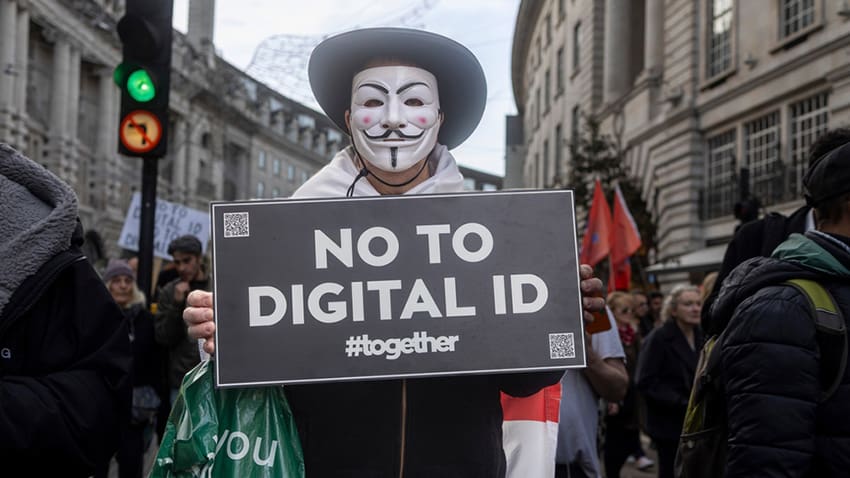
Keir Starmer has abandoned plans to make digital IDs mandatory for Labor, marking the 13th significant U-turn of his premiership and a quiet retreat from one of Labour's most controversial post-election policies.
The digital ID scheme, which was originally introduced as a central plank of Labour's crackdown on illegal work and migration, will now be optional when it is introduced in 2029. Workers will instead be able to verify their right to work using existing documents such as passports or electronic visas.
The decision follows growing unease within the cabinet and on the Labor back benches, where ministers warned that mandatory digital IDs risked undermining public trust, alienating voters and sparking internal rebellion. Government sources confirmed that concerns about cost, complexity and inclusivity ultimately forced a rethink.
Starmer had previously argued that mandatory digital IDs were necessary to know “who is in our country” and to prevent illegal immigrants from entering the shadow economy. However, officials now say the scheme will be recast as a convenience-based service designed to simplify everyday interactions with the state, such as registering births and deaths, opening bank accounts, booking GP appointments and accessing public services.
Voting appears to have played a role in the upset. According to YouGov, support for digital IDs declined sharply after the digital IDs were designed primarily as a migration enforcement tool, with public support falling from six in ten voters to less than four in ten.
Cost has also been a major sticking point. The Office for Budget Responsibility has estimated the scheme could cost as much as £1.8 billion over three years, a figure the government disputes but has refused to change its estimate. Critics inside Whitehall warn that a mandatory system risks excluding older workers and those without digital access, particularly in rural areas.
Under the revised approach, right-to-work checks will remain mandatory for employers, but digital ID will be one of several acceptable verification methods. A public consultation will explore how the system should operate and what safeguards are needed to prevent exclusion or abuse.
A government spokesperson said the move would help reduce conspiracy theories around digital IDs and state surveillance, while still allowing ministers to modernize outdated, paper-heavy verification processes that are vulnerable to fraud.
The reversal adds to a growing list of policy reversals since Labor came to power, including business rates relief for pubs, a softening of inheritance tax reforms affecting farmers and a weakening of employment law reforms.
Opposition figures seized on the latest change as evidence of instability. The Conservatives accused Starmer of abandoning a major policy at the first sign of resistance, while the Liberal Democrats said the volume of U-turns was becoming a defining feature of the government.
For business, the decision removes the possibility of a new mandatory compliance burden for employers, at least in the short term. However, it also raises new questions about the government's ability to deliver large-scale digital reforms without major changes.

Amy Ingham
Amy is a newly qualified journalist specializing in business journalism with responsibility for news content at Business Matters, the UK's largest print and online source of current business news.