
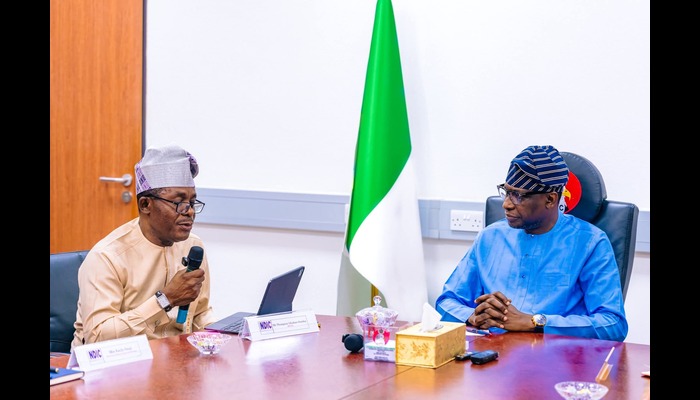
The Nigeria Deposit Insurance Corporation (NDIC) has reaffirmed its commitment to strengthening collaboration with the Economic and Financial Crimes Commission (EFCC) in the recovery of assets and debts of failed banks as well as enhancing investigation and prosecution of persons who contributed to the failure of banks.
The Managing Director and Chief Executive of NDIC, Thompson Sunday, made this known during a courtesy call on the management of the corporation on the Executive Chairman of the EFCC, Olanipekun Olukoyede, at the commission’s headquarters in Abuja.
According to a statement signed by Hauwau Gamboa, Head of Communications and Public Affairs, the delegation included Emily Osuji, Executive Director, Corporate Services, Kabir Katata, Executive Director, Operations, as well as other key directors of the corporation.
Also read:NDLEA arrests Brazilian woman with N3bn heroin in coffee packs
Sunday explained that effective cooperation with the EFCC is key to the successful liquidation of failed banks, including asset recovery and debt recovery, the proceeds of which are applied to the payment of uninsured deposits. He said there is a need for close partnership with the EFCC through enhanced asset detection, recovery and enforcement actions to address cases of asset stripping and asset concealment. They also identified areas of cooperation in the Corporation's efforts to address banking fraud and financial crimes in the banking system and to prosecute individuals who contributed to bank failure.
Sunday stressed that, through the effective implementation of its four core mandates of deposit guarantee, bank supervision, crisis resolution and bank liquidation, the NDIC makes a significant contribution to ensuring the stability of the financial system. He said that the ultimate objective of the Corporation is the protection of depositors' funds, prompt payment of depositors in the event of bank failure and strengthening of public confidence in the financial system. Noting that the NDIC and the EFCC share core values of integrity, professionalism and cooperation, he described the visit as a formal engagement towards strengthening institutional partnerships, especially in areas where the investigative and prosecution capabilities of the EFCC are critical to the achievement of the NDIC’s mandate.
In his reaction, the Executive Chairman of the EFCC, Olanipekun Olukoyede, affirmed the strong working relationship of the Commission with the NDIC in addressing financial crimes in the banking sector. They acknowledged the long-standing cooperation between the two institutions, particularly in investigation and capacity building on the complexities of banking operations.
Also read: Nigeria offers Africa's most competitive tax rates – experts
Olukoyede briefed the delegation on the key departments within the Commission, including the Bank Fraud Section, which handles NDIC related matters. He urged the Corporation to bring forward any pending cases for speedy review to ensure better progress and effective monitoring of progress.
He also highlighted the role of the EFCC's Fraud Risk Assessment and Control Department, which focuses on proactive monitoring of compliance, promotion of sound risk management processes and internal controls within public and private sector institutions. He described this as part of the EFCC’s broader efforts to support and protect the Nigerian economy.
The EFCC Chairman pledged the Commission's continued commitment to deepening collaboration and strengthening synergy with the NDIC to combat financial crimes, enhance asset recovery and prosecute those whose actions undermine the stability and integrity of Nigeria's banking sector.
