
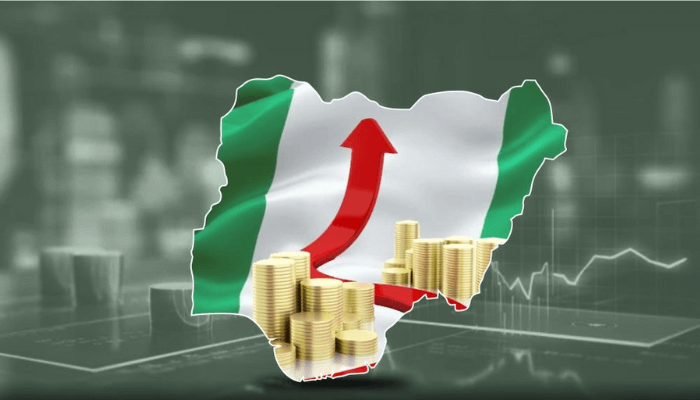
After years of monetary dominance, multiple budget operations and currency market fragmentation, Nigeria is starting 2026 with stronger macro footing than in recent memory.
The Central Bank of Nigeria estimates that real GDP growth in 2026 will be 4.49 percent, with low average inflation and external reserves rising to about $51 billion, a set of numbers that reads like support for reform traction.
Nigeria's Finance Minister and Coordinating Minister for the Economy, Wale Edun, has framed the past two years as a shift from emergency economics to rules-based management.
In March 2025, he said the economy “narrowly survived” after its reliance on central bank financing “far exceeded regulatory limits”. This is his basic argument: the reforms were not cosmetic; They were a stabilization project.
FX market is currently settled but still sensitive to shocks
The 2026 budget proposal assumes an exchange rate of N1,400 per dollar, indicating a preference for domestic financing and public commitment to market-based pricing, even if the market remains weak and marginally sentiment-driven.
This matters because FX volatility acts like a tax on the plan. When pricing becomes volatile, corporate balance sheets shorten their horizons, investment pipelines become thinner, and risk premiums increase.
Edun linked this to transparency and control of public cash flows. In October 2025, he said, “There is a lot of federal government money lying outside the CBN,” adding that the government had introduced a federal billing system to track payments for goods and services and bring visibility to the money.
This is a practical reform, not a slogan. Fiscal visibility reduces leakage and improves confidence that macro tightening will not be undermined by hidden quasi-fiscal pipes.
Fiscal mathematics, big deficit and funding compromise
The macro picture is stable, but the fiscal arithmetic remains demanding. Tinubu's 2026 spending plan is N58.18tn, with a deficit of N23.85tn, equivalent to 4.28 per cent of GDP. This is a large financing requirement in the domestic market where credit is already expensive and private sector demand for capital is increasing.
Financing options both help and hurt at the same time. Domestic borrowing reduces direct external foreign exchange risk, but it could crowd out private credit if rates remain high. Edun has been clear about changing the lending mix.
At the Nigerian Economic Summit in October 2025, he said the government would “make greater use of Sukuk, green bonds and diaspora bonds rather than Eurobonds”, a strategy aimed at reducing costs and lengthening maturities.
The logic is correct. Rollover risk does not disappear, but it can be reshaped over the longer term with more predictable refinancing windows.
Inflation and deflation are possible, but they are not automatic
Inflation remains the most controversial variable in any Nigerian perspective. The CBN's projections are optimistic, but inflation outcomes in Nigeria are not entirely demand driven.
They are aisle led. Food inflation is vulnerable due to insecurity in agricultural sectors, transportation constraints, imported input pass-through, and energy revaluations. A weak crop could lead to a re-evaluation of the basket and dash expectations.
Edun has tried to keep the narrative anchored in fiscal discipline and supply-side logic. In October 2025, he said that “the fight against inflation begins with fiscal authorities”, and that the government would prioritize spending on productivity-boosting sectors.
Investors will welcome that framework, as inflation in Nigeria is as much about supply constraints as the monetary stance.
Oil, less effective, is still determinative
Nigeria is less oil dependent than before, but oil still underpins FX liquidity and confidence. The budget estimates production at 1.84 million barrels per day and oil prices at $64.85, while the CBN is more conservative on the baseline price and output.
This difference matters. If oil disappoints, reserve accumulation slows, FX liquidity tightens, and the credibility of the correction is tested in real time.
Politics of reform, fiscal scope and distribution questions
Macro stabilization does not advance itself politically. When families feel pressured, reform coalitions weaken. Edun stressed that subsidy removal and FX reforms have created fiscal space and improved the federation's revenue flows.
At the summit in October 2025, he said the two reforms had “freed up five per cent of GDP in Federation Account distribution”, and significantly increased allocations to states.
He has made the same point in the context of the World Bank panel, arguing that funds are now flowing into the federation account and cuts have been reduced, thereby improving transparency and development financing efficiency.
He has also fixed the scale of subsidy burden in strict numbers. He said subsidy removal and market-based FX pricing by the end of 2024 led to savings of about $20 billion, on the basis that the combined subsidy burden was about five percent of GDP.
Whether one accepts the precise arithmetic or not, the political point is clear: reforms have created a pool of resources that should now appear in roads, electricity, human capital and a credible safety net.
Investment Implications: Investable, but not risk-free
Nigeria looks more stable in 2026, but it is not entirely free of risks. The best risk-adjusted opportunities are still those with defensive cash flows and policy alignment: export-linked supply chains, domestic gas and power services, logistics and warehousing, and financial infrastructure that benefit from transparent FX pricing.
The risks remain familiar: inflation declines, oil disappointments, fiscal slippages, policy reversals under pressure, and credit deterioration triggered by imported input cost shocks.
Stability may come. The task now is to expand the narrow scope into a sustainable platform for private capital.
