

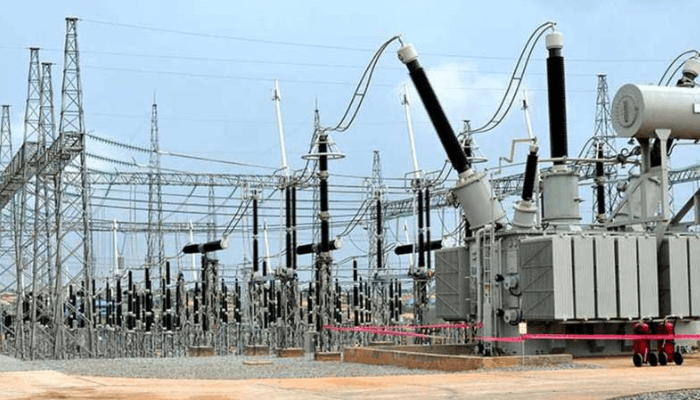
Nigeria's power grid has been restored across the country after another system disturbance caused a partial outage on Monday, the Nigerian Independent System Operator (NISO) said.
The disruption occurred at 2:01 pm on 29 December and affected power supply in many parts of the country.
According to grid data, power generation, which had reached around 4,800 MW earlier in the day, fell sharply to 139 MW by 3 pm.
NISO said in a statement issued on Monday night that the disturbance caused several power generation units and critical 330 kilovolt transmission lines to trip.
“At 14:01 on Monday, 29 December 2025, National Grid experienced a system disturbance resulting in a partial outage,” the operator said.
“Initial reports suggest that tripping of several generating units and 330kV transmission lines has occurred, resulting in widespread impact on power supply.”
Also read: NNPC invites bids to sell stake in oil and gas assets
The incident comes amid ongoing gas supply disruptions following vandalism at the Escravos-Lagos gas pipeline earlier this month, which has reduced fuel supply to several thermal power plants.
NISO said the gas shortage has further weakened the grid.
“This has increased the vulnerability and fragility of the national grid,” the statement said.
Despite the collapse, the Delta Power Generating Complex isolated itself from the national grid and continued operating in island mode, supplying electricity to parts of Delta and Edo states.
“A total of 114 MW was generated from the four units of the Delta Thermal Power Station,” NISO said. He said power was maintained up to Oghara, Amukpe, Benin and Ifunrun substations.
The system operator said emergency response measures were immediately activated at the national control center in Osogbo.
“In line with established operational procedures, NISO immediately initiated system response measures using its dispatch and monitoring tools,” it said.
According to the operator, power supply has been fully restored across the country.
“Supply has been fully restored to all parts of the country and system stability has returned to normal,” NISO said.
The agency said an investigation is ongoing to determine the cause of the disturbance and prevent future incidents.
“Appropriate measures will be taken to prevent recurrence of such major systemic events in the future,” it added.
Nigeria's power grid has suffered repeated collapses in recent years, often linked to gas shortages, aging transmission infrastructure and operational constraints.
NISO, which recently took over responsibility for system operations following sector reforms, said it is committed to improving grid reliability.
“NISO reassures Nigerians of its continued commitment to proactive grid management and application of best operational practices,” the statement said.
