
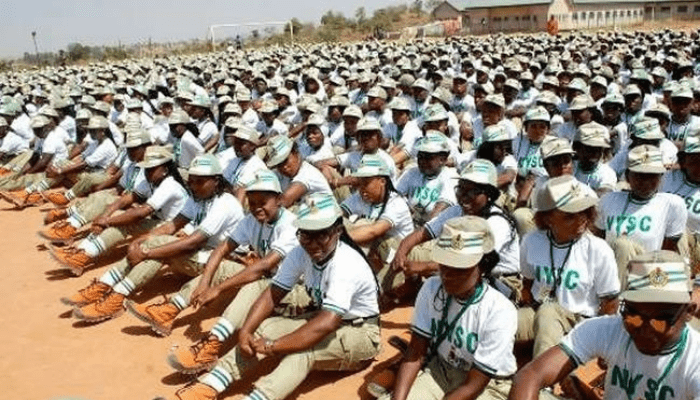
As the Nigeria National Youth Service Corps (NYSC) began its 2026 Batch A (Stream 1) Orientation this week, the annual ritual of national mobilization was met not with celebration but with uneasiness. As parts of northern Nigeria grapple with banditry, kidnapping and sporadic insurgent attacks, young graduates and their families are valuing civic duty over personal safety.
According to Punch, the three-week orientation exercise, which began on January 21 in all 37 camps across the country, comes amid a fresh surge in violence in several states. In recent weeks, mass kidnappings, roadside attacks and bomb rumors have destabilized communities from the northwest to the northeast, reviving long-standing concerns about the risks faced by corps members deployed to unstable areas.
Established in 1973 after the civil war, the NYSC was designed to promote national integration by deploying graduates outside their native states. More than five decades later, that ideal is increasingly colliding with Nigeria's fragile security landscape. Zamfara, Kaduna, Katsina, Sokoto, Niger, Plateau, Yobe and Borno, all states hosting camps in this cycle, have featured prominently in recent security briefings and media reports.
Also read: Six security personnel killed in gunfire as troops foiled terrorist attack in Zamfara
The scope of the program has also increased. In September last year, the NYSC said it planned to produce about 650,000 graduates across all streams in 2026, up from about 400,000 in 2025. Only 40 percent of those registered are expected to participate in the current stream, but thousands more travel long distances through unsafe corridors.
Although official deployment figures have not been released, local officials estimate about 8,000 Corps members are attending orientation in high-risk states this month. Yobe has sworn in about 1,200 participants, Kaduna about 2,000, Katsina more than 2,000, while Zamfara is hosting about 600. Sokoto and Kebbi together have sworn in 3,600 participants.
For many, the most worrying moment came not in the camp but on the road. Many corps members described trips lasting more than 24 hours, broken up by unscheduled night stops as drivers avoided traveling after dark. One participant posted in Zamfara said the fear of bandit attack had dominated his thoughts from the moment he received the call-up letter. His parents, he said, were very worried but eventually agreed after prayers.
Another graduate traveling from Plateau State to Zamfara said he and fellow corps members slept in a village on the way after arriving late at night. “Even with security personnel in place, you can't predict what non-state actors might do,” he said. Others spoke of continued surveillance on highways long associated with kidnappings.
In Borno state, where the Islamist insurgency has raged for more than a decade, a corps member traveling from Abuja said the presence of heavily armed security personnel was reassuring, but declined to say whether he would seek redeployment after orientation, a common option quietly adopted by some participants.
State officials insist they have taken extraordinary steps. Many camps have been shifted closer to state capitals for business sustainability for perceived safety. Zamfara shifted its camp from Tsef to Gusau, while Kwara shifted its operations from Yikpata to Ilorin in Edu Local Government Area late last year following repeated attacks in Kwara North. The camp in Kaduna has been temporarily housed within a government college in the state capital, after being forced to abandon its permanent site along the Abuja highway due to insecurity.
Also read: Soldiers open mass graves of terrorists in Borno
At these locations, soldiers, police officers and paramilitary groups maintain visual posts, patrolling and surveillance. Officials say these arrangements are designed to prevent attacks and reassure families. Yet for many parents, reassurance remains fragile.
Haruna Danjuma, national president of the Parents Teachers Association of Nigeria, said deployments to unstable areas should be accompanied by “the highest form of security”. He urged closer cooperation between security agencies and local leaders, arguing that the security of corps members should be treated as a national priority rather than an administrative detail.
Public policy analysts go even further and question whether the current structure of the plan is sustainable amid prolonged insecurity. Waheed Bello, a public affairs analyst in Ilorin, called for a review of camp locations and greater flexibility in the use of temporary facilities. “There is nothing inevitable in harming the youth in the name of tradition,” he said.
The NYSC has yet to respond publicly to the specific concerns raised during this mobilization. Efforts to reach its national spokesperson were unsuccessful.
At present, the core members are acclimatizing inside the camps. Many say they plan to limit movement outside campgrounds, avoid late-night activities and rely on collective vigilance. Some people are already thinking about their primary duties and considering whether to seek redeployment after orientation is over.
The unease surrounding this year's exercise underscores a broader dilemma facing Nigeria: how to preserve national institutions built for unity in an era defined by insecurity. For thousands of young graduates, the answer is being tested not in theory, but on the street and behind guarded camp gates.
