
By Kenneth Christian L. basilio, reporter
Energy Secretary Sharon S. Garin said Monday that the Philippines is holding direct talks with foreign governments and encouraging local oil companies to seek alternative suppliers as the conflict in Iran enters its second week, adding that existing reserves are enough to last until April.
“The Philippines is still in good shape,” Garin told congressmen at a hearing. “We're hoping for the best, but we're also preparing for the worst.”
Local oil companies have agreed this week to a gradual increase in prices, including an increase of P2.50 to P10 per liter, as global oil prices continue to rise. Overall fuel costs could increase by P17 to P24 per litre, he said.
The Philippines is a net importer of oil and relies heavily on crude from the Middle East, which accounts for about 98% of its imports, according to Department of Energy data.
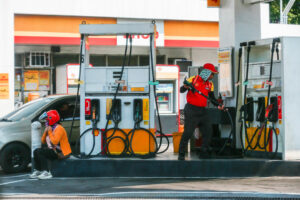
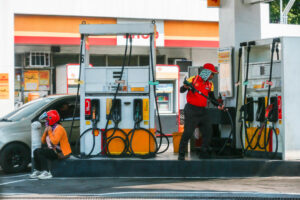
Gasoline prices have increased for eight consecutive weeks, diesel and kerosene prices have increased for 10 weeks. Last week, oil companies increased gasoline prices by P1.90 per liter, diesel by P1.20 and kerosene by P1.50.
The latest price pressure follows escalating US and Israeli attacks on Iranian targets, Tehran's retaliatory attacks and the partial closure of the Strait of Hormuz, through which about 20% of the world's seaborne oil and gas shipments flow.
US President Donald J. Trump has indicated that military action will continue “as long as necessary” to curb Iran's nuclear ambitions and pursue regime change.
White House press secretary Carolyn Leavitt said Saturday that it could take “four to six weeks” to achieve Washington's objectives.
Ms Garin warned that prolonged disruption would weigh heavily on the Philippine economy. “The two-week price change will have a long-lasting impact on our economy as prices will readjust and fares will rise,” he said.
Socioeconomic Planning Undersecretary Rosemary G. Adilan said continued hostilities could drive inflation higher.
An agency simulation estimated inflation at 6.3% to 7.5% in March under an “extreme scenario”, with similar levels expected in April.
In this scenario, crude oil prices could reach $140 per barrel, but may fall later. However, higher prices may continue till September, he said.
The government is also considering policy measures to mitigate the economic impact. Finance Undersecretary Carlo Fermin S. Adriano said suspending or eliminating excise taxes on fuel products could cause the state to lose about P136 billion from May to December, depending on the timing.
Proposals to temporarily cut fuel duties have gained momentum in Congress, building on a 2017 law that allowed excise duties to be suspended if global crude oil prices were above $80 a barrel for three months, a provision that expired six years ago.
Ms Garin said officials were closely monitoring stockpiles and incoming shipments, while local companies were diversifying supply chains.
“The government is continuously preparing to prevent shortages that could impact economic activity,” he said.