

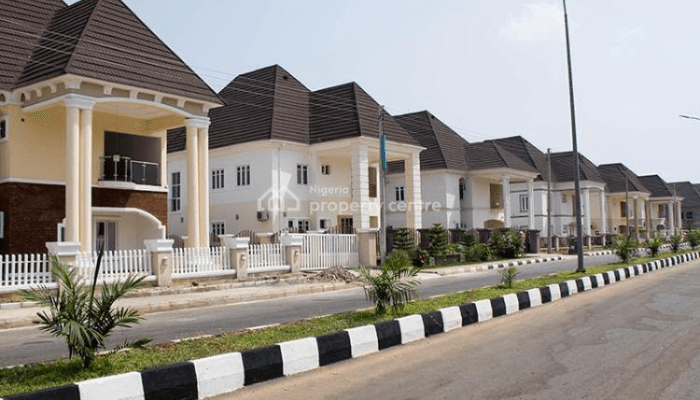
The outgoing year, 2025, can be described as a critical or defining moment for the real estate sector in Nigeria.
It was a year that delivered rapid growth, demonstrating the sector's resilience in the face of policy shocks and high interest rates. Investor confidence strengthened, construction activity increased and real estate firmly established itself as a major economic pillar. Yet, these gains were accompanied by persistent concerns, notably Nigeria's deepening housing deficit and the rising wave of building demolitions across the country.
Inflation declined to 14.45 per cent by November 2025 from 33.88 per cent at the end of 2024, but the monetary policy rate (MPR) remained at a high level of 27 per cent. Despite this, the sector, especially the residential segment, continued to expand.
Construction activity picked up, reflected in a 9.9 percent rise in nominal output in the first quarter of 2025. The latest data from the National Bureau of Statistics (NBS) indicates that the momentum remains positive, with real growth recorded at 5.57 per cent in the third quarter of 2025.
According to Estate Intel's report on the residential real estate market, by the end of the year, development starts, i.e. pipeline projects, will reach 4,800 units, leaving a market gap of 2.7 million units.
Also read: Why 2025 is a defining moment for the real estate sector in Nigeria
Elsewhere in the world, the real estate sector reflects the economy, as demonstrated in Nigeria in 2025.
Despite pressures from high inflation and exchange rate volatility, the economy demonstrated remarkable resilience following the GDP revaluation by the NBS.
The rebasing of GDP underpinned the growth recorded in real estate, giving the sector its real value and position as the third largest contributor to GDP.
This situation shows a jump in value from N10.5 trillion in 2023 to N30.7 trillion within the same year and now stands at over N41 trillion, reflecting improved GDP measurement methods and wider inclusion of wealth-related services.
The rebased GDP data showed that real estate services contributed 13.36 per cent to the GDP, making it the third largest sector after crop production (23.06 per cent) and trade (16.42 per cent).
This was a notable structural shift as the sector overtook traditional giants such as telecommunications and information, which contributed 7.67 per cent; livestock, 6.18 percent, and even crude petroleum and natural gas, 3.8 percent.
The flip side of this growth story is the concerns among industry leaders, developers, investors and diverse stakeholders about the growing demand-supply gap and widespread building demolition at both the national and sub-national levels.
The deficit in the sector, which is a measure of its market opportunity, is variously estimated at 20 million, 22 million and 28 million units. Analysts say Nigeria needs to build about 550,000 housing units and spend N5.5 trillion annually over the next decade to be able to close that gap.
Nigeria's Minister of Housing and Urban Development, Ahmed Dangiwa, who indicated that this gap is both a social need and a business opportunity, said investors and partners are encouraged to participate through public-private partnerships (PPP) and collaboration with housing development finance institutions to take advantage of this opportunity.
On his part, Matthew Ashimolowo, a renowned pastor and a real estate investor, agrees, however, saying that the country needs to build about 700,000 housing units annually for the next 20 years to meet the needs of its growing population. “This ambitious target requires an investment of N59 trillion,” he said, citing a World Bank report.
Another major loss in the sector in the outgoing year was imposed by state and federal government agencies citing violation of building approvals and planning, blocking of drainage channels and distortion of the city masterplan, among other violations.
Records show that more than 2,500 houses have been demolished by government bulldozers. In Lagos, which leads the demolition exercise in the country, about 300 houses were recently demolished on Mile 12. Meanwhile, regulatory lapses have been blamed for investment losses of over N2 trillion in the sector.
“Demolition of buildings is a bad wind. It does no good to anyone. Apart from loss of investment, it leads to homelessness, creates social dislocation among families,” said a developer who did not wish to be named.
Kunle Adeyemi, Chairman of the Real Estate Developers Association of Nigeria (REDAN), South West Region, said the demolition discourages investors, adding that many expatriate investors are stopping investments because the safety of their investments can no longer be guaranteed.
