
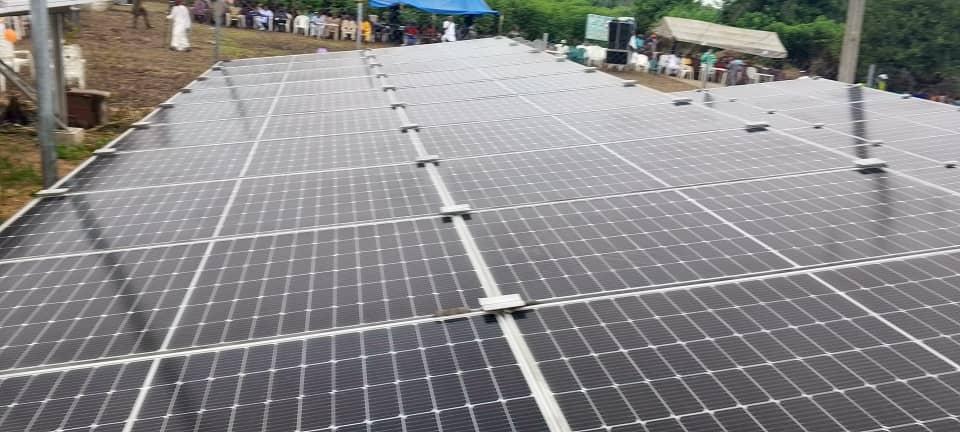
Nonprofits backed by the Rockefeller Foundation and the World Bank have won millions of dollars to boost the productivity of African farmers using a range of solar-energy devices.
Solar-powered cold rooms, refrigerators, water pumps and grain mills are being rolled out in six African countries – Kenya, Nigeria, Ethiopia, Sierra Leone, Uganda and the Democratic Republic of the Congo – through a program managed by Clasp, a Washington DC-based non-profit focused on energy efficiency.
The program, which has completed a two-year pilot and is now rolling out, has received $50 million from the World Bank to expand in Nigeria and the Rockefeller Foundation can add to the $12 million it has allocated.
“There's always the capacity to scale up,” Rockefeller Foundation President Rajiv Shah said Jan. 15 in Nairobi at a facility run by SocoFresh, which runs solar-powered cold rooms to preserve farm produce for sale and export. “As the program expands, there will be more resources country-by-country,” he said.
The Productive Use Financing Facility, or Puff, falls under the umbrella of Mission 300, a program supported by the World Bank and the African Development Bank that aims to raise tens of billions of dollars to bring electricity to 300 million Africans by 2030. Of the approximately 600 million people, more than 80% live without access to electricity globally in Sub-Saharan Africa.
The PUFF program provides grants, subsidies, and technical assistance to suppliers and distributors to make solar equipment more affordable. In its pilot phase, between 2022 and 2024, it supported 24 businesses, including SokoFresh, in six countries.
“We finance innovations and new projects and new ideas that can be adopted at scale by governments and the World Bank and others,” Shah said in a statement.
SokoFresh, which is based in Nairobi, serves about 19,000 farmers. Dennis Karima, chief executive officer of SocoFresh, said lack of refrigeration plays a role in about 40% of losses suffered by farmers in sub-Saharan Africa.
“This is a very good deal for them,” Karema said of farmers. “It's catalyzing demand for their products.”
Kenya's horticulture industry exports approximately $1 billion annually, ranging from avocados and vegetables to cut flowers.
