
Nigeria's decision to counter terrorism through a targeted joint security operation with the United States is being read in financial and diplomatic circles as more than a military action. It is a signal to markets, partners and investors that Africa's largest economy is aligning security, recovery and global cooperation to boost economic growth and restore confidence.
The Christmas Day operation in Sokoto conducted by Nigerian forces with US support was precise and intelligence led, aimed solely at terrorist elements who have disrupted communities and economic activities in parts of the country.
Nigerian authorities have made clear that this action does not mark an escalation in the conflict, but rather reinforces stability, a distinction with significant implications for capital markets.
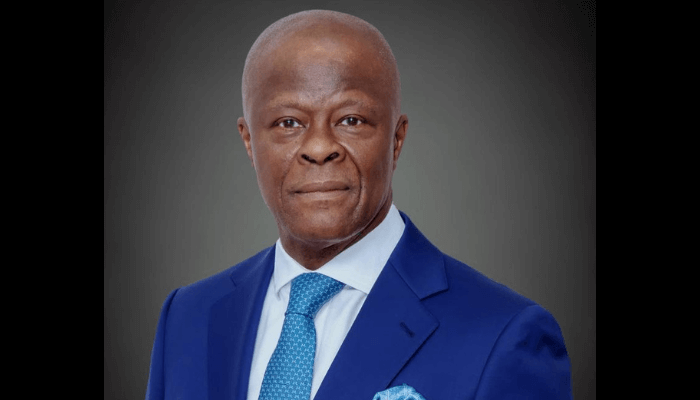
“Nigeria is neither at war with itself, nor with any country,” Wale Edun, Coordinating Minister of Finance and Economy, said in a statement issued on December 28.
“Nigeria, together with trusted international partners, is decisively countering terrorism.”
For investors accustomed to linking Nigeria's risk premium to security headlines, the message was deliberate: security actions that protect lives and productive sectors are pro-growth, not destabilizing.
Security as an economic signal
Edun framed the operation as part of a broader reform agenda under President Bola Ahmed Tinubu, describing security as inseparable from economic stability. He said, “Security and economic stability are inseparable; every effort to protect Nigerians is, by definition, pro-growth and pro-investment.”
This argument resonates in markets where stability, policy clarity and institutional resolve matter as much as headline growth. Nigeria's reform programme, including exchange rate adjustment, fiscal consolidation and regulatory tightening, has begun to reshape investor sentiment in 2025. Security cooperation with the US adds a geopolitical layer, signaling Nigeria's readiness to work closely with global partners to protect both people and capital.
building macroeconomic momentum
Nigeria's economic indicators provide context for confidence. GDP grew by 4.23 percent in the second quarter of 2025 and 3.98 percent in the third, with the government projecting a stronger fourth quarter. Inflation, long a pressure point, has declined for seven consecutive periods and is now below 15 per cent, reflecting tight coordination between the fiscal and monetary authorities.
Credit rating agencies have taken notice. Moody's, Fitch and S&P Global Ratings upgraded Nigeria to 2025, citing improved policy credibility, strong external buffers and fiscal discipline. For a country that spent years battling downgrades, the upgrade represents an independent endorsement of recovery traction.
“Domestic and international credit markets are stable and functioning efficiently,” Edun said. He said Nigeria has maintained macroeconomic stability despite global shocks and commodity price fluctuations.
Capital markets take the lead in revaluation
Nowhere is the renewed confidence more visible than in Nigeria's capital markets. Nigerian Exchange Group (NGX) defied global uncertainty and persistent forex concerns to emerge as one of Africa's strongest performers in 2025.
As of December 24, the NGX All-Share Index had gained nearly 49.2 percent for the year, placing it among the continent's top-performing stock markets. Chairman of the Nigerian Exchange Group (NGX), Alhaji Umaru Kwairanga, in his year-end review said equity turnover has more than doubled year on year, underscoring the increasing participation of investors.
Domestic investors drove most of the activity, contributing about 79 per cent to 80 per cent of the transaction value, while foreign investors contributed about 20 per cent to 21 per cent, which was modest by global standards but a meaningful increase in absolute terms. Market participants see this as a foundation on which deeper offshore partnerships can be built as reforms mature and policy risks subside.
Total market capitalization expanded rapidly. As of December, the combined value of equities, debt instruments and exchange-traded funds listed on the NGX was about ₦149.9 trillion, with equities accounting for more than ₦98 trillion, or about 65 percent of the total. Banking, consumer goods, industrials and telecom led gains supported by strong earnings and balance-sheet flexibility.
The primary market also played an important role in raising long-term capital. New listings and capital raised are projected to reach ₦6.34 trillion in 2025, partly due to strategic bank recapitalization. The scale of issuance reflects the confidence of issuers as well as investors' appetite for Nigerian risk.
Foreign capital: Interest returns, cautiously foreign portfolio investment, have begun to recover, with offshore trading activity seeing double-digit year-on-year growth in many reporting periods. Nevertheless, foreign participation remains constrained due to concerns related to exchange rate dynamics, capital gains tax clarity and the need for continued policy stability.
For policymakers, the challenge is not only to attract foreign flows but also to stabilize them. The government's message is that security cooperation, macroeconomic reforms and market development are parts of a single strategy.
“Nigeria is open for business, committed to peace and firmly focused on the future,” Edun said.
a broader geopolitical message
Beyond economics, the joint operation also has diplomatic significance. This places Nigeria within the framework of shared global responsibility against terrorism, strengthening its role as a regional anchor for stability in West Africa.
For multinational investors and development partners, this cooperation reduces risks that are difficult to value but critical to long-term commitments.
President Tinubu in a recent address set 2026 as a consolidation year, building on the gains of 2025 to strengthen resilience and deliver inclusive growth. The administration's resolve to align security, fiscal discipline, and reform is central to that approach.
As markets reopen on December 29, Nigeria is betting that investors will view the Sokoto operation not as a warning sign, but as reassurance: a country facing its risks in partnership with allies, while laying the foundation for continued growth.
For a market long defined by volatility and potential, the message is clear. Stability is being imposed, reforms are gaining momentum, and Nigeria is establishing itself not only as a high-yield frontrunner, but as a reliable, cooperative player in the global economy.
