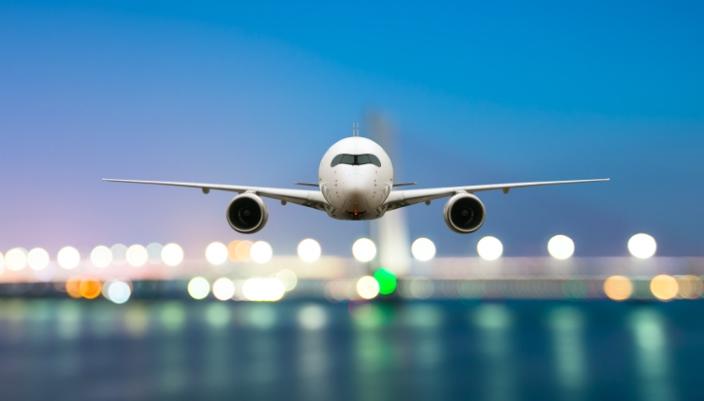
The emergence of state-owned airlines in many Nigerian states is reshaping competition on secondary routes that were long dominated by one or two carriers, thereby cutting fares and expanding travel options for passengers.
New competition has led to lower ticket prices, greater choice for consumers, increased pent-up travel demand and creation of employment opportunities within the aviation value chain.
The Akwa Ibom Government kicked off this initiative with the launch of Ibom Air, achieving notable milestones such as substantial fare reduction on the Lagos-Akwa Ibom corridor, upgrading of the Akwa Ibom Airport and the commissioning of a state-of-the-art Maintenance, Repair and Overhaul (MRO) facility.
Also read: United Nigeria Airlines operations disrupted after bird hit, plane grounded
This catalyst led neighboring Cross River State to establish Cali Air in July 2021, and within a year, Enugu, Ogun and Ebonyi states followed suit with their own aviation ventures. Recently, Bayelsa State commenced commercial operations with its inaugural state-owned aircraft, further intensifying the competitive landscape.
While critics argue that state funds could be better allocated to infrastructure and public services, supporters argue that these airlines have eliminated monopolistic practices at secondary airports, resulting in lower fares and increased service quality.
Olumide Ohunayo, industry analyst and research director at Zenith Travels, said the market needs this trend, especially at a time when ticket prices are rising.
“I encourage this trend and I would like to see more states involved in setting up local carriers. Perhaps this will bring the necessary consolidation because the regulatory side has not worked,” he said.
“We will thank them for helping us reduce the fares. We knew what it was like to fly into Enugu in the past. Enugu had the same problems as Ilorin passengers. Now, UMZA Air has moved to Ilorin and the fares there have gone down. Once supply exceeds demand, you will see a difference in fares but when demand exceeds supply, passengers suffer,” Ohunayo explained.
He advised that airlines should consider collaborating with others as this would help the industry and secondary airports to reduce passenger hassles and promote scheduled reliability and reduced flight schedules.
“This trend will also help develop other routes outside the trunk route. You will see some flights connecting states to states without coming to Lagos, Abuja and Port Harcourt and that is what we are waiting for.
“I know that somewhere, they have to look at what Ibom Air has done, how they have operated the airline commercially and link it to the development of Ibom airport and other activities around tourism. That should be the goal,” Ohunayo said.
Also read: Airfare hike: FCCPC deepens investigation into alleged exploitative airline practices
BusinessDay had earlier reported that passengers traveling from Lagos to second tier airports such as Ilorin, Akure, Anambra, Benin, Katsina, Sokoto, Ibadan and Yola have continued to pay exorbitant fares due to the absence of competition on the routes.
The findings show that very few airlines operate on these routes, leading to increased competition as airlines set prices arbitrarily, arguing that most of these airports are not profitable because they have low passenger traffic.
However, stakeholders argue that if more airlines are competing on these routes, prices will go down and more passengers will be able to travel through these airports.
Before Enugu, Cross River, Ogun and Ebonyi states joined the fray of state-owned airlines, one-way economy class tickets to these destinations were priced between N200, 000 to N350,000, even when it was not the festive season.
Whereas, before Christmas, a one-way economy class ticket from Lagos to distant destinations like Abuja, Port Harcourt, Kano and Owerri costs an average of N150,000 to N200,000 depending on the time of journey and the airline.
However, since some of these airlines joined, fares on these secondary routes have dropped to about N150,000 except during festive seasons.
Stakeholders argue that despite the presence of these new airlines, there is still a shortage of supply as flights to these secondary airports are currently fully booked for Christmas.
Seyi Adewale, Chief Executive Officer, Mainstream Cargo Limited, told BusinessDay that the emergence of state-owned airlines will significantly benefit travelers as air fares in/out of the investing states are subsidized to generate throughput, attract business travelers, tourists, investors, federal government or political party patronage.
He said this would directly boost the entertainment, leisure and hospitality sectors.
“Also, it helps connect the Nigerian aviation sector within and among the states because the Federal Airports Authority of Nigeria (FAAN) and the Nigeria Civil Aviation Authority (NCAA) are federal agencies that have direct oversight functions over these state-sponsored airports and airlines,” Adewale said.
He said this trend will be facilitated by direct connectivity to international airports and potential possibilities of code share or interline arrangements with large international carriers.
Also read: Ethiopian Airlines expands Middle East connectivity with new service to Jizan, Saudi Arabia
However, John Ojikutu, CEO of Centurion Aviation Security and Safety Consult, argued that in 2000 the passenger traffic forecast for 2020 was 20 million, noting that in 2025, traffic is still below the 20 million projection despite an increase in the number of airlines and airports.
“These are all political projects in political contests. How much traffic is there for Ebonyi and Enugu airlines and airports in the South-East, where are Owerri and Anambra airports that have not collectively recorded 1.5 million passenger traffic? Asaba is not far from Onitsha.”
He raised similar concerns about Ibadan, Akure and Ogun competing with Lagos, Nigeria's main commercial hub, despite low passenger numbers.
Ojikutu called on the NCAA to strengthen monitoring and enforcement of airport and airline development rules.