
Nigeria's security challenge is entering a more complex and dangerous phase. Recent attacks in Kwara State and President Bola Tinubu's confirmation that Boko Haram was responsible have raised urgent questions about insurgent convergence, intelligence failures, and the future direction of Nigeria's internal security strategy.
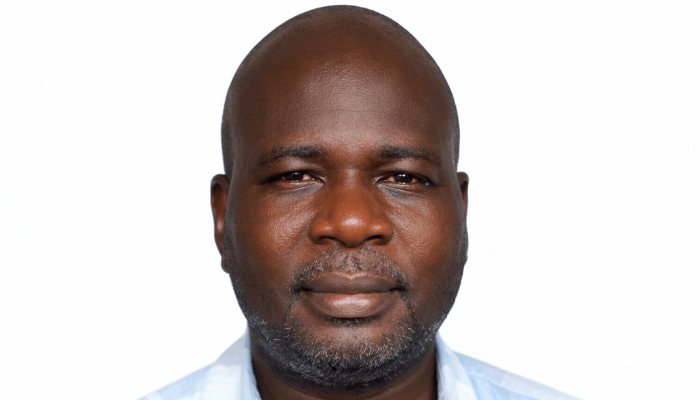
In this strategic discussion moderated by Mazemite Jaboro, Dr. Abiodun Duyile, Defense and security analysts at Ekiti State University provide a candid assessment of what is changing, what is missing and what urgently needs to be improved. Part…
President Tinubu has confirmed the role of Boko Haram in the Kwara Genocide. How important is this development?
The Nigerian leadership must stop pointing fingers and instead expose the real forces behind Boko Haram and banditry. What we are seeing is not accidental. The way terrorism and robbery are on the rise is a clear political signal, especially as elections approach.
It is no longer just about ideology or religion. The timing, targets and spread suggest deep sponsorship networks that remain largely untouched. Unless the state is prepared to confront and expose those structures and not just be foot soldiers, Nigeria will continue to react to the symptoms rather than addressing the causes.
Does this confirm that Nigeria's rebel theaters are merging?
Yes, we are clearly moving in that direction. What is happening now is less about formal alliances and more about operational convenience. These groups are sharing forests, routes, logistics corridors and safe havens.
They do not need to declare unity. There is a lot of overlap. When Boko Haram fighters appear in areas previously occupied by bandits or other extremist groups, it shows that Nigeria's threat landscape is converging. This enhances the state's response capacity and influences area-based security planning.
How dangerous is this type of rebel convergence compared to separate groups?
This is much more dangerous. Networked insurgencies are resilient. They adapt rapidly, spread across multiple regions, and exploit gaps between security orders, state borders, and institutional mandates.
When threats are isolated, they can be controlled geographically. When they come together they become liquid. When there is pressure in one area, they retreat and reappear in another area. This renders traditional prevention strategies ineffective and turns local crises into national crises.
Operation Savannah Shield reportedly involves special forces rather than conventional troops. Is this the right approach?
Yes, this is the right approach. The forest-savanna environment requires speed, stealth, intelligence, and the ability to fight at night. Conventional infantry units are often too slow and invisible for this kind of terrain.
ISR, intelligence, surveillance, and special operations units, supported by reconnaissance and air assets, are better suited to track dispersed cells, conduct precision raids, and disrupt camps before they can move. Nigeria is now facing such a war, and theory must match reality.
Where has Nigeria struggled most in countering these groups – firepower or intelligence?
The real problem is intelligence-to-action. There are frequent warning signs in Nigeria. There are indicators, reports and patterns. But the state struggles to act quickly or decisively.
This gap between knowing and reacting has repeatedly resulted in the loss of lives. Intelligence that arrives late or is not acted upon immediately becomes useless. The problem is not always one of collection; It is coordination, decision making and speed.
“Nigeria needs an integrated, intelligence-driven internal security doctrine that recognizes the interconnected threat space.”
History offers lessons here, doesn't it?
Absolutely. Even in January 1966, intelligence warnings existed but were not acted upon in time. The lesson of history is clear: intelligence without timely action is meaningless.
Nigeria has repeated this mistake for decades – from coups to rebellions. When warnings are ignored or delayed, consequences follow. History is not abstract here; This is instructive.
What should immediately change in Nigeria’s security architecture?
There should be better integration of military intelligence, police intelligence and local human intelligence. The current silo system is outdated and dangerous.
Security agencies cannot afford to operate as isolated islands. Information must flow horizontally and vertically – from communities to local authorities, from the police to the military and across all agencies. Silos are a luxury Nigeria can no longer afford.
Is there a danger of prolonged internal deployment politicizing the army?
Yes it does. That risk is real. This is why professionalism and constitutional discipline are important.
Ideally, the police should be better equipped to deal with internal security challenges, with the Army providing support where necessary. Over-reliance on the armed forces for domestic policing creates tensions and increases the risk of politicization if not carefully managed.
How should Nigeria manage external security partnerships, especially with the United States?
Nigeria should carefully consider such partnerships. They should be partnerships, not dependencies. External ISR, training and equipment can help, but Nigeria must maintain command, strategic direction and legitimacy on the ground.
Each partner has his own interests. Nigeria must be clear about its priorities and avoid becoming a platform for external agendas that may not align with long-term national security interests.
Looking ahead, what worries you most?
What concerns me most is how quickly these groups are adapting. Rebels do not need to win conventional battles. They just need to survive, spread, and eliminate the kingdom.
If Nigeria continues to treat these threats as isolated problems rather than interconnected systems, the situation will worsen. Adaptation is happening faster on the rebel side than on the state side.
Final Question – What is the most important reform Nigeria needs now?
Nigeria needs an integrated, intelligence-driven homeland security doctrine that treats the country's threat space as interconnected, not fragmented by sectors, agencies or bureaucratic boundaries.
This involves deep state involvement, strong local intelligence structures, and integration of state and local police within a coordinated national framework. Without that change, Nigeria will remain reactive rather than proactive.

