
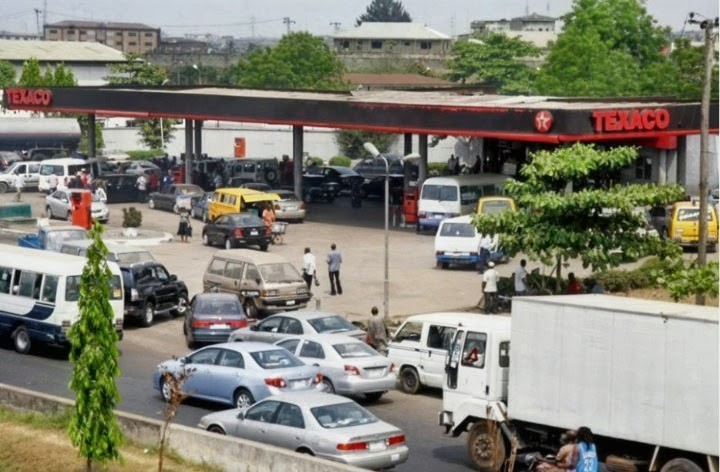
Rising oil prices are once again testing Nigeria's economy. But this time there is no subsidy to bear this shock.
Once fuel subsidies are removed in 2023, Nigeria will no longer be able to insulate its economy from global oil shocks. Rising crude oil prices amid renewed tensions in the Middle East are directly impacting domestic fuel costs, transport fares and food prices.
This is the first real external test of the country's post-subsidy framework.
shock without buffer
The mechanics are straightforward. Higher global oil prices drive up the cost of refined fuel imports. Without government intervention, the burden of those costs falls on consumers almost immediately. Gasoline prices rise, transportation costs rise, and inflationary pressures spill over into supply chains.
“Fuel prices are at the heart of Nigeria’s cost structure,” said a Lagos-based macroeconomist. “Once they leave, transportation follows, then food. It spreads rapidly throughout the economy.”
Under the previous system, the government absorbed part of the increase through subsidies, which cushioned the blow to households while also taking pressure off public finances. That buffer is now gone. Prices adjust rapidly, and the burden falls directly on consumers and businesses.
oil paradox
In theory, higher global oil prices should provide relief to Nigeria through stronger fiscal revenues and improved foreign exchange inflows. In practice, that benefit is limited. Oil production remains below capacity, and most refined fuels continue to be imported.
Also read: Oil prices fall 2% as Iran considers US proposal to end war – Reuters
“This is why Nigeria is not fully benefiting from high oil prices,” said Olugbenga Olaoye, an energy economist and USAEE member. “The country exports crude oil but still imports fuel, so rising prices increase both revenues and costs at the same time.”
As crude oil prices rise, import costs also rise along with it. The net effect is to increase inflation rather than promote economic growth.
backdoor inflation
Initial signs are already visible. Fuel price adjustments are increasing transportation costs, leading to food prices and consumer inflation. The impulse is external, but the impact is domestic and immediate.
Removing subsidies solved the fiscal problem, not the structural problem.
Structural limitations persist
Domestic refining capacity is still limited. Apart from the Dangote refinery, which has begun supplying an increasing share of Nigeria's gasoline market, most government-owned refineries remain offline. Oil production has declined due to piracy and underinvestment, while the cost of transporting goods is increasing due to lack of infrastructure.
These weaknesses limit the benefits of higher oil prices while leaving the economy exposed to their costs.
Also read: Why do high oil prices hurt Nigerian families?
a tough policy compromise
The challenge for policymakers is clear. Maintaining full price adjustment maintains the credibility of the recovery and supports fiscal stability, but it also increases pressure on households at a time when real incomes remain fragile.
“For many households, it is already on the verge of being unsustainable,” said Farouk Quadri, an economist at Spec-Matrix, an Abuja-based research firm. “When fuel, food and transportation costs rise together, there is little room to adjust. Without some kind of targeted relief, the pressure increases.”
“Full price adjustment is important for the credibility of the reform,” Farooq said. “But if incomes are not catching up, social pressure builds rapidly. The challenge is to find support measures that don't silently bring back subsidies.”
“The risk with intervention is that it distorts the price signal again,” he said. “Any response must be precise and limited.”
long term solution
The long-term solution is clear: Nigeria needs to expand refining capacity, boost oil production and strengthen foreign exchange buffers to reduce sensitivity to global price fluctuations. Currently, most government-owned refineries are offline and only the Dangote refinery supplies the bulk of domestic fuel, with the country still dependent on imports.
Unless these shortcomings are addressed, Nigeria remains stuck in a familiar cycle where it earns more from crude oil exports while paying higher prices for domestic fuel.
In the past, subsidies masked this mobility. Today, the cost is starkly visible, and Nigerians are feeling it.

