
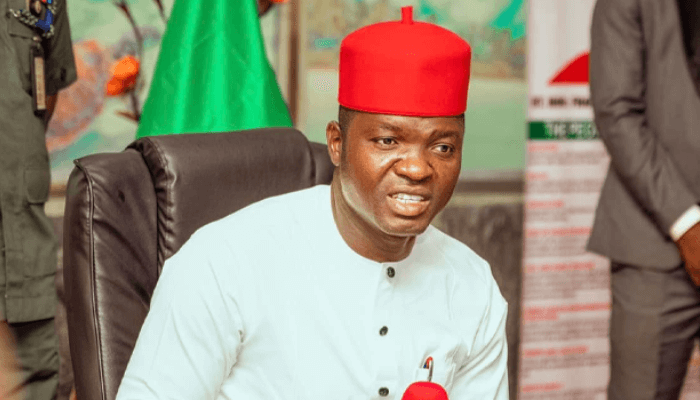
In Nigeria's south-eastern agricultural region, Ebonyi State, the vast green land is not just soil; It links identity with livelihood, sometimes sparking violence. This is a grim reality illustrated by the recent firestorm between the Amasiri community in Afikpo LGA and Oso-Adda in Edda LGA, threatening local peace, threatening the broader credibility of subnational governance, and setting off a cycle of retaliation in an area already scarred by similar clashes. Then Governor Francis Ogbonnaya Nwifuru steps in with measured intervention and it is also tough.
On January 29, Governor Enwifuru visited the devastated Okporjo site to ascertain the extent of the damage caused by the controversy. He subsequently imposed a curfew on Amasiri, dismissed all government appointees from the community including Tertiary Education Commissioner Amari Omaka, dissolved the Local Development Association, deposed traditional rulers and temporarily closed schools. Troops were deployed and a 72-hour ultimatum was issued to produce the culprits. By February the suspects were taken into custody and the 7am to 6pm curfew was relaxed from an almost complete lockdown.
A bitter pill for lasting peace
Some have argued that these measures averted a massacre and potentially saved the Amasiri from deaths caused by deafening whispers of reprisals. Others argue that Nwifuru's move from a previous heavy-handed approach to a complete lockdown toward a graduated relaxation is a demonstration of a governing style that is as forceful as it is cautious. Enwifuru's Amaseri peace tonic may have seemed like a collective punishment to the casual observer, but intelligence disclosed by the governor revealed that five neighboring communities were preparing for a retaliatory attack that could have killed up to 200 people. This suggests that his approach was preventive rather than punitive as he may have saved the Amaseri from massacre. The decisive action, praised by eminent blacks like the Minister of Works, David Umahi, has quelled the vengeful flames of anger.
Given the high number of communal conflicts in Ebonyi, a state that contributes significantly to Nigeria's rice production and hosts deposits of lead, zinc and limestone, such decisiveness should be appreciated from an economic point of view. The World Bank estimates that violence in rural areas of Nigeria costs the economy up to 2 percent of GDP each year, while reducing investor confidence. In Ebonyi alone, past conflicts such as those between Abaomege and Ishinkwo or Ishiagu and Akeze have destroyed farms, halted mining operations and destroyed agribusiness investments. Thus, by acting forcefully, Mr. Enwifuru halted the immediate escalation, and preserved the fragile peace that underpins the state's ambition to become the food basket for the South-East.
Reflecting previous Pan-African approaches; shower praise
Enwifuru's approach reflects previous successful interventions in other parts of Africa. In Kenya's Rift Valley, following the 2007 election violence, a top-down approach to violence was eliminated, including curfews and leadership purges, allowing time for lasting reconciliation. Governor Enwifuru's move is based on prior peace agreements including the 2003 boundary-demarcation gazette. What's more, the Governor showed zero tolerance for collusion, thereby discouraging future instigators. Early signs are promising as there have been no major reprisals and investigations are ongoing, which should help businesses get back on track.
But praise should be tempered. Critics, including Amasiri leaders and a human rights lawyer who filed a N105 billion ($65m) lawsuit against Governor Enwifuru, described the action as punitive and discriminatory and additional punishment. With schools closed, markets deserted, and residents fleeing out of fear of arbitrary arrests, he argues that external actors could exacerbate rancor and turn border disputes into core hostilities. Economists warn about a “conflict trap” that could lead to long-term instability if grievances escalate.
towards lasting harmony
The Governor's leadership has, so far, demonstrated a perceptive understanding of political economy, in which his restraint signals neutrality, his engagement signals respect, and his interventions restore peace without resorting to wanton force. Now, the Governor must move from containment to stabilization. First, they should implement the 2003 boundary gazette prepared during the previous administration, which clearly provides a neutral demarcation based on historical claims and surveys. Delaying this may give rise to allegations of bias. Clear boundaries would reduce ambiguity, in the same way that Rwanda's post-genocide land reforms clarified ownership and increased agricultural productivity by about 20 percent.
Then, the governor must control negative externalities and mitigate the economic costs of lost wages for businesses, disrupted education for children, and psychological trauma for families that have resulted from curfews and shutdowns. The governor could establish a rehabilitation fund to compensate victims from both sides, rebuild houses in Okporjo, and support displaced Amasiri farmers. This way, the mining sector of the state will benefit over N10 billion per year as the stability will attract investors.
Third, the Governor could establish a cross-community council in the framework of South Africa's post-apartheid Truth and Reconciliation Commissions. This will give people an opportunity to air their complaints and promote dialogue. On the economy front, shared infrastructure projects such as irrigation schemes for rice fields and access roads to disputed mines could turn disputed lands into common property.
last words
Overall, Governor Enwifuru has shown the courage to take decisive action. He has demonstrated the wisdom of taking rest in time. They have earned the trust of the wider public and the patience of the affected communities. Now he must remove the detonator and reassemble it and be guaranteed lasting peace. To do this, he must work as an economic architect and a security operator. Binding communities together through mutual economic destiny, legally indisputable borders and accountable local governance. This way, he will assure that the only thing that is broken in the future of Ebonyi is the rope between his people and poverty, and not between a man and his head. For as the gun has fallen silent, the moment of danger must be transformed into the foundation of prosperity. This is the final test of economic statecraft.
Dr. Una is an investment banker and public policy analyst; He writes from Lagos

