
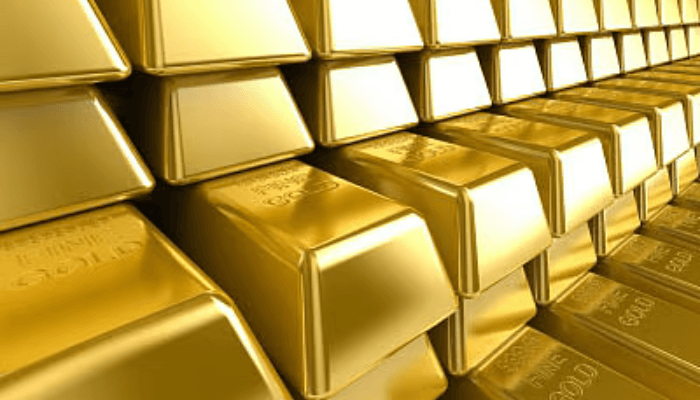
Gold prices rose above $5,000 an ounce for the first time on Monday, marking a historic rally driven by geopolitical tensions, monetary policy uncertainty and strong safe-haven demand. The price shock is set to deliver windfall benefits for gold-producing economies, especially across Africa, where bullion remains an important export and foreign exchange earner.
Gold has long been central to Africa's economic story. From the ancient empires of West Africa that traded gold on trans-Saharan routes, to today's industrial mining operations supplying global markets, the metal has shaped the continent's wealth, diplomacy and global relevance.
Today, gold exports generate billions of dollars annually, supporting national currencies and boosting foreign reserves for many African states.
Below are the 10 largest gold producing countries in Africa by production, based on World Gold Council 2024 data.
1. Ghana – 140.0 tonnes
Ghana remains Africa's largest gold producer, a position reflecting centuries of mining history. Gold has been extracted in this country, once known as the Gold Coast, since the 15th century. Today, gold accounts for 40 percent of Ghana's export earnings.
Higher bullion prices helped support the cedi's performance in recent years, underscoring gold's role as a macroeconomic stabilizer. Ghana's production comes largely from industrial mines as well as a large artisanal sector.
Also read: Gold crosses $5,000 for the first time, other stocks in Ghana and Uganda rise
2. Mali – 100.0 Ton
Mali's gold industry is deeply rooted in history, dating back to the ancient Mali Empire, which dominated the trans-Saharan gold trade in the medieval era. In the modern economy, gold is Mali's most important export.
The government has sought to boost state revenues through reforms, including a new mining code introduced in 2023 aimed at extracting more value from foreign-owned operations amid rising global prices.
3. South Africa – 98.1 tonnes
South Africa's production, once the world's largest gold producer, has fallen sharply from its peak of more than 600 tonnes in the early 1990s. Nevertheless, the country remains a major global player.
South Africa's gold mines are among the deepest and most labour-intensive in the world, and the industry played a fundamental role in the rise of Johannesburg, which became known as Egoli – the City of Gold.
Also read: Gold crosses $ 5,000 per ounce for the first time
4. Burkina Faso – 94.4 tonnes
Burkina Faso has emerged as a major gold producer over the past two decades due to discoveries and foreign investment. Gold is now the backbone of the country's export economy.
However, the sector continues to face challenges including security risks, illegal mining and political instability
5. Sudan – 73.8 tonnes
Gold has become the most important source of foreign exchange for Sudan, especially after the loss of oil revenues following the secession of South Sudan.
Most of Sudan's gold production comes from artisanal and small-scale miners, creating income opportunities for local communities but also creating regulatory, environmental and smuggling challenges.
6. Guinea – 68.0 tonnes
Better known for its vast bauxite reserves, Guinea has quietly built up a significant gold sector. Production is mainly concentrated in the Siguiri field, one of the largest industrial gold mines in the country.
Gold contributes significantly to export revenues and remains an increasing focus of foreign investment.
Also read: Due to surge in gold, the currency of Africa's largest country strengthened to its highest level in 3 years.
7. Côte d'Ivoire – 58.0 tonnes
Côte d'Ivoire's gold production has grown rapidly over the past decade, turning the region into a key pillar of economic diversification.
The country's relatively stable investment climate has attracted multinational mining companies, which are positioning gold as a long-term growth driver, along with cocoa and hydrocarbons.
8. Tanzania – 51.8 tonnes
Gold is Tanzania's most valuable mineral export and contributes more than 4 percent to GDP. The country has several large-scale mines, including the Geita gold mine, one of the largest in Africa.
9. Zimbabwe – 50.9 tonnes
Zimbabwe's history of gold mining dates back to the pre-colonial era, and the metal remains important to the economy today.
Gold plays an important role in generating foreign exchange, especially amid long-term balance of payments pressures. Both industrial producers and small-scale miners contribute significantly to production.
10. Democratic Republic of Congo – 42.3 tonnes
The Democratic Republic of the Congo is better known for copper and cobalt, but gold is an important part of its mineral wealth.
Production is concentrated in the eastern regions, where both industrial operations and artisanal mining co-exist. Persistent conflict and illegal mining are undermining the region's full economic potential.
