

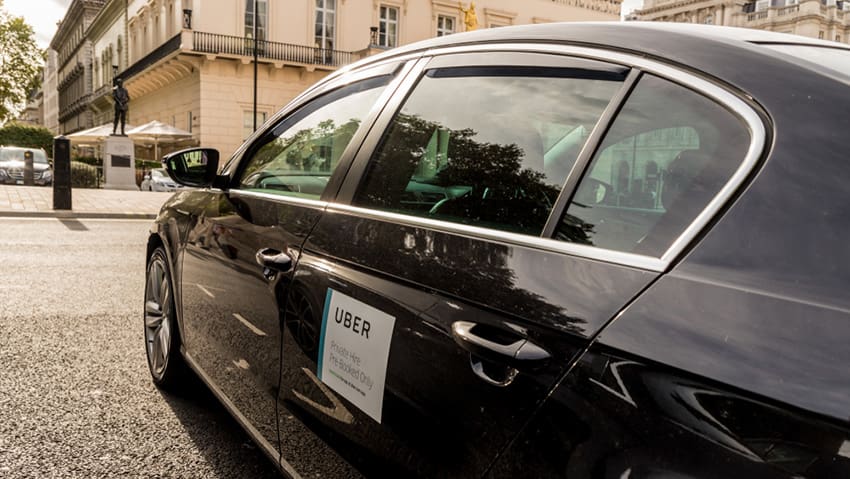
London taxi fares are set to rise after the government moved to close a long-standing VAT loophole used by ride-hailing platforms, a decision expected to raise around £700 million a year for the Exchequer.
The changes, announced by Chancellor Rachel Reeves in November's Budget, will affect companies such as Uber and Bolt, which previously used the tax scheme for tour operators to reduce their VAT bills.
Ministers argue the move will level the playing field for London's black cab drivers, while Uber warns it will result in higher prices for passengers in the capital.
At the center of the controversy is the tour operators' margin scheme, which allows eligible businesses to pay VAT only on their profit margin rather than the full value of a service. Originally designed for holiday and coach tour companies, the scheme has also been used by ride-hailing platforms.
According to the Treasury, this reduced the effective VAT rate paid by some operators to 4% compared to the standard 20% rate. Under the new rules, suppliers of private hire vehicles and taxi services will be excluded from the scheme.
The government has described the move as an “illegitimate” elimination of tax benefits, while critics have labeled it a new “taxi tax”.
Its impact will be felt most acutely in London due to rules set by Transport for London, which require ride-hailing firms to act as principals in transactions rather than as booking agents.
Outside the capital, Uber has clarified that it operates as an agent, meaning that VAT is only charged on the commissions it earns, with drivers being treated as suppliers of transportation services. Most drivers fall below the VAT registration threshold, limiting overall tax exposure.
That structure is not permitted in London, requiring operators to charge VAT on the entire fare.
Reeves said: “We are putting the brakes on the illegitimate use of a specific tax scheme to protect everyday cabbies. The raise of £700 million a year will help us cut the cost of living, cut waiting lists and cut lending and borrowing.”
Steve McNamara, general secretary of the Licensed Taxi Drivers' Association, welcomed the change, calling it “a historic step forward for fairness and integrity”.
“For too long, drivers and small operators paying the full 20% VAT have had to compete with online minicab firms benefiting from a specific tax scheme,” he said.
However, Uber warned that the move would have unintended consequences. Uber UK chief Andrew Brem previously said the change would mean “higher prices for passengers in London and less work for drivers, at a time when people are already struggling with the cost of living”.
He also criticized the creation of a two-tier system, where travel into London is taxed differently than travel into other places in the UK.
With fares expected to rise and political pressure rising over the cost of living, closing the VAT loophole is set to become another flashpoint in the ongoing battle between the government, gig-economy platforms and traditional taxi operators.

Amy Ingham
Amy is a newly qualified journalist specializing in business journalism with responsibility for news content at Business Matters, the UK's largest print and online source of current business news.